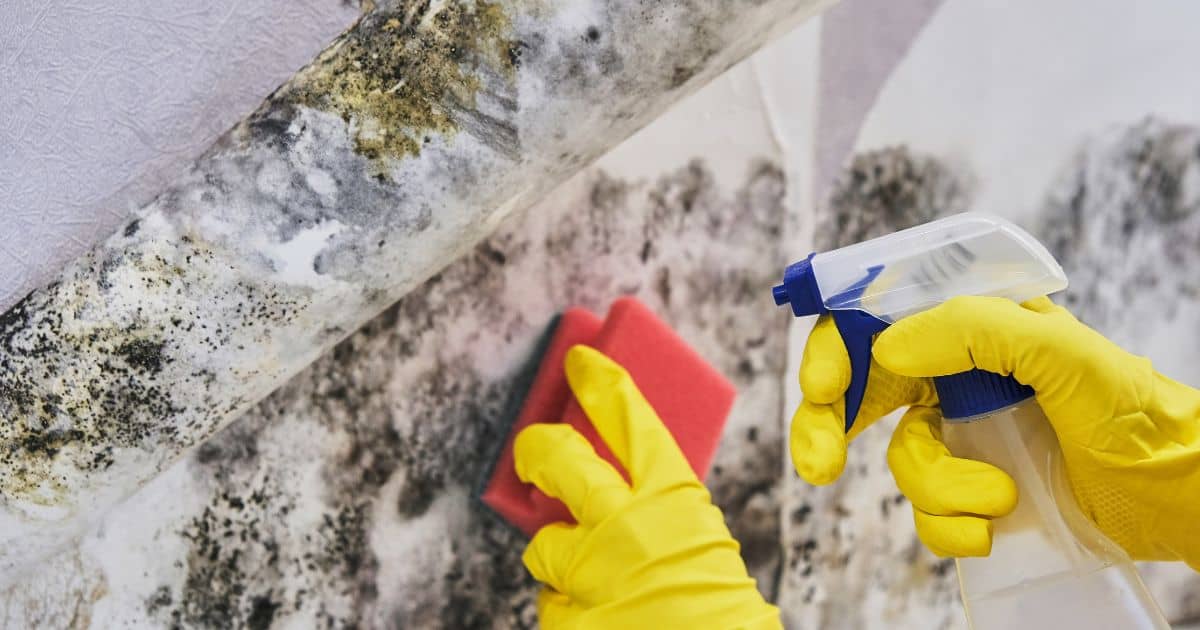
An unwelcome guest in many homes, mould doesn’t just take up residence — it quietly and negatively affects your health. Without the right approach, trying to get rid of mould can feel like an uphill battle. That’s why this article walks you through how to get rid of mould on walls in your flat or house, so you can reclaim a healthy living space.

Why does mould form in your home?
Mould is a type of fungus found virtually everywhere around us. There are many different species, but nearly all of them share one thing in common: they need a damp, cool environment to survive and grow. Mould can appear as black, green, or even fuzzy patches on various surfaces, including the walls, ceilings, and floors inside your flat or house.
Before you start figuring out how to get rid of mould, you need to identify what’s causing it in the first place. If you skip this step, the microscopic organism will just keep coming back. Mould damages your property and can also lead to respiratory problems and allergies.
Everything you need to know about mould can be found HERE.
Causes of mould growth
Whether you’re a homeowner or a tenant, mould in your house or flat is something you should never ignore. The following factors can be behind mould growth:
- Excess moisture – Moisture and mould are, unfortunately for you, a match made in heaven. The moisture source could be a water leak or a leaking roof.
- Poor ventilation – Insufficient airflow in a room can trap moisture and encourage mould growth.
- Poor insulation – Insulation also plays a role. When your home is poorly insulated, condensation can form on the walls and ceiling.
- Poor maintenance – If you neglect regular cleaning, including checking seals and cracks, you’re giving mould free rein.

How does mould harm your health?
Long-term exposure to mould — meaning breathing in the spores it releases into the air — can cause a range of health problems. These include:
- Allergies – Symptoms of mould allergy include sneezing, itchy eyes, and a blocked nose.
- Breathing problems – Mould spores can worsen asthma and trigger respiratory infections.
- Skin irritation – A rash that appears after mould exposure is not uncommon either.
Read more about mould allergy.
How to spot mould?
As we’ve already mentioned, mould thrives in areas with higher moisture levels. That means bathrooms, kitchens, cellars, tiled areas, grout lines, and floors. You can recognise it by suspicious patches that are black, green, or white in colour.
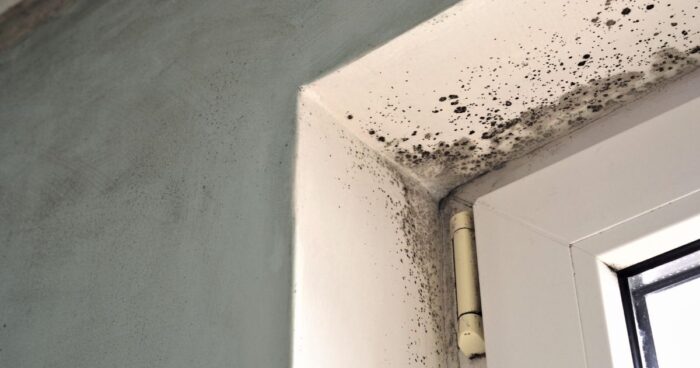
Mould also comes with a characteristic musty, unpleasant smell. The source of the odour doesn’t necessarily come from the walls or floor — it can also come from food, where a different type of mould tends to form.
If you suspect mould has settled under your flooring, lift a section if possible and check underneath. Should you struggle to visually identify it, consider calling in professional help. Specialists have both the expertise and the equipment to determine where the mould is located and how far it has spread.
You might also be interested in: How to reduce indoor humidity
5 tips to get rid of mould at home
We’ve put together a detailed guide that walks you through 5 steps on how to get rid of mould and win the battle against it in your flat or house — once and for all.
1) Wear protective equipment
You should put on protective gear not just while removing mould, but even before you start inspecting. Once you have an idea of where the mould is hiding, put on gloves and a respirator, and only then examine the affected area.
A respirator protects you from inhaling spores that could trigger an allergic reaction. You can also substitute a respirator with an antiviral scarf, which also comes in handy when travelling and encountering other allergens.
You might also be interested in: Czech nano respirator becomes the world’s first to receive FFP3 certification
2) Choose your removal method
Now you have two main options for tackling the mould you’ve just uncovered. You can remove it mechanically or chemically. If the mould has affected a really large area of material, you may have no choice but to dispose of it entirely. Use bleach and water to help with the job.
Today’s market offers plenty of cleaning products designed specifically for chemical mould removal. Chlorine-based cleaners are the most commonly used, but you can also find odourless anti-mould treatments for walls. Always follow the manufacturer’s instructions on the packaging.
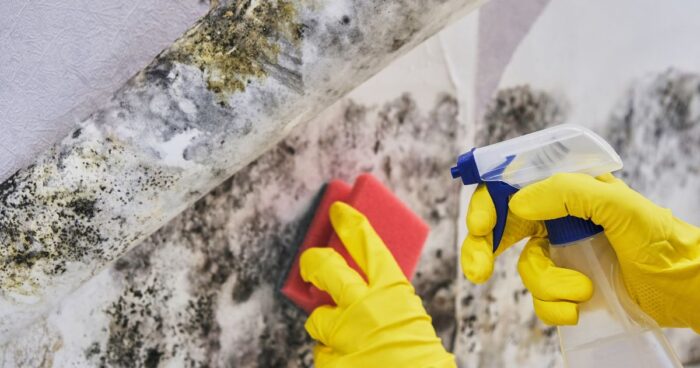
Of course, we can’t skip the old-fashioned home remedies for mould on walls. One effective solution is vinegar. Mix water and vinegar in a 1:1 ratio, apply the solution to the affected area, let it sit for a few minutes, and then wipe it off with a cloth.
3) Ventilate the room
Open a window in the affected room to let the musty smell escape. Handling the mould will actually intensify the odour for a while. However, don’t leave the window open for several hours on end. You could end up letting outdoor moisture back inside.
In general, it’s recommended to ventilate in short bursts during autumn and winter. After coming home from work, cooking, or bathing, open the window fully to let the built-up moisture out. Close it again after about 10 minutes. Leaving ventilation running all day can cool down the walls, which creates ideal conditions for mould.
If the smell lingers even after airing out, purify the air with an ozone air purifier. It tackles not just odours, but also allergens, viruses, and bacteria. Some ozone generators are impressively compact — small enough to use in your car.
TIP: Ozone generator – what is it and how does it work?
4) Reduce moisture levels in the room
The single most important step in getting rid of mould for good is to bring the humidity in the room down to a safe level of 40–55% and keep it there. That’s what dehumidifiers are for — they condense the moisture out of the air. You can choose models with a really large water tank that can handle even higher concentrations of moisture.

Some of these devices even come with a HEPA filter, which captures not just mould spores but also dust, bacteria, pollen, and other impurities. Feel free to let the dehumidifier run overnight — most models are powered by a quiet motor.
Find out how to choose a dehumidifier HERE.
5) Focus on prevention
No guide on how to get rid of mould would be complete without stressing the importance of prevention. It essentially involves nearly everything we’ve already covered. Keep rooms at optimal humidity using dehumidifiers and ventilate regularly.
To prevent mould from forming, you also need to walk through your home regularly and check that nothing is leaking and everything is in working order. Thorough cleaning probably goes without saying, but we recommend pairing it with an air purifier to multiply your efforts.
Walls coated with a photocatalytic coating also offer an excellent way to get rid of mould and prevent it from forming in the first place. It stops mould from settling on the wall and growing. Think of it as an air purifier that works purely on light. As a bonus, it keeps your walls clean for several years.
TIP: How to get rid of mould allergy
Frequently asked questions
How to get rid of mould in the bedroom?
First, put on protective equipment and identify the cause of the mould. Then decide how to tackle it. Depending on the extent, you can remove it either mechanically or with chemical products. Moisture and mould — not just in the bedroom but throughout the entire house — can also be managed with dehumidifiers.
How to get rid of mould in the kitchen?
Kitchen mould is a common concern. Remove it using chemical cleaning products. If the mould has spread over a large area of the material, you may need to dispose of it and then run an ozone generator. Keep in mind that after cooking, it’s important to always ventilate the kitchen thoroughly and run a dehumidifier. It will help you maintain proper humidity levels.
What kills mould?
Bleach and other products specifically designed to fight household mould are very effective. Another way to get rid of mould is with ozone air purifiers. They eliminate not just mould, but also other allergens, bacteria, viruses, and odours.
What paint to use against mould?
It’s a good idea to coat the wall with a photocatalytic coating that prevents mould from settling and growing. The wall also stays snow-white for years, doesn’t stain, and even repels spiders. If you apply a photocatalytic coating, you may never need to worry about how to get rid of mould again.
How to deal with mould at home?
First, identify the cause — only then tackle removal. Use chemical cleaning products and run an ozone generator. Don’t forget to ventilate in short bursts and maintain proper humidity levels. Dehumidifiers can help with that.
How to heat your home to prevent mould?
During the heating season, you need to ensure that air circulates throughout the room rather than staying concentrated near the radiator, as this could lead to increased humidity. Get a dehumidifier — it makes controlling humidity levels incredibly easy.
How to get rid of mould in the bathroom?
To prevent bathroom mould, ventilate regularly and ensure adequate air circulation — for example, with an extractor fan. After every shower, wipe excess moisture off surfaces such as walls and floors. If mould does appear, use specialist cleaning products with anti-mould properties and thoroughly treat the affected areas. Check silicone grout regularly and replace it if you can see visible mould. Read even more tips here.