
A dust allergy is actually an allergy to dust mite droppings, and it’s one of the most common allergies there is. As unpleasant as it sounds, dust mites are found in every home — no exceptions. They’re an invisible enemy that makes life miserable for millions of people, and I know how frustrating that endless cycle of sneezing, congestion, and itchy eyes can be, especially in your own home — the one place that should feel like a safe haven.
They mainly live in our pillows, duvets, and mattresses, but also in carpets, curtains, and upholstered furniture. Dust mites love darkness, moisture, and warmth, and they feed on dead skin flakes. A runny nose, sneezing, burning eyes, watering, eczema, breathing problems, night-time coughing, red skin — these are just some of the symptoms. If you’re wondering how to get rid of a dust allergy, or at least its symptoms, you’re not alone. Let’s look at specific, proven steps that actually work.
TL;DR
- The bedroom is key: You spend a third of your life in bed. Priority number one is allergen-barrier covers for your mattress, pillow, and duvet.
- Control humidity: Dust mites need humidity above 50% to survive. Keep it between 40–50% using a dehumidifier, especially in autumn.
- Clean smart: Ditch the feather duster. Wipe surfaces with a damp microfibre cloth and vacuum slowly with a quality HEPA vacuum (H13 class or higher).
- Wash at 60 °C: Regularly washing bedding, soft toys, and smaller textiles at 60 °C reliably kills dust mites and destroys their allergens.
- Minimise fabrics: Hard floors beat carpets. Wipeable blinds beat heavy curtains. Fewer dust traps means fewer problems.
Dust Allergy Symptoms
A household dust allergy doesn’t just cause a runny nose. Its symptoms can affect the respiratory system, the skin, and the eyes, and they often get worse at night or first thing in the morning. Here are the most common dust allergy symptoms:
- A blocked nose or watery rhinitis, often upon waking.
- Itchy nose and bouts of sneezing.
- Itchy, watery, or red eyes.
- Dark circles under the eyes (known as allergic shiners).
- A dry, irritating cough, especially at night.
- Itchy skin or worsening atopic eczema.
- A feeling of chest tightness or wheezing.
- Poor-quality sleep and daytime fatigue.
If you also have asthma, the symptoms can be more serious:
The most common include: noticeable breathing difficulties and shortness of breath, audible wheezing on exhalation, a feeling of tightness or pain in the chest, and a severe asthma attack requiring immediate medical attention.
Tip: If you’re not sure whether you have a dust allergy, I’d recommend seeing an allergist. They can carry out precise tests and suggest a treatment plan. You can also try a home allergy test as a starting point.

10 Proven Tips for Dealing with a Dust Allergy
If your dust allergy is truly wearing you down, let’s look at some concrete steps you can take. There are no miracles here — just systematic effort that delivers real results.
1. Turn your bedroom into a fortress
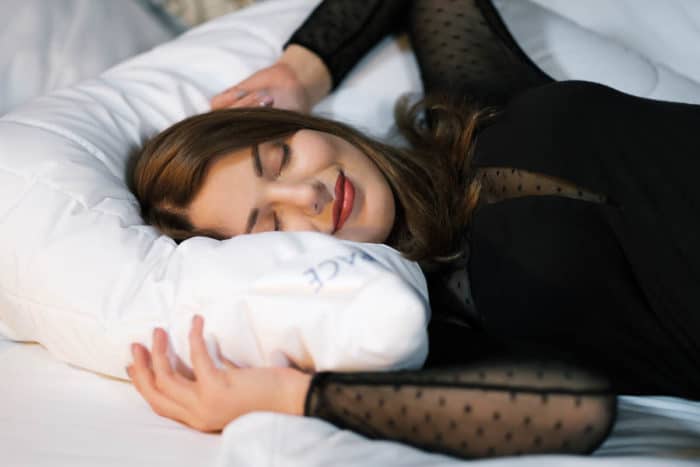
The bedroom is the absolute epicentre of the problem. You spend a third of your life here, breathing air directly from your mattress and pillow, where allergen concentrations are highest. The foundation is to completely encase your bed. Get allergen-barrier covers for your mattress, pillow, and duvet. These covers have such a tightly woven structure that they don’t let dust mites or their droppings through. From personal experience, I recommend ones with a nanofibre membrane — they’re breathable and don’t rustle. Mites trapped inside the mattress and bedding gradually starve, and new ones can’t get in. You’ll often feel relief after the very first night. It’s an investment, but one that pays for itself in better sleep and better health.
2. Take control of humidity
Dust mites need a relative humidity above 50% to survive and breed. Their population explodes at 60–80%. Your goal is to keep humidity consistently between 40 and 50%. An electric dehumidifier will help you do just that. Modern units have a built-in hygrostat, so they switch on automatically when humidity rises. They’re most useful in autumn, when it’s rainy outside and you ventilate less. In winter, central heating dries the air out, so a dehumidifier often isn’t needed. Don’t forget passive measures too: use an extractor fan when cooking, close the bathroom door after showering, and never dry laundry in the bedroom.
3. Wash bedding at 60 °C
High temperature is a reliable killer. Wash all standard bedding (duvet covers, sheets) at least once a fortnight at 60 °C. This temperature reliably destroys both live dust mites and their allergens. If you have children with allergies, the same applies to their soft toys. Those that can’t withstand high temperatures can be placed in a plastic bag and frozen for 24 hours, then washed at a lower temperature to remove the dead remains and allergens.
4. Clean smart, not just hard
The goal of cleaning isn’t just to remove visible dust — it’s to eliminate microscopic allergens without stirring them up into the air. Throw away that traditional feather duster; all it does is launch dust into the room. Wipe all surfaces with a damp microfibre cloth. The fibres trap particles inside the fabric. Mop floors with a damp mop too. This simple habit dramatically reduces the amount of airborne allergens.
5. Invest in a quality HEPA vacuum
A standard vacuum cleaner is more foe than friend if you have allergies. It sucks up dust, but the smallest, most aggressive allergenic particles pass straight through its filters and get blown back into the room at high concentration. What you need is a HEPA vacuum for allergy sufferers, ideally with certified H13 or H14 filtration and a sealed body so no air escapes around the filter. Technique matters too: vacuum slowly (about half a metre per second) to give the machine time to actually pull dust out of carpet fibres. And if possible, get someone else to do the vacuuming. If it has to be you, wear an FFP2 respirator and leave the room for an hour afterwards.
6. Minimise fabric dust traps
Every piece of fabric in your home is a potential dust mite habitat. Hard floors (wood, vinyl, tiles) are incomparably easier to maintain than wall-to-wall carpets. If you can’t bear to part with carpet, opt for a small rug with a low pile that’s easy to wash or clean. Swap heavy curtains and net curtains for wipeable blinds or roller blinds. Cut down on decorative cushions, throws, and upholstered furniture. A leather or faux-leather sofa is ideal — just wipe it down. When it comes to a dust allergy, this step really does make a noticeable difference.
7. Harness the power of sunlight
Direct sunlight contains UV radiation, which has acaricidal (mite-killing) properties and also dries things out. Whenever you can — especially in summer — take your bedding, pillows, blankets, or even smaller rugs outside into direct sunlight. Leave them there for several hours. This old trick our grandmothers swore by is free and works brilliantly as a complement to other measures.
8. Consider an air purifier as a supplement
An air purifier with a HEPA filter can help reduce the amount of airborne allergens that get stirred up as you move around the room. However, it’s more of a supplementary solution. It doesn’t address the source of the problem in your bedding and carpets. If you do decide to get one, place it in the bedroom and run it mainly at night. Bear in mind, though, that without barrier covers and thorough cleaning, its effect is limited. The same applies to tackling a dust allergy in general.
9. Look after your nasal passages
Even with the best efforts, you can’t avoid every single allergen. So strengthen your airways’ defences. Regular nasal rinses with saline solution (using a neti pot such as a Rhino Horn or a squeeze bottle) flush out allergens trapped on the nasal lining and help soothe irritation. There are also barrier nasal sprays (e.g. those containing cellulose powder) that form a protective gel film over the mucous membrane, preventing contact with allergens.
10. Keep your bedroom cool
Dust mites prefer warmth around 25 °C. According to the Czech Society of Allergology and Clinical Immunology (ČSAKI), the ideal temperature for sleep — and for slowing dust mite reproduction — is between 18 and 20 °C. A cooler bedroom combined with controlled humidity creates a very hostile environment for dust mites.
What Actually Works vs. Myths
There’s no shortage of advice floating around online and in forums. Some of it is helpful, but some can actually make things worse. Let’s separate fact from fiction.
Myth 1: “If I keep a window cracked open all winter, I’ll ventilate the allergens out and things will improve.”
Reality: This is one of the biggest misconceptions, especially in autumn and winter. Dust mites thrive in damp conditions. When you leave a window permanently on tilt, the walls around it cool down. Warm, moist air from the room condenses on them, creating the perfect microclimate not only for mites but also for mould. The right approach is to ventilate briefly but intensively — open the window fully for a few minutes to exchange the air without cooling the walls.
Myth 2: “Any old vacuum will do, as long as I vacuum every day.”
Reality: As I mentioned earlier, a vacuum without proper HEPA filtration and a sealed body scatters allergens rather than removing them. It works like a leaf blower for microscopic particles, which you then breathe in for hours. Frequency matters, but without the right tool it’s counterproductive. Vacuuming once a week with a proper machine is better than stirring up dust every day with a poor one.
Myth 3: “An ozone generator will purify the air and kill dust mites.”
Reality: Ozone is indeed a powerful oxidising agent, but at the concentrations needed to kill dust mites, it’s toxic to humans too. It can damage the lungs and irritate the airways, which is especially dangerous for people with asthma. Expert bodies such as the US EPA (Environmental Protection Agency) strongly warn against using ozone generators at home. Don’t be swayed by the marketing — the risks outweigh the benefits here.
So what actually works?
There’s no single miracle solution. Success lies in a comprehensive, long-term strategy. It’s a combination of several pillars:
1. Barrier protection for your bed: Covers that physically separate you from the mites.
2. Climate control: Keeping humidity between 40–50% with a dehumidifier.
3. Allergen removal: Regular washing at 60 °C and smart cleaning (HEPA vacuum, damp wiping).
4. Minimising reservoirs: Reducing carpets, curtains, and other dust traps.
Only when you combine these steps will you see a real and lasting difference.
Seasonal Cleaning Plan for Allergy Sufferers
A dust mite allergy is year-round, but its intensity fluctuates with the seasons. Adapting your cleaning routine and precautions to the time of year can make a significant difference.
Spring (March–May)
Goal: A thorough clean after the heating season.
After winter, there’s plenty of dust that dried out during months of heating. Time for a deep clean. Wash all winter duvets and blankets at 60 °C before storing them away. Clean windows thoroughly, including frames where dust clings. If you have carpets, this is the ideal time for a deep clean — but make sure they dry quickly and completely. Take advantage of the first warm days and put mattresses and bedding out in the sun.
Summer (June–August)
Goal: Make the most of the sun and keep an eye on humidity.
Summer is ideal for dust mites — warm and often humid. Your greatest weapons are sunshine and ventilation. Ventilate mainly in the early morning when the air is cooler and fresher. Regularly put mattresses, pillows, and rugs in direct sunlight. But watch out for summer storms and muggy days! An open window can let 80% humidity into your home, which is basically a party invitation for dust mites. On days like these, ventilate briefly and consider running the dehumidifier.
Autumn (September–November)
Goal: Fight moisture and stay on high alert.
Autumn is the critical and worst period for dust mite allergy sufferers. It’s damp outside, it rains, we close the windows, and we spend more time indoors. Indoor humidity rises and the mite population that multiplied over summer reaches its peak. This is when the dehumidifier needs to run at full capacity to keep humidity below 50%. Step up vacuuming to twice a week. Ventilate briefly and intensively. Under no circumstances dry laundry indoors without a tumble dryer or dehumidifier.
Winter (December–February)
Goal: Maintain the balance and don’t let up.
Winter brings some relief. Central heating and freezing outdoor air can push indoor humidity down to as low as 30%. This dry environment kills dust mites and their population drops. The problem is that allergens from their bodies and droppings remain in the dust. What’s more, air that’s too dry (below 35%) irritates our mucous membranes and makes us more susceptible to respiratory infections. The aim is therefore to keep humidity in the ideal range of 40–45% (using a humidifier if necessary) and to continue vacuuming regularly to remove accumulated allergens.
Table: Dust Mite Measures vs. Effectiveness and Cost
It can be hard to decide where to invest your time and money. This table summarises the most important measures, their approximate costs, and the strength of the scientific evidence supporting their effectiveness.
| Measure | Approximate Cost | Scientific Evidence |
|---|---|---|
| Barrier covers (nanofibre) | 1,000 – 2,000 CZK / bed | Strong (confirmed e.g. by studies in the Cochrane Database) |
| HEPA vacuum (H13+ class) | 3,000 – 15,000 CZK | Strong |
| Dehumidifier | 5,000 – 10,000 CZK | Strong |
| Washing bedding at 60 °C | Free (just energy costs) | Strong |
| Removing carpets (hard flooring) | High (30,000 – 50,000 CZK / room) | Strong |
| Minimising fabrics (curtains, blankets) | Free | Strong |
| HEPA air purifier | 4,000 – 15,000 CZK | Moderate (effective on airborne allergens, doesn’t address the source) |
| Damp dusting (microfibre) | approx. 500 CZK (for quality cloths) | Moderate |
| Airing bedding in sunlight | Free | Moderate (effective but weather-dependent) |
| Home dust mite test (Acarex) | approx. 400 CZK / test | Weak (indicative; helps target cleaning efforts) |
Conclusion
Fighting a dust allergy is a marathon, not a sprint. I know it can be tiring and expensive at times, but the reward — peaceful sleep, easy breathing, and a better quality of life overall — is absolutely worth it. The most important thing to understand is that individual measures work best when combined into one system. A HEPA vacuum on its own without barrier covers, or washing at 60 °C without humidity control, won’t deliver the results you’re after. The key is a systematic, consistent approach that targets the source of the problem. When it comes to a dust allergy, always keep that in mind.
If you don’t know where to start, do one concrete thing today. Order a barrier cover for your pillow at the very least. It’s a small, affordable change, but because your head is on that pillow all night long, you may notice a difference very quickly. It’s the first step towards feeling at home again and being able to take a deep breath. And if your symptoms persist, don’t hesitate to see your allergist, who can help with further treatment. With a dust allergy, that’s doubly important.
Frequently Asked Questions
How often should you vacuum with a dust allergy?
In the bedroom and living areas, 1–2 times a week with a HEPA vacuum (H13/H14 class). Vacuum slowly — 0.5 m/s. Ideally, the allergy sufferer shouldn’t vacuum themselves. If they must, they should use an FFP2 respirator.
Does an air purifier help even with windows closed?
Yes. Most allergens (dust mites, pet dander, mould) originate inside the home. A HEPA purifier with a CADR > 250 m³/h in the bedroom filters the air continuously and reduces allergen concentrations while you sleep.
Do I have to get rid of carpets?
In an allergy sufferer’s bedroom, yes — carpet is a reservoir for mites and dust. If that’s not possible, use a HEPA vacuum twice a week plus a steam cleaner once a month. In a child’s room, opt for a small washable rug instead.
How to choose a HEPA vacuum?
Look for a certified HEPA filter of class H13 or H14 plus a fully sealed body. Without proper sealing, filtered air leaks back into the room. Trusted brands include Dyson, Miele, and Bosch (with suction motors above 250 W).
Do anti-dust mite sprays work?
Acaricides (benzyl benzoate, tannic acid) kill mites temporarily but don’t provide a lasting solution. A Cochrane review found no confirmed clinical benefit for asthma. It’s better to invest in barrier covers and humidity control.
FAQ: Common Questions
How often should you vacuum with a dust allergy?
Ideally once or twice a week, very slowly and thoroughly with a quality HEPA vacuum. If you have pets or small children, it’s better to stick to twice a week, especially during the critical autumn period. When it comes to a dust allergy, this really matters.
Does an air purifier help even with windows closed?
Yes — an air purifier works independently of ventilation, and its job is to filter the indoor air. During the heating season, when you ventilate less and more dust gets stirred up, it can actually be most effective, because it removes airborne allergens that would otherwise keep circulating in a closed space.
Do I have to get rid of carpets?
Removing carpets — especially wall-to-wall ones — is one of the most effective measures you can take, because you’re eliminating a huge allergen reservoir. If that’s not possible, opt for a small rug with a low pile that can be washed, and vacuum it very thoroughly and slowly with a HEPA vacuum.
How to choose a HEPA vacuum?
Look for a vacuum with a certified HEPA filter of class H13 or H14, which captures more than 99.95% of the smallest particles. Equally important is a fully sealed construction so dust can’t escape around the filter. Bagged vacuums are often a more hygienic choice than bagless models.
Do anti-dust mite sprays work?
So-called acaricidal sprays can temporarily reduce the number of live mites, but they don’t address the existing allergens in mite droppings. Experts see them as a supplementary and temporary solution that can’t replace fundamentals like barrier covers, washing at 60 °C, and humidity control.
🏠 What works for us against dust
The basics: nanofibre bedding (locks the mites under a barrier), a HEPA air purifier running in the bedroom overnight, and a dehumidifier keeping humidity under 50%. For monitoring, a simple hygrometer is all I need.