
The arrival of spring brings warmer weather, birdsong — and blooming flowers that can make life miserable for some people. We’re talking about spring allergies, and in this article we’ll take a closer look at what they are. We’ll cover their causes, symptoms, and what actually helps, so allergy sufferers can enjoy the season without suffering.
What are spring allergies?
Spring allergies are an overreaction of the immune system to pollen and other allergens released into the air during the spring months. These allergens are typically produced by flowering plants, including trees, grasses, and weeds. When an allergen reaches the nasal mucosa of a sensitive individual, it triggers a whole range of unpleasant symptoms.
You might also like: Pollen allergy
When does spring allergy season start?
The onset of spring allergies can vary depending on your geographical location and local climate, both of which affect when problematic plant species start to bloom. Generally speaking, spring allergies begin in March and can last well into late summer.
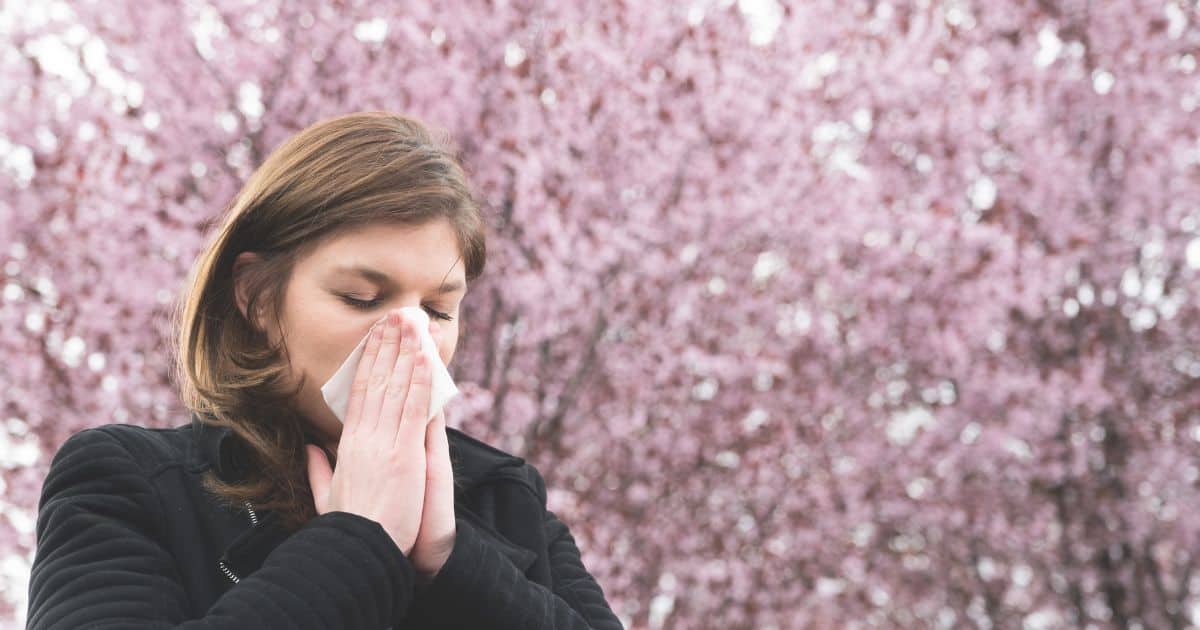
What blooms in spring and causes allergies?
Spring allergies aren’t just triggered by flowering plants — trees, grasses, and weeds play a major role too. The most common spring allergy triggers include:
- Birch – Birch is one of the leading causes of spring allergies. It blooms from March to May.
- Alder – Alder blooms in April and May. It’s another significant allergen that can trigger a runny nose, itchy and watery eyes.
- Ash – Ash blooms from April to May and can cause sneezing or a blocked nose in sensitive individuals.
- Beech – In early May, beech trees can trigger unpleasant allergic reactions.
- Hornbeam – Hornbeam is another allergenic tree species, blooming in April and May.
- Hazel – Hazel starts blooming as early as February. Its pollen is a particularly potent allergen.
- Lilac – In May, lilac can also trigger allergic reactions.
- Poplar – Poplar blooms from March through May. Inhaling its pollen can leave you with a sore throat or a cough.
- Hops – Hops start blooming in June and can cause spring allergies in some people.
- Butterbur – Butterbur typically blooms from April to May. In sensitive individuals, it can cause itchy skin and eyes in addition to a runny nose.
- Rapeseed – Rapeseed mainly blooms in May and commonly triggers a runny nose, itchy eyes, or sneezing.
- Grasses – Various grass species bloom from spring through summer. May and June tend to be the worst months, when pollen from common reed, cocksfoot, and false oat-grass fills the air.
Spring allergy symptoms: How to recognise them?
Exposure to pollen from plants that bloom in spring can affect everyone a little differently. Common symptoms of spring allergies include:
- Runny nose (hay fever),
- itchy nose, eyes, and throat,
- sneezing,
- watery eyes,
- blocked nose,
- sore throat,
- cough,
- rash and swelling.

If you start noticing any of these symptoms during spring, it’s important to take a home allergy test or see your doctor straight away, so you can start the right treatment or prevention in good time.
After a thorough medical history review, your doctor may carry out skin prick tests or blood tests. Skin allergy tests involve applying a small amount of allergen solution to the forearm. If the person is sensitive to that allergen, swelling and redness will appear at the application site.
Blood tests measure the levels of specific IgE antibodies in the blood — these are linked to allergic reactions. When IgE levels are higher than normal, it confirms an allergy — in this case, a pollen allergy.
How long do spring allergies last?
Just as the form of the allergic reaction varies from person to person, so does its duration — depending on the specific allergen and the treatment used. For some people, spring allergy symptoms last only a few weeks; others may struggle with them throughout the entire spring and partly into summer as well.
TIP: Heading out on a trip to the Wallachian region? Read about what grows in Wallachia and be prepared.
How to get rid of spring allergies?
Whether you realise it or not, stress and eating the wrong foods can make allergic reactions worse. Learn to manage your stress and try to avoid alcohol, caffeine, chocolate, sugar, and artificial sweeteners. Beyond that, here are 5 tips that really work for spring allergies.
1) Medication for spring allergies
If your doctor confirms a pollen allergy, they may recommend:
- Antihistamines – These medications help relieve itching, sneezing, and a runny nose. They work by blocking the effects of histamine — a substance released in excess when the body comes into contact with an allergen.
- Corticosteroids – Corticosteroids are anti-inflammatory drugs. Corticosteroid nasal sprays help reduce swelling and inflammation of the nasal mucosa.
- Decongestants – Decongestants reduce swelling of the nasal mucosa and relieve a blocked nose by narrowing blood vessels. However, they are not intended for long-term use.
- Mast cell stabilisers (cromolyns) – These help stabilise cell membranes and prevent the release of substances that could trigger an allergic reaction. They are less potent than corticosteroids and are available as nasal sprays suitable even for children.
2) Natural nasal and eye drops
Prescription nasal and eye drops will give you fast relief from annoying symptoms, but they’re not suitable for long-term use. After the recommended period, switch to natural-based drops. These contain ingredients that are gentle on the nasal mucosa and eyes, so with prolonged use there’s no risk of side effects or dependency. They work both as a remedy and as prevention. A big advantage is that they can also help children and pregnant women. Always check the product packaging to confirm this, though.

Read more: How do nasal drops work and which are the best?
3) Protection when outdoors
When spending time outdoors, severe allergy sufferers should protect themselves from pollen using a nano respirator or a neck gaiter with a nanofibre membrane offering 97–99.9% filtration efficiency. In terms of comfort and practicality, we’d recommend the neck gaiter — it’s washable, doesn’t pull behind your ears, and you can even use it while cycling or skiing.
4) Air purifiers
Protection matters at home, too. You won’t need a respirator or neck gaiter indoors, but you should clean the air with an air purifier. An air purifier doesn’t just tackle pollen — it also removes other allergens, bacteria, viruses, and odours. Pair it with a dehumidifier and you can prevent mould growth, which is another very common allergy trigger.
TIP: How to choose an air purifier?
5) Herbs for spring allergies
It might seem a bit strange that herbs can ease spring allergies when some herbs are themselves allergy triggers — but it’s true. Helpful medicinal herbs include:
- Nettle – Nettle contains compounds that help reduce inflammation and inhibit the development of allergic reactions.
- Rosemary – Rosemary has anti-inflammatory properties and can ease swelling and irritation linked to allergies.
- Sage – Sage has anti-inflammatory and antiseptic effects that soothe inflammation and irritation of the nasal mucosa.
- Mugwort – Mugwort contains substances that relieve a runny nose and help clear nasal congestion.
- Yarrow – Like sage, yarrow has anti-inflammatory and antiseptic properties that help reduce swelling and irritation of the nasal mucosa.
- Chamomile – Chamomile also soothes swelling and irritation associated with allergies.
TIP: Don’t forget to pack your allergy medication, especially when heading out into nature or the mountains. What else should you bring? 5 essential things to pack for a mountain hike.
Frequently asked questions
How does grass allergy manifest itself?
Grass allergy can manifest in several ways. Common symptoms include a runny nose, itchy eyes, watery eyes, sneezing, a blocked nose, throat irritation, and cough. Some people may also experience itchy skin, swelling, and a rash. The allergic reaction to grass varies depending on the individual’s sensitivity and the specific type of grass involved.
What are the skin symptoms of spring pollen allergy?
Skin symptoms of spring pollen allergy can include itchy skin, a rash, redness, and swelling. These symptoms may appear on various parts of the body — the face, hands, legs, and torso. Some individuals may also experience a runny nose, itchy eyes, and sneezing.
What are the symptoms of spring allergies?
Symptoms of spring allergies include a runny nose, itchy eyes, watery eyes, sneezing, a blocked nose, throat irritation, cough, itchy skin, a rash, and swelling. They develop upon contact with pollen from plants such as grasses, trees, or flowering plants. The severity of symptoms can vary from person to person.
Which plants cause spring allergies?
The most common causes of spring allergies are birch, alder, ash, beech, hornbeam, lilac, poplar, hops, butterbur, rapeseed, and grasses.
How can I prevent spring allergies?
To protect yourself against spring allergies, it’s a good idea to wear a respirator or a neck gaiter with a nanofibre membrane when outdoors, use natural eye and nasal drops, run an air purifier at home, and consult your doctor.
How are spring allergies treated?
If you suspect you have spring allergies, see your doctor. They may recommend antihistamines, corticosteroids, decongestants, or mast cell stabilisers (cromolyns).