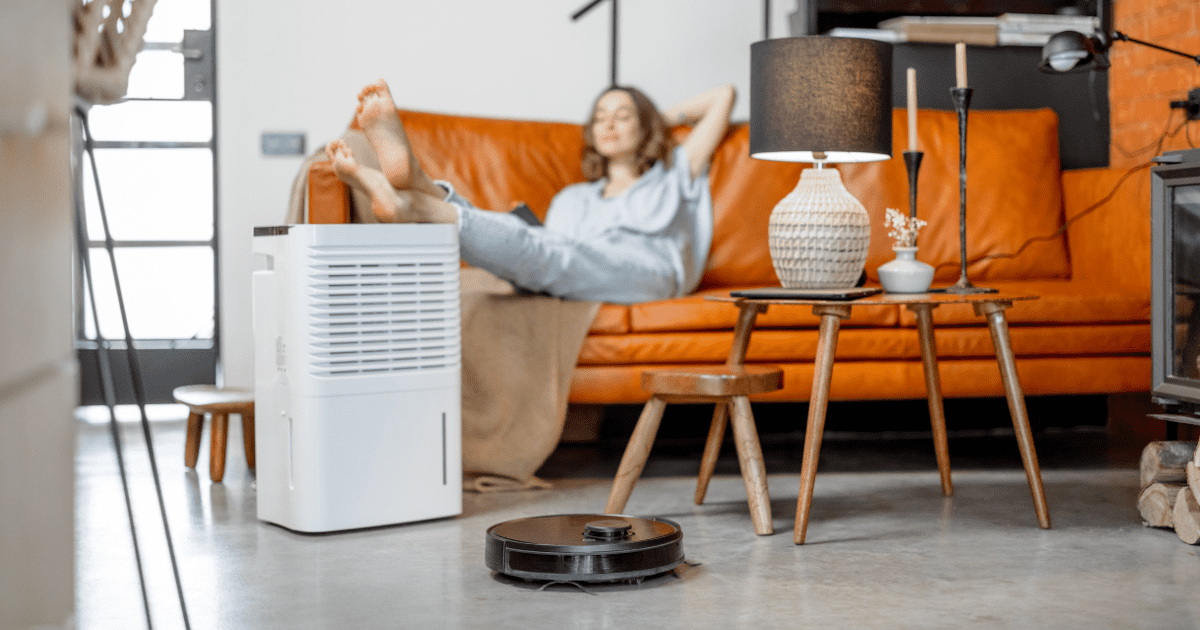
If you or someone in your household lives with allergies, keeping the indoor air free from allergens is a must. That’s where an air purifier for allergies comes in — though really, it’s a worthwhile investment for anyone who cares about what they breathe. Indoor air carries all sorts of impurities, from dust, mould spores and pollen to smog during the heating season. Let us walk you through how to choose the right air purifier for your needs.
Why buy an air purifier?
On average, you take about 13 breaths per minute. With every breath, harmful substances can enter your body and cause health problems — not just outdoors, but indoors too. You may have heard of sick building syndrome. It’s typically caused by faults in heating, ventilation or air conditioning systems.
Buildings affected by this syndrome often harbour mould spores and may accumulate dangerous gases such as carbon dioxide or carbon monoxide, or be otherwise chemically contaminated. This is exactly why an air purifier is worth having — it can filter out smog, dust, allergens and volatile organic compounds.

How does an air purifier work?
An air purifier has a built-in fan that draws air into the unit. Inside, the air passes through a filtration system and, depending on the model, may also be humidified and ionised. Once impurities have been removed, the clean air is blown back into the room. As you can see, the basic principle behind an air purifier is fairly straightforward — yet individual models differ considerably in efficiency, overall performance, noise levels and weight.
What is airflow rate in an air purifier?
When choosing a new air purifier, you’ll need to consider its airflow rate. This tells you how many cubic metres of air the purifier can clean per hour. For effective performance, the recommended airflow rate should be at least 3 to 4 times the volume of air in the room. To work this out, simply use the classic formula: height × width × length of the room in metres.
For example, a room with a floor area of 12 m2 and a ceiling height of 2.5 m would need a purifier with an airflow rate of 90 to 120 m3/h. The total room volume is 12 × 2.5 = 30 m3. Most air purifiers on the market have adjustable airflow settings, so you can adapt the output to the size of the room and the level of pollution.
Watch out for noise levels
Since your air purifier will be running indoors, you want it to be as quiet as possible. Keep in mind that you’ll probably have it on while you sleep. If the purifier exceeds 30–35 dB on its quietest setting, it’s likely too loud. The quietest purifiers tend to use an electrostatic filter.
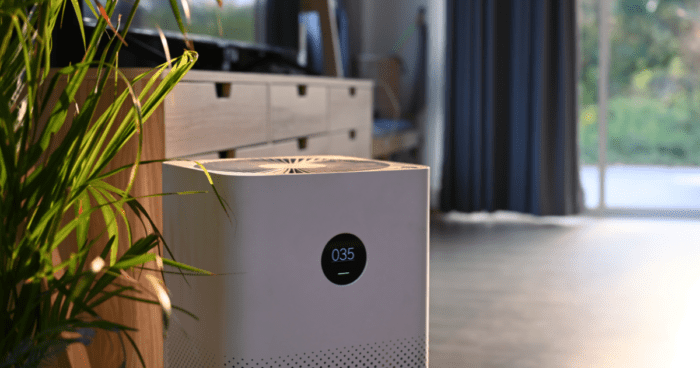
Choosing the right air filtration
Different air purifier models also differ in the type of filter they use. Because every purifier has a limited capacity, it can only filter a certain amount of air per minute. Having a large number of filters doesn’t necessarily mean better filtration.
Air purifiers currently come with several filter types:
- HEPA filter — captures up to 100% of dust particles. It can filter out solid particles, bacteria, viruses, mould and allergens. It needs to be replaced regularly.
- Electrostatic filter — operates almost silently with dust-capture efficiency of up to 99%. It cannot absorb odours. This is a washable filter with an unlimited lifespan, so there’s no need for regular replacement — just periodic cleaning.
- Water-based filter — removes toxic substances, viruses and bacteria. It uses a catalyst for a chemical reaction that produces water and carbon dioxide. It can occasionally produce higher levels of ozone. This filter doesn’t need replacing either, which keeps running costs lower.
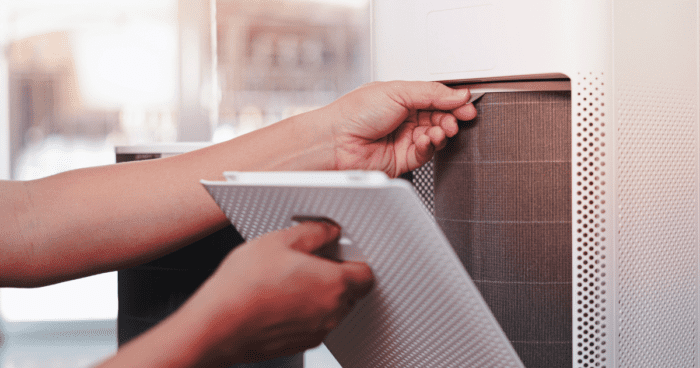
A purifier’s performance is indicated by its clean air delivery rate. To maintain consistent quality, you’ll need to replace filters regularly according to the manufacturer’s instructions. For most purifier owners, this does mean an ongoing expense to factor in.
What about a purifier with a humidifier and ioniser?
Some air purifiers come with an optional humidifier function. This is especially useful in rooms with dry air, which can be harmful to health because it dries out mucous membranes, eyes and skin. Another handy feature is an air ioniser, which produces negative ions. These help dust particles clump together, making it easier for the purifier to filter them out. The ionisation function can usually be switched off. Thanks to the higher ozone content in the air, you get a sensation similar to breathing the fresh air right after a thunderstorm.
Read our guide on how to get rid of allergens at home.
Is your indoor air too dry? Try a humidifier
Excessively low humidity increases the risk of infections spreading, worsens allergies and atopic eczema, and dries out the skin, leading to itching. Allergy and eczema sufferers in particular tend to notice almost immediate relief, because overly dry air dries out mucous membranes and skin, which can aggravate atopic eczema. We recommend combining a humidifier with an air purifier, or trying a 2-in-1 purifier and humidifier combo.
What are the running costs of an air purifier?
The initial cost is the purifier itself. Prices can range from 3,000 to 12,000 Czech crowns, depending on the model and features you choose. One model worth noting is the Airbi SPRING WiFi, which features a filtration system including a HEPA 13 filter with 99.95% efficiency, a highly effective catalytic and formaldehyde filter that eliminates odours, and a pre-filter to catch the largest particles.
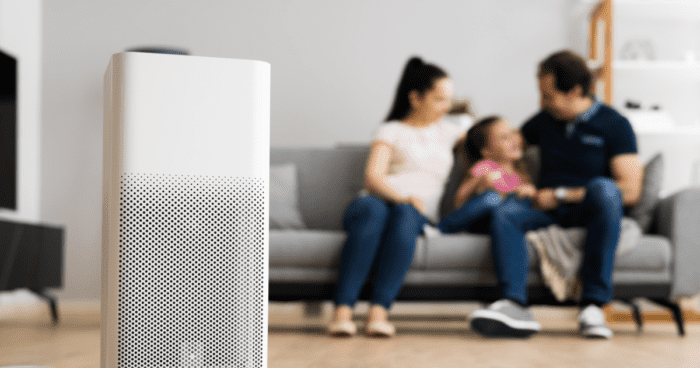
On the other hand, the WINIX ZERO air purifier holds all the key certifications for allergy-friendly products, including CE, RoHS, ECARF, WEEE and UK Allergy. It also has very low energy consumption and runs quietly. This model features PlasmaWave® technology — a positive and negative ion generator that excels at filtering pollen and dust.
Consider energy consumption
With today’s electricity prices, it’s important to pay attention to your air purifier’s energy consumption. Remember, it runs for many hours at a time. The key specification here is power input — the amount of energy supplied per unit of time, measured in watts (W). When choosing the right air purifier, you need to look at the combination of power input and filtration ability. There’s no point buying a purifier with a 10 W input if it only achieves 50% filtration efficiency. Standard air purifiers typically have a power input ranging from 5 to 130 watts.
Choosing the right air purifier for allergies no longer has to feel overwhelming. Now all that’s left is to set it up at home — and finally take a deep, healthy breath.