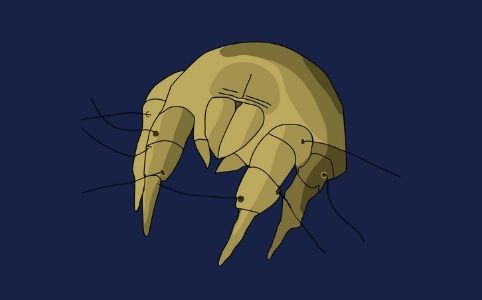
Dust mites — those tiny, persistent housemates that can make life truly miserable. Plenty has been written about them, including so-called foolproof tips on how to banish them for good. Let’s be honest: you can’t get rid of dust mites completely and permanently. What you can do is tame them and keep their numbers at a tolerable level — even for allergy sufferers. With a few basic rules and some modern technology, we’ll show you how to get rid of dust mites effectively.
What are dust mites and why should you care
Dust mites are tiny creatures that live in symbiosis with humans. Most of them are smaller than 1 mm, so you’d only spot them under a microscope. That’s probably for the best — these arachnids aren’t exactly pleasant to look at.
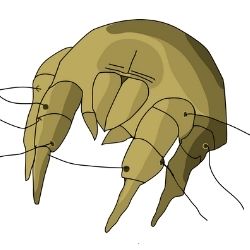
They thrive in large numbers in every household. Picture your entire home as a bustling little dust mite world. You could easily have tens of millions of them at home without ever seeing a single one. So why do they love living with us so much?
Humans provide dust mites with an abundance of food. These tiny colonies feast daily on flakes of our skin and other organic waste — dead skin actually makes up around 85% of their diet!
After their hearty meals, they leave behind droppings that act as allergens for sensitive people. Not the most pleasant thought, is it? If you’re already jumping up to scrub and disinfect everything, hold on — read on first. Fighting dust mites requires a smart and consistent approach.
Dust mites everywhere you look
Dust mites like to stay close to their food source, which is why the highest concentration is unfortunately in your bed. It offers ideal living conditions: warmth, moisture, and plenty to eat. Mattresses, pillows, and duvets are by far their favourite hangout.
But dust mites aren’t fussy — they’ll happily settle in upholstered sofas and armchairs too. You’ll also find them in wardrobes, carpets, curtains, and cuddly toys. Yes, even that nostalgic stuffed animal you’ve kept since childhood is an ideal dust mite home. Sad, isn’t it? If you have a child with allergies, opt for wooden toys instead — they don’t trap dust and are much easier to clean.
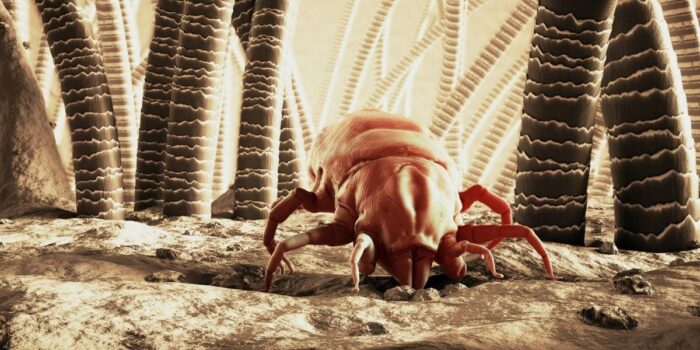
You’ll also find them in household dust. Every gram of dust contains between 2,000 and 15,000 mites, and research has shown that after two years of use, up to 10% of a typical pillow’s weight is dust. So if you think you have a dust allergy, there’s a good chance it’s actually a dust mite allergy.
A “dust allergy” in the strict sense doesn’t actually exist. You may never see the mites themselves, but if you’re allergic, their presence will give itself away through symptoms such as:
- blocked nose
- chronic rhinitis
- coughing
- increased morning fatigue and a puffy face
- recurrent sinus or nasopharyngeal infections
- recurrent middle ear infections
- atopic eczema, particularly in young children
If you want to confirm whether you’re allergic to dust mites, you can try a home allergy test, or visit an allergist.
Rules for fighting dust mites
If you’re now sufficiently motivated to tackle those uninvited housemates, follow the tips below. They should help you get the unwelcome residents of your home under control before long.
1. Keep your home — and especially your bedroom — clean
The mere presence of dust mites has nothing to do with cleanliness — as we mentioned at the start, everyone has them. However, cleanliness does affect their numbers. If dust mites are causing you problems, you should:
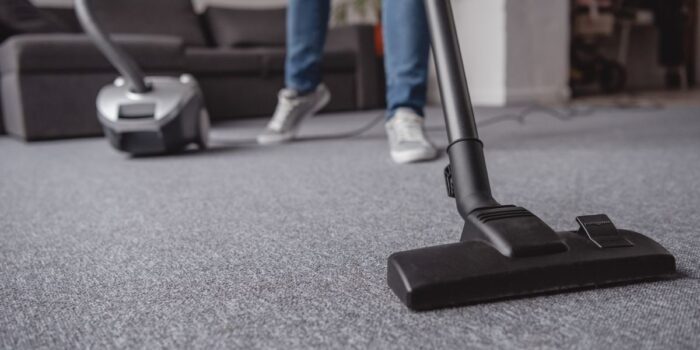
- vacuum regularly and wipe down dusty surfaces,
- use a quality air purifier suitable for allergy sufferers (Airbi, Winix) — read our guide on how to choose a quality air purifier,
- air the room for at least 15 minutes twice a day — even during winter,
- keep the bedroom cooler — ideally around 18 °C,
- reduce carpets, curtains, and other textiles, especially in the bedroom,
- lower indoor humidity below 50% (but beware of overly dry air, which can cause itching).
To maintain humidity below 50%, use a dehumidifier or a humidifier. Dust mites love warm, moist environments — like your bed. Put simply, every night we warm the bed for them and serve up a meal, since they feed on skin flakes and other skin debris.
Experts recommend keeping humidity below 50% to discourage dust mite breeding — not just in your bed, but also in carpets, sofas, and even curtains. It’s a myth that they only live in bedding; they’re found everywhere, though bedding does harbour the highest numbers. Anti-dust-mite bed linen and covers designed for allergy sufferers are an excellent choice.
2. Change and wash your bedding regularly
Do you change your bed linen once a month like most people? If you want to reduce dust mite numbers, you need to do it more often. Experts agree that once a week is ideal.
Our beds harbour entire dust mite colonies. According to available studies, up to 10% of a typical pillow’s weight consists of dust mites after just two years. A mattress can hold as many as ten million of these critters after the same period. An allergy sufferer ends up inhaling mite allergens all night and can’t get proper rest. The result? Waking up tired and irritable.
Even if you go to bed freshly showered, skin flakes still shed onto the sheets and body oils soak in. If you use a night cream, that transfers to the covers too — all of it becomes food for dust mites. The less of a feast you lay out for them, the less they’ll multiply.
You should wash your duvets and pillows several times a year at 60 °C — this temperature kills dust mites. Even so, it’s not a perfect solution. While a hot wash does kill them short-term, their dead bodies become food for the next colony already waiting in your pillows and mattress. It’s a bit of a vicious circle. Everyone has these tiny arachnids at home, and it’s virtually impossible to wipe them out. Insecticides exist, but their effect is only temporary and the negative health impacts outweigh the benefits.
It’s worth noting that the mere presence of dust mites is entirely unrelated to cleanliness and hygiene — they’re found in all homes and routinely float through the air. What you can control, however, is their numbers. How? Primarily through effective prevention.
Ironically, killing dust mites in one place — say, your duvet — creates a food source for the colony living in your mattress. The dead bodies of their fallen comrades promise yet another hearty feast. The best strategy is to follow as many preventive measures as possible so that overpopulation doesn’t happen anywhere. Barrier bedding, where dust mites can’t live in the first place, is a smarter option — it only needs washing at 40 °C, saving both the environment and your wallet.

3. Use barrier bedding and nanofibre covers
This is where modern technology comes in — specifically, Czech-made nanofibres. Barrier covers and bedding with a nanofibre membrane act as an excellent mechanical barrier against dust mites.
The membrane is essentially a very dense mesh that stops mites from getting through, preventing them from multiplying. The bed linen and covers remain fully breathable, so they’re still very comfortable. You can find special mattress protectors and bedding covers on the market that go under your normal bed linen.
Barrier covers are the most affordable solution and, with proper care, remain effective for many years. If you wash your existing duvets and pillows and then encase them in barrier covers, you’ll significantly reduce the dust mite concentration around you. A bigger investment would be anti-dust-mite duvets or pillows, as well as anti-allergy bed linen made from nano-cotton.
Anti-dust-mite duvets and pillows contain nanofabric that prevents dust mites — and therefore allergens — from accumulating and breeding inside the filling. This dramatically reduces mite numbers and stops dangerous colonies from forming that trigger allergic reactions.
Nano-cotton bed linen also blocks the passage of dust mites and allergens. An added bonus is the fabric’s firm structure with a subtle sheen, plus colour fastness that holds up even after many washes.
What to avoid
Don’t use insecticides or other chemicals against dust mites. They may kill mites in a single application, but the effect is only short-lived. What’s more, they can have negative health effects that significantly outweigh any benefits. Likewise, don’t focus on eliminating mites in just one spot — you need a targeted approach combined with consistent prevention. That’s the only way to achieve the best results.
With proper prevention you can significantly reduce dust mites in your home. Don’t forget to consult a specialist, though — they’ll have plenty of tricks up their sleeve when it comes to outsmarting these unwanted guests.
You might also like: nanoSPACE Review: Year-round anti-dust-mite complete bedding set
Can dust mite allergy cause serious complications?
Dust mite allergy usually produces symptoms that can be unpleasant but rarely lead to serious complications. In some cases, however, it can develop into asthma.
Can dust mite allergy be completely cured?
Treatment for dust mite allergy can help relieve symptoms and minimise their impact, but a complete cure isn’t possible. Prevention and proper treatment are key to managing the allergy.
What toys are suitable for children with allergies?
Most soft toys are unfortunately unsuitable. If you do want to buy stuffed toys, choose ones that can be easily machine-washed.
Try to avoid large stuffed animals in particular. Remember, even when a manufacturer claims a product is “hypoallergenic,” that only means it doesn’t cause allergies — it doesn’t mean it protects against dust mites and their allergens.
What furniture is suitable for allergy sufferers?
For severe allergy sufferers, it’s recommended to remove carpets and net curtains and choose non-fabric furniture. You can easily find suitable options at a furniture search portal. Dust mites love fabric-covered surfaces too. With every movement or breeze, mites and their allergens become airborne and irritate allergy sufferers. Cleaning can also be a challenge — the only effective options are frequent washing or using a powerful steam vacuum cleaner.