
Dust mite allergy has become an unwelcome part of your life — but what can you actually do about it? Are you really going to take allergy tablets for the rest of your life? Isn’t there some better solution?
You’ve suspected for a while now that your runny nose can’t just be from a cold. After all, it’s been going on for months — or maybe all year round? You’ve lost track of when you last felt clear. Runny nose, swollen eyes, and fatigue. The most common symptoms of allergy. During the day it’s more manageable, but mornings — mornings are the worst. You can barely drag yourself out of bed. And when you stay overnight at a cottage, you wake up completely stuffed up.
The Cause: Dust Mites
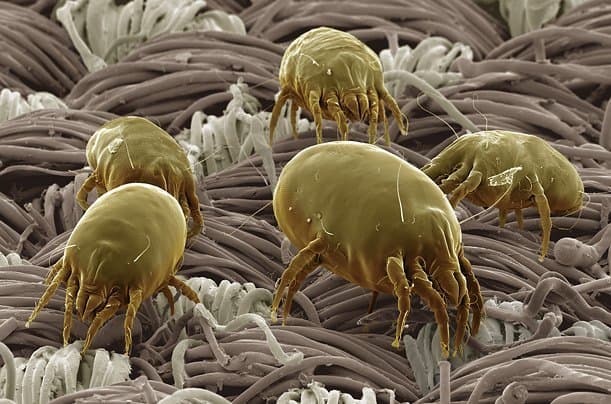
The culprits are dust mites — tiny creatures that thrive in darkness and humidity, feeding on dead skin cells. They live in mattresses, duvets, and pillows, where they form colonies. After two years, up to 10% of your pillow’s weight can be made up of dust mites. And there you were thinking you had your side of the bed all to yourself. Not quite. You’re sharing it with millions of little companions.
So let’s just wash the duvet and pillows! Sounds smart, but that only helps for about a week — and you can’t clean a mattress that easily. Unless you want to pop allergy pills every day, which come with drowsiness as a side effect.

Dust Mite Allergy Symptoms
Dust mite allergy can trigger a range of symptoms that vary from person to person. However, the most common signs of dust allergy include:
- Blocked nose,
- chronic runny nose,
- cough,
- increased morning fatigue and a puffy face,
- recurring sinus or nasopharyngeal infections,
- recurring middle ear infections,
- atopic eczema, especially in young children.
A Simple Solution Exists — But Choose Wisely
The best solution is specialist anti-mite bedding. There are chemically treated options, densely woven fabrics, and bedding with a nanofibre barrier. You probably don’t fancy chemicals, and densely woven fabrics will just make you overheat — plus, they don’t fully protect against allergens. That’s why bedding with a nanofibre barrier is the best choice. Nanofibres might sound a bit intimidating… but they’re not.
Nanofibres are made from standard polyamide (a synthetic material) — they’re simply very thin fibres. Czech researchers figured out how to produce them industrially and weave them into a fabric with openings so tiny that neither dust mites nor their allergens can pass through. The beauty of it is that air molecules still get through, so the fabric is breathable and you won’t sweat in it.
TIP: Review: nanoSPACE All-Season Anti-Mite Duvet for Allergy Sufferers
Which Products Should You Choose?
The most affordable option is anti-mite encasings. You use these to cover your mattress, duvet, and pillows. Bear in mind that you still put your regular bed linen on top. It’s the cheapest route, but also the least comfortable — you end up with extra layers that can shift around on your pillow and duvet.

The second option is a mattress encasing combined with a pillow and duvet with a built-in nanofibre barrier. This option costs more, but it’s far more comfortable.
If you already have a great duvet and pillow that you don’t want to replace, you can get bed linen and a fitted sheet made from nano-cotton. It’s the priciest option, but it means you don’t have to give up the bedding you already love.

You might also like: nanoSPACE Review: All-Season Anti-Mite Complete Bedding Set
Aren’t We Creating an Unnatural Environment?
Keep in mind that dust mites are naturally present in the air and you encounter them throughout the day. What really causes problems are their colonies — and the fact that you’re sleeping right in the middle of a mite nest every night. It’s a bit like being allergic to cats and then placing one on your face while you sleep. You’d never do that. So why would you sleep on a bed full of dust mites?
Read more articles on how to fight dust mite allergy.