
Online forums and even sales websites of anti-allergy product manufacturers often spread inaccurate or misleading information about dust mites. These dust mite myths can trigger unnecessary panic — or, just as dangerously, total indifference. Let’s take a closer look at what’s really true when it comes to dust mites.
“Before we started developing anti-allergy nanofibre membranes in the Czech Republic, we carefully mapped the European and global market for these materials — and found a surprising number of myths promoted and spread by manufacturers to boost their profits,” says Marcela Munzarová from Nanovia, the company behind the development of Czech anti-mite nanofabric. She shared with us which myths are the most common.
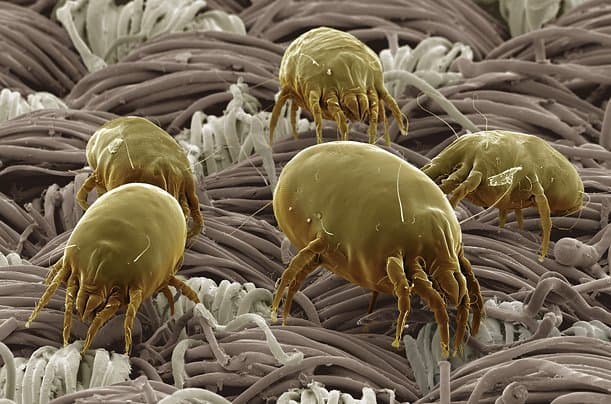
Myth #1 – Dust mites are too large to pass through fabric
In reality, dust mites can easily pass through ordinary fabric because the gaps between fibres are far too large. That’s exactly what makes products made from nanofabric so revolutionary. A dust mite simply cannot get through nanofabric.
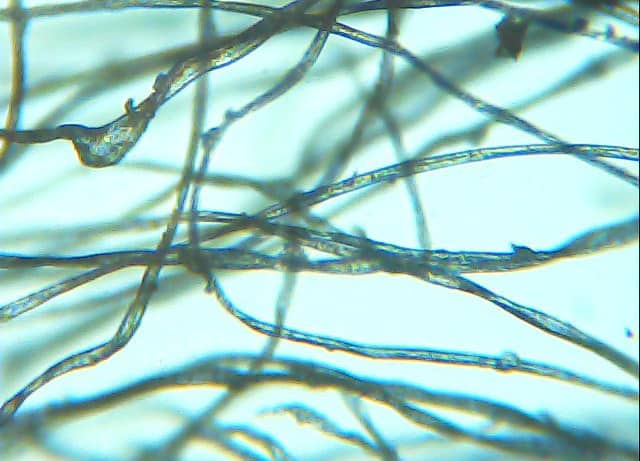
Myth #2 – Frequent washing stops dust mites getting into bedding
If you look at the structure of a material like Pristine after 10 wash cycles, you’ll quickly see this claim doesn’t hold up. Repeated washing and everyday mechanical wear loosen the fabric structure, increasing the size of the pores between the warp and weft threads.
Myth #3 – The smallest dust mite droppings are 1 μm
Dust mite droppings are not indivisible, compact particles. Once they dry out, they break down into even smaller fragments that are invisible to the naked eye. Just because you can’t see them doesn’t mean they’re not there — and the smaller they get, the more easily they pass through fabric and mattress structures.
You might also like: What flea bites look like and how to deal with fleas in your bed
Myth #4 – Synthetic bedding is anti-allergy because dust mites don’t live in it
Dust mites couldn’t care less whether the material is cotton or synthetic, or whether the bedding is filled with feathers or synthetic fibres. They thrive wherever they have food, adequate moisture, and warmth. Our bodies and our presence in bed in a normally heated home provide all three.
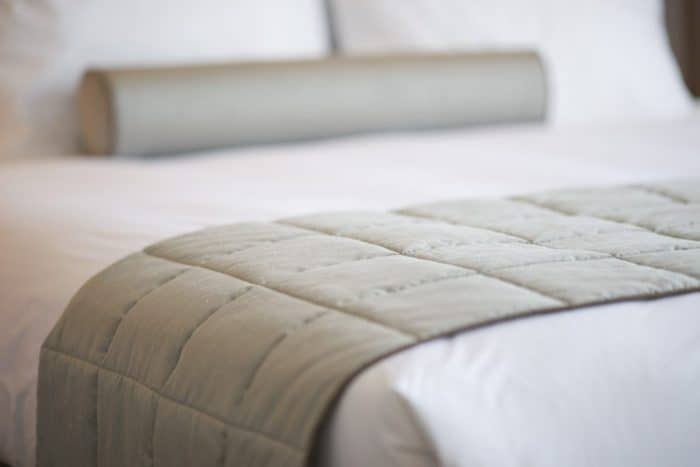
Manufacturers of synthetic-filled bedding argue that their products can be repeatedly washed at 60 °C or even boiled. This process does “cook” the mites, and some allergens may get flushed away in the waste water. But try doing that 10 times and see what happens to your duvet. What’s more, cooked, decomposing mite bodies aren’t exactly hygienic either.
Myth #5 – Antibacterial bedding kills dust mites and reduces their numbers
This claim is not backed by any study. Antibacterial treatments are proven to reduce bacteria levels, which makes sense in healthcare settings, for example. They also demonstrably boost the revenues of companies that manufacture textile finishing agents.
It’s a question for dermatologists and immunologists whether it even makes sense for healthy people to use bedding with antibacterial treatments — or whether doing so might actually be counterproductive. We could go on with more myths like these, but here are the key takeaways:
- No other available material besides nanofabric can match the level of performance (approximately 99 % allergen capture) achieved by nanofibre membranes, as confirmed by a study conducted at the Technical University of Liberec.
- Nanofibre membranes also offer comparable breathability and superior moisture permeability compared with conventional textiles. In other words, the physiological comfort for the user is outstanding.
- Nanofabric bedding — whether pillows, covers, or fitted sheets — is therefore the only 100 % protection against dust mites.
Dust mites are uninvited guests in our homes. They may be tiny creatures, but you should never underestimate the impact they can have. Fortunately, there are several effective solutions — so pick the one that works best for you and stop letting mites ruin your sleep.