Waking up with mysterious itchy bumps on your legs is nobody’s idea of a good morning. Maybe it was mosquitoes — but when it keeps happening, it’s worth considering other culprits, like fleas. I still remember the morning I realised those bites weren’t from mosquitoes at all, but from fleas our cat had brought in from outside. In this article, we’ll break down exactly what flea bites look like and how to deal with fleas in bed, so you can tackle the problem quickly and systematically.
TL;DR
- Flea bites are small red bumps (1–3 mm) with a darker puncture dot in the centre, often clustered in groups of 3–5, typically on ankles and calves.
- Dust mites don’t bite — what people call “dust mite bites” is actually an allergic rash.
- Flea season peaks from June to September, but pupae can survive indoors for months and are triggered into hatching by vibrations.
- The key to solving the problem is tackling everything at once: wash bedding at 60 °C, vacuum with a HEPA filter, treat your pet, and consider using an insecticide.
- For itching, try 0.5 % hydrocortisone cream, antihistamine gels (Fenistil), or a cold compress.
What is a flea?
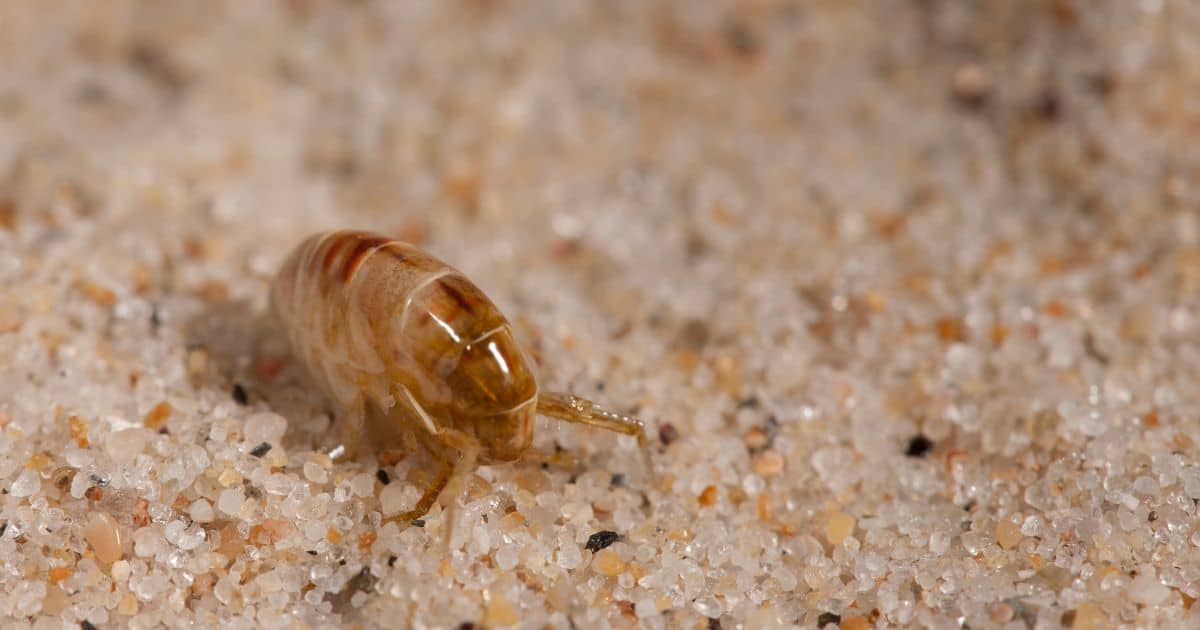
A flea is simply a tiny parasite that feeds on blood — and it doesn’t care whether that blood belongs to your dog, your cat, or you. The most common household species (the cat flea Ctenocephalides felis and the dog flea C. canis) are brown, measure 2–4 mm, and have a flat body that lets them move rapidly through a host’s fur. Fleas live in animal fur. When it comes to pets, they particularly target dogs and cats. If no such host is available, some species will jump across and bite humans too.
Fleas lay their eggs in the environment where their host spends time — burrows, pet beds, upholstery, or carpets. Flea eggs are tiny, white, oval, and very hard to spot. Think of them as roughly the size of grains of sand. After hatching, flea larvae develop in the surrounding environment, feeding on skin debris and fur.
Fleas also very commonly settle in beds. You’ll know they’re there by the unpleasant bites. It’s best to act straight away, because ignoring the problem can lead to a much bigger infestation. That’s why it’s worth checking your pets regularly and doing everything you can to prevent fleas.

TIP: What are dust mites and how to get rid of them?
How to tell if your pet has fleas
If your pet is excessively licking or scratching certain parts of its body, that could be a sign of fleas. With a cat or dog, check the base of the tail, where you may spot small black specks. You might also find them in the pet’s bed. If you can’t see anything, try combing through the fur and placing what you collect on a white surface — flea droppings will be much easier to spot against the light background.
How to spot fleas in bed
Detecting fleas in your bed is very similar to finding them in a pet’s bed. How do you spot fleas in bed? Look for black specks on your sheets or mattress. These marks are flea droppings or partially digested blood that fleas excrete after feeding. The biggest giveaway, though, is flea bites — you’ll notice them the moment you wake up.
How to identify flea bites
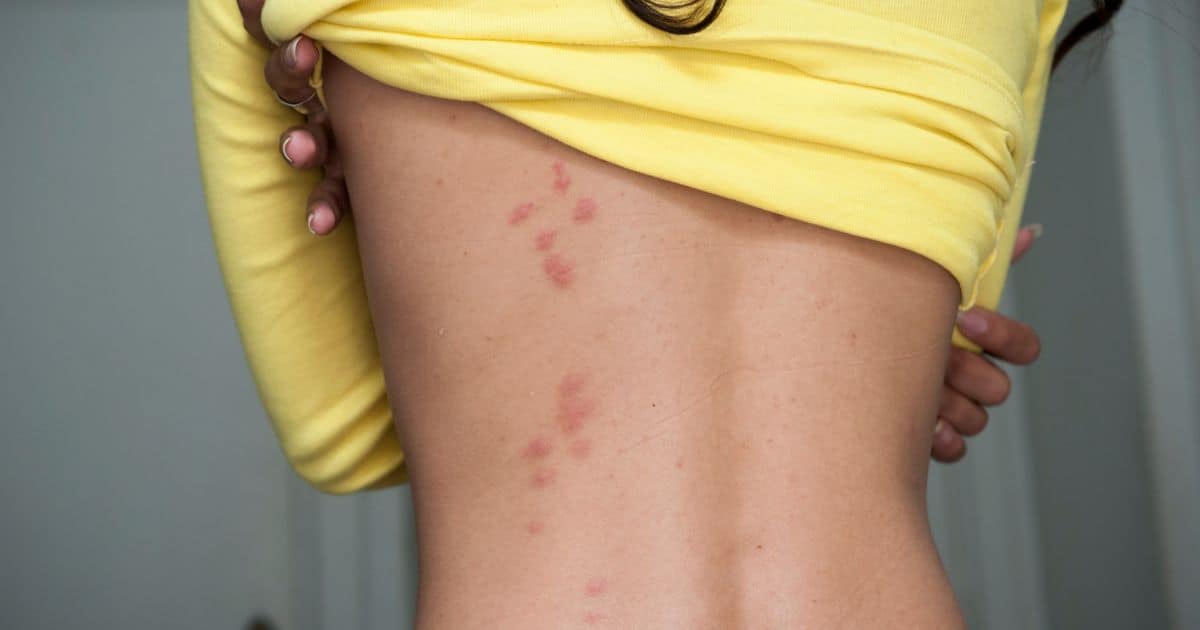
Fleas have sharp mouthparts that pierce your skin easily so they can draw a small amount of blood. After a bite, you’ll see a small wound on the skin that causes itching and irritation. Flea bites can appear anywhere on the body, but they’re most common on the legs, ankles, waistline, and hands. Here’s how to recognise them:
- Small, red, itchy bumps.
- Round, sharply defined marks.
- In sensitive individuals, bumps that may bleed.
- Bumps often appear in clusters or rows of 3–5.
- The itching can be extremely intense and scratching can lead to further skin irritation.
- Some people may have an allergic reaction to flea saliva, which can cause not only severe itching but also swelling or hives.
I don’t want to scare you — the risk of contracting a serious disease from fleas in central Europe is genuinely minimal. Clinically, the most relevant issue today is flea saliva allergy. Still, it’s good to know what fleas can theoretically transmit:
Flea allergy dermatitis (FAD)
This is the most common problem associated with fleas in bed. It’s a strong allergic reaction to proteins in flea saliva, causing intense itching and redness that can last for weeks. This topic is closely linked to pet allergies, since pets are the main hosts fleas cling to. In sensitive individuals, the reaction can develop into hives.
Bartonellosis (cat scratch disease)
Caused by the bacterium Bartonella henselae, which fleas transmit between cats. Humans typically don’t get infected directly from a flea, but rather through a scratch from an infected cat. Cases are sporadic.
Historical and tropical diseases
For completeness: the rat flea could theoretically transmit murine typhus (Rickettsia typhi) and even plague (Yersinia pestis). In modern Europe, you’re extremely unlikely to encounter these diseases. No cases have been reported in the Czech Republic in over 100 years.
Fleas vs. bed bugs vs. dust mites — how to tell bites apart
Itchy bumps in bed don’t automatically mean fleas. Let’s quickly compare the three most common culprits so you know what you’re dealing with. I’ve put together a handy comparison table.
| Criterion | Fleas | Bed bugs | Dust mites |
|---|---|---|---|
| Location on the body | Typically ankles, calves, shins, waistline — areas they can easily reach by jumping from the floor or the edge of the bed. | Back, shoulders, neck, arms — body parts exposed during sleep. Often in rows (“breakfast, lunch, dinner”). | Not bites at all. A rash appears broadly wherever skin contacts bedding (face, neck, hands). |
| Appearance | Small red bumps (1–3 mm) with a darker puncture dot in the centre. Appear in clusters of 3–5. | Larger, reddened, swollen bumps (5–10 mm), often arranged in a straight line or cluster. | No bite marks. This is an allergic rash — redness, eczema, small bumps without a central puncture point. |
| Reaction time | Itching is almost immediate after the bite. The reaction is fast. | The reaction may not appear until the morning or even days later (up to 14 days). | Not a one-off reaction. Chronic or episodic rash, runny nose, or cough, typically worst upon waking. |
The important thing to remember is that dust mites don’t bite. What people often call “dust mite bites” is actually an allergic reaction to their droppings. If you’d like to learn more, have a look at my article on how to spot dust mites in bed.
How to treat flea bites
Once you’ve confirmed you’re dealing with flea bites, it’s time to relieve the itching. Here’s what you can use:
Flea bites can be seriously unpleasant, especially when there are lots of them. Here are 4 simple steps to help you find relief.
1. Cold compresses
Applying a cold compress to the affected area helps reduce swelling and soothe itching. This works best within the first few hours after being bitten.
2. Over-the-counter creams and gels
Your pharmacy will stock hydrocortisone creams (0.5 %) or antihistamine gels (e.g. Fenistil, Tinmestin) that suppress itching and calm irritated skin. For stronger reactions, an oral antihistamine (Zyrtec, Claritine) can help.
3. Anti-itch treatments
Specialised products designed to treat insect bites are available over the counter at pharmacies. They typically contain a combination of an anaesthetic and an antihistamine.
4. Protective clothing
Try to avoid scratching the affected areas — broken skin from scratching can easily become infected. Breathable antibacterial clothing won’t irritate your sensitive skin.
Symptoms should clear up within a few days. If they don’t — or if they get worse — see a doctor.
You might also be interested in: Dust mite “bites” and what to do about them
Seasonality — why fleas are worst in summer and autumn
You’ve probably noticed that flea problems peak at certain times of year. That’s no coincidence. Their life cycle is strongly influenced by temperature and humidity. Fleas love warmth and moisture — ideal conditions sit between 21–32 °C with humidity above 70 %. That’s why flea season is strongest from June to September.
The flea life cycle has four stages: egg → larva → pupa → adult. While adults make up only about 5 % of the total flea population in a home, the remaining 95 % are eggs, larvae, and pupae hidden in carpets, cracks, and pet beds. The pupal stage is the most resilient. A pupa can survive in your home for months, waiting for the right signal to hatch. That signal? Vibrations, warmth, and carbon dioxide — in other words, the presence of a host. This is why it often happens that you return from holiday to a seemingly empty flat and within hours it’s swarming with fleas. Your presence simply woke them up.
Due to milder winters — like those seen in 2024 and 2025 — flea season is also getting longer, which means year-round prevention for pets is becoming increasingly important.
How to get rid of fleas in bed
So you’ve confirmed there really are fleas in your bed? Don’t panic. It’s fixable — but it takes a systematic approach. Here are 5 steps to get rid of fleas in bed and throughout your home.
Seasonal cleaning — when is the best time to strike
Fighting fleas is a marathon, not a sprint. It helps to align your cleaning schedule with their life cycle. In spring and autumn, plan a deep clean focusing on carpets, upholstery, and hard-to-reach spots. During summer, harness the power of the sun — put mattresses and pillows in direct sunlight, as UV rays have a disinfecting effect. In winter, use the cold to your advantage: pop soft toys or small cushions in the freezer at -18 °C for 24 hours, which reliably kills all life stages.
1) Clean and change your bedding
Start with the bed itself. Strip all duvet covers, sheets, pillowcases, and blankets. Wash everything at a minimum of 60 °C to reliably kill fleas and their eggs. Don’t forget to thoroughly vacuum the mattress, bed frame slats, and the entire area under the bed. Pay close attention to seams and folds in the mattress.
💡 Lucie’s Tip: Turn your bed into a fortress
After a flea attack, eggs may remain inside the mattress. A great long-term solution is a nanofibre anti-dust-mite mattress encasing. Its membrane, with pores just 80 nm wide, blocks not only dust mites but also fleas and their eggs. You simply wash the outer bedding while the inside of the mattress stays clean. Check out nanoSPACE encasings →
Leave putting fresh sheets on until the very end. You need to clean not just the bed, but the entire bedroom first. Consider investing in anti-dust-mite bedding that acts as an impenetrable barrier. A dust mite is many times smaller than a flea, so if bedding with a nanofibre membrane can stop dust mites, it’ll handle fleas even more easily.
2) Clean the whole home
As we’ve already mentioned, vacuuming isn’t just for the bed — it applies to the whole bedroom and ideally your entire flat or house. Use a vacuum with a quality HEPA filter (ideally class H13 or H14) and vacuum slowly, at roughly 0.5 m/s, so the filter has time to capture as many allergens and eggs as possible. Target every tiny gap — skirting boards, cracks in the floor, and hidden corners. Pay special attention to carpets, sofas, fabric stools, seat cushions, and throws. Once you’ve finished vacuuming, I recommend mopping the floor with a damp microfibre mop and running an air purifier.
If you have a pet, it needs to be treated at the same time as you tackle the home. Bathe it with a flea shampoo and arrange long-term protection with your vet. Reliable options include Bravecto tablets (for dogs and cats, effective for 12 weeks), Frontline Combo or Advantage spot-on treatments (applied monthly), and Seresto collars (lasting up to 8 months). An important detail: treatments must be repeated exactly as directed — the flea development cycle takes 14–21 days, so a new generation will emerge if you leave a gap. Don’t forget to wash your pet’s bed at 60 °C, and consider getting an anti-dust-mite pet bed.
TIP: Thorough home cleaning — how to get rid of allergens
3) Using insecticides
If the problem is really severe, consider insecticides designed to kill fleas (products containing permethrin or deltamethrin). Follow the instructions on the label carefully — ventilate the room thoroughly during application and for several hours afterwards. Important warning: permethrin is highly toxic to cats. If you have a cat, always consult your vet first. For households with small children (under 3), it’s better to call a professional pest control service — they’ll use products suitable for sensitive environments.
4) Professional help
If you can’t solve the problem on your own, call in a professional pest controller. Professional treatment will eliminate fleas at every life stage and prevent them from coming back. That way you can rest easy.
5) Home remedies
Home remedies aren’t as effective as professional treatment, but they work well as a supplement. Be realistic about them — they’re useful for prevention and as a complement, but they can’t replace a thorough clean.
Vinegar
A 1:1 solution of vinegar and water sprayed onto surfaces kills fleas on direct contact. However, it only works at the moment of application — once it dries, fleas can return. Good as a supplement, not as your main weapon.
Herbal preparations
Scents like lavender, citronella, or eucalyptus repel fleas. Sachets of dried herbs placed in the bed or wardrobe work more as prevention than a cure for an active infestation.
Salt
Fine salt scattered on the carpet and vacuumed up after a few hours helps dehydrate flea larvae and eggs. Repeat once a week for a month.
Diatomaceous earth
I recommend this over boric acid, which is often suggested online — boric acid is toxic to children and pets. Food-grade diatomaceous earth has a similar effect — it kills fleas mechanically and is safe to use.
Conclusion
Fleas in bed are an unpleasant and stressful problem, but they can be solved if you approach things systematically. First, confirm that it really is fleas (and not bed bugs or an allergic reaction to dust mites) — the comparison table above will help. Then hit all three fronts at once: your bed (wash at 60 °C, vacuum the mattress, consider nanofibre encasings), the rest of the home (HEPA vacuum, keep humidity below 50 %), and most importantly your pet (anti-parasitic treatment from the vet).
What can you do today? Wash your bedding at 60 °C, prop the mattress up in the sun on the balcony, and book a vet appointment to treat your cat or dog. Those three steps will resolve about 80 % of the problem within the week. You can fine-tune the rest based on how the first round goes.
Frequently asked questions
How do you treat a flea bite?
Flea bites respond well to cold compresses, anti-itch creams, soothing sprays, anti-pruritic treatments, and antibacterial clothing to prevent scratching.
How do you recognise a flea bite?
A flea bite typically looks like a small, red, itchy bump with a red dot in the centre. The bumps appear in clusters or rows, most commonly on the legs and ankles.
How do you get rid of fleas in bed?
Thoroughly clean the entire bedroom. Wash all bedding at 60 °C and vacuum the mattress and bed frame. At the same time, treat your pets with anti-parasitic products. For severe infestations, use insecticide sprays or contact a professional pest controller.
What kills fleas?
Fleas are reliably killed by high temperatures (washing at 60 °C, steam cleaning), freezing (-18 °C), insecticides, and anti-parasitic pet treatments. The key is to target all life stages.
What do fleas hate?
Fleas dislike strong scents and aromatic substances, including lavender, citronella, and eucalyptus. These work more as repellents than as actual flea killers.
How do you get rid of fleas quickly?
For fast results, use specialised flea-killing products — most commonly insecticide sprays or flea bombs. It’s also essential to carry out a thorough clean of the entire affected area. If needed, call in a professional.
How long does it take to get rid of fleas?
The time it takes to fully eliminate fleas depends on the severity of the infestation and how thorough your cleaning is. Due to the flea life cycle, it can take several weeks to months before all pupae have hatched and been dealt with.
What is biting me in bed?
Several types of insects could be biting you in bed. The most common culprits are fleas (small bites on the legs), bed bugs (larger bites in rows on the torso and arms), or mosquitoes.
What happens when a flea bites you?
When a flea bites you, an itchy red bump appears at the site. Sensitive individuals may develop a stronger allergic reaction in the form of hives (FAD). It’s important not to scratch the area and to address the root cause — getting rid of the fleas.
Can fleas survive in bed without a pet?
Yes. Pupae can lie dormant in carpets and cracks for several months. Adult fleas survive 1–2 weeks without a host under normal household conditions (up to 100 days in laboratory settings). They’re triggered by vibrations and warmth, which is why returning from holiday often leads to a mass hatching.
How fast do fleas multiply in bed?
Very fast. A single female can lay 40 to 50 eggs per day. Under optimal conditions (warmth and humidity), the entire development cycle from egg to adult takes just 2 to 3 weeks. The problem can quickly spiral out of control.
What should I put on a flea bite?
Over-the-counter hydrocortisone cream (0.5 %), antihistamine gels (e.g. Fenistil, Psilo-Balsam), or a cold compress can relieve the itching. For a stronger reaction, an oral antihistamine (e.g. Zodac, Zyrtec) is advisable.
How long does a flea bite last?
For a typical reaction, the itching lasts 2 to 4 days and the bump heals within a week. In people allergic to flea saliva (FAD), the reaction can be much more intense, with itching and redness persisting for 2 to 3 weeks.