
Brushing your teeth twice a day is second nature for most of us, yet doctors recommend paying equal attention to another part of your body — your nose. A regular nasal rinse can do wonders for your health. After all, your nose plays a vital role: it warms, moistens, and filters the air you breathe, trapping harmful particles before they reach your lungs.
And just like any filter, the one inside your nose needs cleaning — especially when you’re fighting a cold or dealing with allergies. Research shows that nasal rinsing is a highly effective way to prevent viral infections and a great tool for helping your body cope with allergic reactions.

Flu prevention, fast cold relief, and allergy support
Saline nasal rinses — sometimes called nasal lavage — have been used for years to improve airway patency and help prevent colds and flu. In Eastern cultures, nasal hygiene has long been treated as seriously as brushing your teeth. In Western Europe and North America, however, it has only gained popularity in recent years. Today, nasal rinsing is recognised as an important part of preventing both viral and bacterial infections.
Nasal rinses help relieve uncomfortable sinus infections and are recommended for chronic rhinitis as well as recovery after nose, sinus, and nasopharynx surgery. They’re also an effective way to get over a cold faster and to manage long-lasting rhinitis. For allergy sufferers, rinsing the nose flushes out allergens, which can significantly ease symptoms.

You might also like: 6 tips for getting rid of a runny nose
What can a nasal rinse help with?
- Removes dried mucus, dust, and other debris — including allergens and infectious particles — improving airway patency.
- Moisturises dry mucous membranes, making breathing more comfortable.
- Stimulates the cilia, whose function is crucial for preventing infections from spreading into the sinuses.
- Helps relieve so-called “post-nasal drip.”
- Eases nasal symptoms caused by allergies and hay fever.
- Relieves nasal symptoms during colds and flu.
- Helps with sinus pressure and the feeling of a blocked nose.
- Supports prevention of allergies triggered by workplace and household dust, smoke, pet dander, grass, pollen, and cigarette smoke.
- Helps prevent nasal drip.
- Reduces nasal symptoms in sleep apnoea patients treated with nasal CPAP (continuous positive airway pressure).
- Eases problems caused by thick nasal mucus in cystic fibrosis and primary ciliary dyskinesia.
What to rinse with?
You can use plain water for a nasal rinse, but saline solutions are far more effective. These are available to order or buy at a pharmacy. Most are based on treated sea water or mineral water from inland wells. Alongside rinse solutions, you can also find saline drops and nasal sprays.
It is possible to make your own solution at home from table salt and drinking water, but a ready-made saline solution is safer because it guarantees the correct concentration. An incorrect concentration can irritate or even damage the nasal lining.
We therefore recommend choosing a professional nasal rinse product with balanced pH and no preservatives. One of the most popular options is the isotonic Sinus Rinse by NeilMed. Its easy-to-squeeze bottle ensures a simple yet thorough cleansing of the nasal passages, removing allergens, bacteria, and viruses.
How to do a nasal rinse
If you’re making your own rinse at home, use 300 ml of lukewarm, previously boiled water and dissolve 2.7 g of Himalayan salt in it. Once the salt has fully dissolved, use the solution just as you would a shop-bought one.
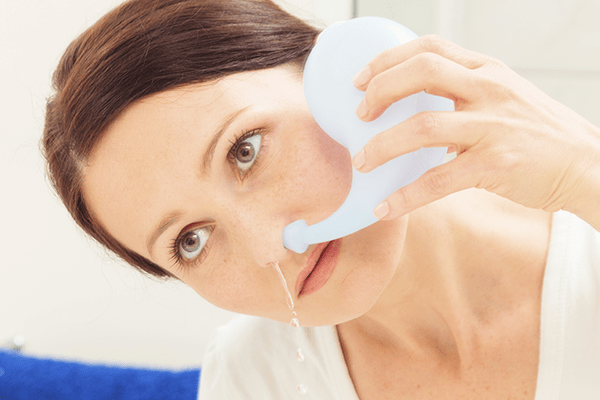
Press a neti pot against one nostril, lean forward, and tilt your head slightly to one side. The rinse should flow by gravity rather than under pressure — when your head is positioned correctly, this minimises the risk of water entering the middle ear. Introduce the saline solution into the upper nostril so that it flows out naturally through the lower one. Breathe through your mouth throughout the process.
Blow out any remaining solution. If necessary, blow your nose with your head tilted forward towards the ground to release all the used solution. Then repeat the process on the other nostril.
TIP: How does a neti pot work and how often should you use one?
How often should you rinse your nose?
You can rinse your nose every day as part of your regular hygiene routine. If you’re experiencing strong allergic reactions or have a cold, you can rinse several times a day.
A nasal rinse is a simple, safe, and effective way to keep your nasal passages healthy. When done correctly and regularly, it can bring a host of health benefits and improve your overall well-being.
Read more: How do nasal drops work and which are the best?
Frequently asked questions
What is a nasal rinse?
A nasal rinse is a procedure in which a liquid (most commonly saline solution) is introduced into the nose to flush out the nasal cavities and remove debris, allergens, bacteria, and viruses.
When should you rinse your nose?
Nasal rinsing is recommended when you have a runny nose, a cold, allergies, a dry nose, or after exposure to allergens, dust, or polluted air. It’s also helpful for people who suffer from chronic nasal problems or frequent infections.
Is nasal rinsing safe for children?
Yes, nasal rinsing is generally safe for children. However, it’s important to adapt the technique to the child’s age and use a product designed specifically for children. Always consult a healthcare professional or doctor before rinsing a child’s nose.
How long before a nasal rinse takes effect?
The effects can vary depending on the individual and the specific situation. Most people, however, experience immediate relief after rinsing their nose.
Can a nasal rinse relieve migraines?
A nasal rinse is not a primary treatment for migraines. Migraines are a complex health condition that requires a comprehensive approach to treatment. That said, some people do report mild relief from migraines after performing a nasal rinse.
What are the possible side effects of nasal rinsing?
Side effects from nasal rinsing are generally rare. If the technique isn’t performed correctly, some people may experience mild nasal irritation, a burning sensation, or a temporary change in their sense of smell. If any adverse effects occur, it’s a good idea to see a doctor.