Dust mites are microscopic relatives of spiders that live in mattresses, bedding, sofas, armchairs, carpets, and curtains — and they’re a leading cause of dust allergy. If you’re wondering how to get rid of dust mites, you’re not alone.
No matter how clean your home is, dust mites can never be completely eliminated. However, their numbers can be significantly reduced in several ways. In this article, you’ll learn exactly how to tackle them.
Dust Mites
As we’ve already mentioned, dust mites are tiny creatures only visible under a microscope. They measure between 0.1 and 0.5 millimetres and are commonly found in dust, wool, feathers, and other materials. Dust mites feed on dead human skin cells and are particularly fond of warm, humid environments.
If you’d like more detailed information about dust mite allergy, have a look at this article.
7 Things to Address with a Dust Mite Allergy
Let’s be honest — dust allergy can make life pretty miserable for adults and children alike. Below, we’ve put together 7 common concerns you’re probably dealing with. You might feel stuck, but we’ve got answers — read on and see for yourself.
1) How to Prevent Dust Mites from Multiplying?
Use a dehumidifier or humidifier to keep indoor humidity below 50%. Dust mites thrive in warm, moist environments — your bed being a prime example. Put simply, every night we warm the bed for them and provide a feast of dead skin cells and dandruff.
Keeping humidity below 50% is recommended to discourage mite reproduction — not just in your bed, but also in carpets, sofas, and even curtains. It’s a myth that they only live in bedding; unfortunately, though, your bed does harbour the largest numbers. Anti-dust-mite bedding and covers designed for allergy sufferers are an excellent choice.

2) How to Remove Dust Mites from Your Bed?
Entire colonies of dust mites live in our beds. According to available studies, up to 10% of an average pillow’s weight can consist of dust mites after just two years. A mattress can harbour as many as ten million of these creatures after two years. An allergy sufferer ends up inhaling mite allergens all night long, unable to get proper rest. The result? Waking up tired and irritable.
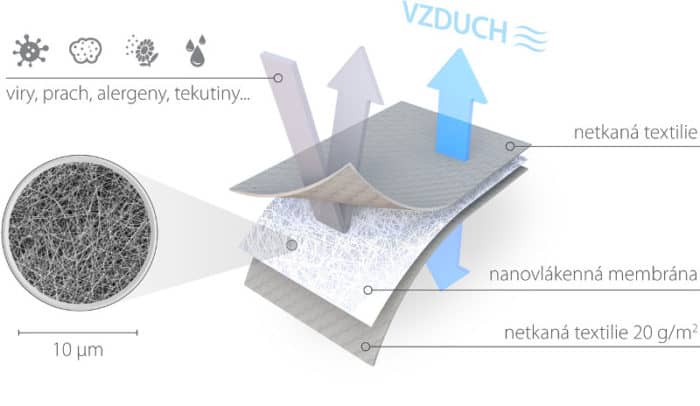
It’s recommended to use anti-dust-mite bedding with nanofibre, which is the only type capable of blocking dust mite excrement (allergens) from passing through. These products work as a barrier — the pores in the nanofabric are so small that mites cannot get through, and they also prevent allergens from passing.
In such bedding, dust mites cannot accumulate or breed, providing allergy sufferers with immediate relief. Anti-dust-mite bedding is effectively the only way to protect yourself. Don’t forget to protect your mattress with a dedicated mattress cover. You can also opt for duvet covers and sheets made from nanocotton, which offer the same protection as anti-dust-mite covers and nanofabric bedding.

You might also be interested in: nanoSPACE Review: Year-Round Anti-Dust-Mite Complete Bedding Set
3) How Often Should You Wash Bedding?
Wash your bedding at least once every two weeks. If you have more severe allergies, washing once a week is recommended — at 60°C. Lower temperatures won’t kill dust mites.
4) What Toys Are Safe for Allergic Children?
When buying toys for children with allergies, make sure they only sleep with ones that are allergy-friendly. Most soft toys are unfortunately unsuitable. If you do want stuffed toys, choose ones that can be easily machine-washed.
Try to avoid large plush animals in particular. And remember — even when a manufacturer labels a product as hypoallergenic, that simply means the toy itself doesn’t cause allergies. It doesn’t mean it protects against dust mites and their allergens.
5) What Furniture Is Best for Allergy Sufferers?
Dust mites don’t only live in beds, although that’s where the largest and most problematic populations are found. If you have severe allergies, it’s advisable to remove carpets and curtains and choose non-fabric furniture. Mites thrive in these places too. Every movement or breeze sends dust mites and their allergens into the air, irritating allergy sufferers. Cleaning upholstered furniture is also tricky — the only effective options are frequent washing or using a powerful steam cleaner.
6) What Vacuum Cleaner to Choose for Allergy Sufferers?
Use a vacuum cleaner with a dual filter or HEPA filter, or a powerful professional steam cleaner capable of killing dust mites. Cleaning is recommended at least once a week, but it depends on where you live and how much dust enters your home. In large cities, the situation can be noticeably worse than in the countryside.
7) How Should Allergy Sufferers Handle Dust?
When vacuuming or dealing with large amounts of dust, people with severe allergies and asthma should wear nanofabric protective gear to avoid inhaling allergens. After vacuuming, it’s a good idea to leave the room for about 20 minutes.
With proper prevention, you can significantly reduce the presence of dust mites in your home. Don’t forget to consult a specialist, though — they’ll have plenty of additional tricks up their sleeve for keeping mites at bay.
Read more about solutions that can ease the symptoms of dust allergy.
Frequently Asked Questions
How often should I vacuum and dust to minimise dust mites?
Ideally, you should vacuum and dust at least twice a week. Thorough cleaning helps limit dust mite reproduction and remove allergens.
Can dust mite allergy cause serious complications?
Dust mite allergy typically causes symptoms that can be unpleasant but rarely lead to serious complications. In some cases, however, it can develop into asthma.
Is it possible to completely cure dust mite allergy?
Treatment for dust mite allergy can help relieve symptoms and minimise their impact, but a complete cure isn’t possible. Prevention and proper management are key to keeping the allergy under control.