
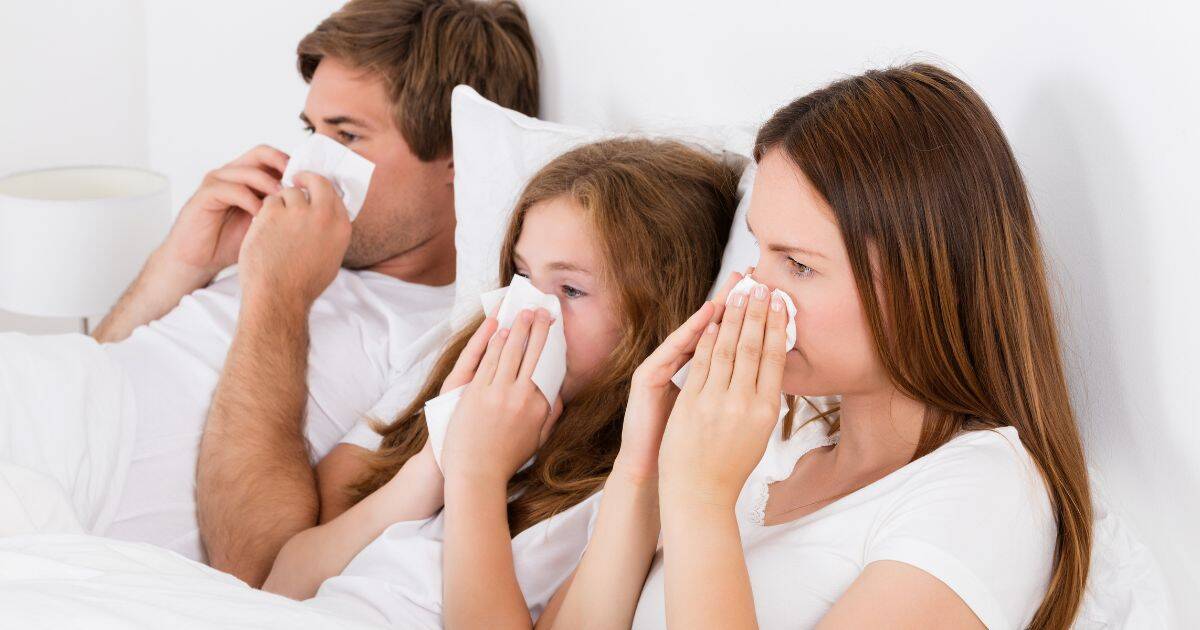
Do you wake up every morning with a stuffy nose, watery eyes, and feeling completely drained? You’re likely one of the millions of people who suffer from a dust mite allergy. Allergic reactions aren’t just unpleasant — they wreck your sleep quality and, with it, your overall quality of life. In this article, we’ll help you find the best pillow for allergy sufferers and explain what doesn’t work, so you don’t throw your money away on products that won’t help.
TL;DR
- The most effective pillow for allergy sufferers contains a nanofibre membrane that physically blocks dust mites.
- “Anti-allergy” hollow-fibre pillows don’t work. In reality, they provide dust mites with an ideal environment to thrive.
- Frequent washing won’t solve your allergy problem. In fact, it can lead to mould growth if the pillow doesn’t dry thoroughly.
- Pillows with nanofibre technology are breathable, comfortable, and require no chemical treatment.
- For comprehensive protection, combine an anti-dust-mite pillow with a nanofibre duvet and a mattress encasing.
Why ordinary pillows cause problems for allergy sufferers
Over time, a standard pillow becomes home to millions of microscopic dust mites. These tiny creatures feed on our dead skin cells, and their droppings contain potent allergens that trigger unpleasant reactions in sensitive individuals.
After several years of use, dust mites, their droppings, and other debris can make up as much as a tenth of your pillow’s weight. No wonder you wake up every morning with allergy symptoms — you’ve been breathing in concentrated allergens all night long.
What makes matters worse is that dust mites reproduce exponentially. A single female dust mite can lay up to 80 eggs in her lifetime, which means the population inside your pillow grows at a staggering rate.
You might also like: 10 tips for dealing with a dust allergy
Common mistakes when choosing and using a pillow for allergy sufferers
When searching for allergy relief, you’ll often come across solutions that unfortunately don’t deliver the results you’d expect. Let’s look at the most common mistakes — it’ll save you both money and disappointment.
Hollow-fibre pillows: the big myth
Hollow fibre is one of the most commonly marketed materials for allergy sufferers, but the reality is quite different. Manufacturers often label these pillows as “hypoallergenic” or “anti-allergy,” which is misleading.
The problem lies in the very structure of hollow fibre. The ball-shaped fibres create numerous tiny spaces between them, which give dust mites an ideal hiding spot and breeding ground. Studies have actually shown that hollow-fibre pillows can harbour more dust mites than traditional feather fillings.
Hollow fibre may be suitable for people who are allergic to feathers, but it’s certainly not the answer for those allergic to dust mites.
Frequent washing at high temperatures
Another commonly repeated piece of advice is to wash your pillows regularly at 60 °C or higher. While high temperatures do kill dust mites, this approach overlooks two critical problems:
- Dust mites also feed on the dead bodies of other mites, so the population quickly bounces back.
- On top of that, an insufficiently dried pillow can encourage mould growth, which is yet another potent allergen.
Recent research revealed some alarming findings: 50 % of regularly washed pillows contained dangerous moulds such as Aspergillus and Candida. These microorganisms can trigger even more severe allergic reactions and health complications than dust mites.
Chemical treatments against dust mites = a short-term fix
Some pillows are treated with chemicals designed to repel or kill dust mites. These treatments come with several major drawbacks:
- Their effectiveness gradually diminishes, especially after each wash.
- Some people may react allergically to the chemicals themselves.
- They aren’t environmentally friendly and may contain harmful substances.
- After a few months, they stop working altogether.
What actually works: nanofibre technology
After years of research, the most effective protection against dust mites has turned out to be a physical barrier in the form of a nanofibre membrane. This technology represents a genuine breakthrough in the fight against allergies.
How a nanofibre membrane protects you from allergens
A nanofibre membrane is made up of extremely thin fibres — a thousand times thinner than a human hair. These fibres form a dense mesh with microscopic pores that have remarkable properties:
- The pores are small enough to block dust mites and their allergens.
- At the same time, they’re large enough to allow airflow, so the pillow stays breathable.
- They work on a purely mechanical principle, meaning no chemical treatment is needed.
Unlike chemically treated materials, a nanofibre membrane retains its effectiveness even after repeated washing.
Benefits of a nanofibre pillow for allergy sufferers
Modern pillows with nanofibre technology offer several key advantages:
- Maximum protection – The mechanical barrier blocks up to 99.9 % of allergens, including dust mites, their droppings, and other microorganisms.
- Excellent breathability – Unlike conventional covers, nanofibre allows natural airflow, so you won’t overheat or sweat.
- Long-lasting effectiveness – The protection lasts for the entire lifespan of the pillow, typically 8–10 years.
- Comfort – Modern nanofibre pillows are just as comfortable as ordinary pillows — they simply protect you better.
How to choose the best pillow for allergy sufferers
When choosing the right pillow for allergy sufferers, there are several important factors to consider.
Pillow construction
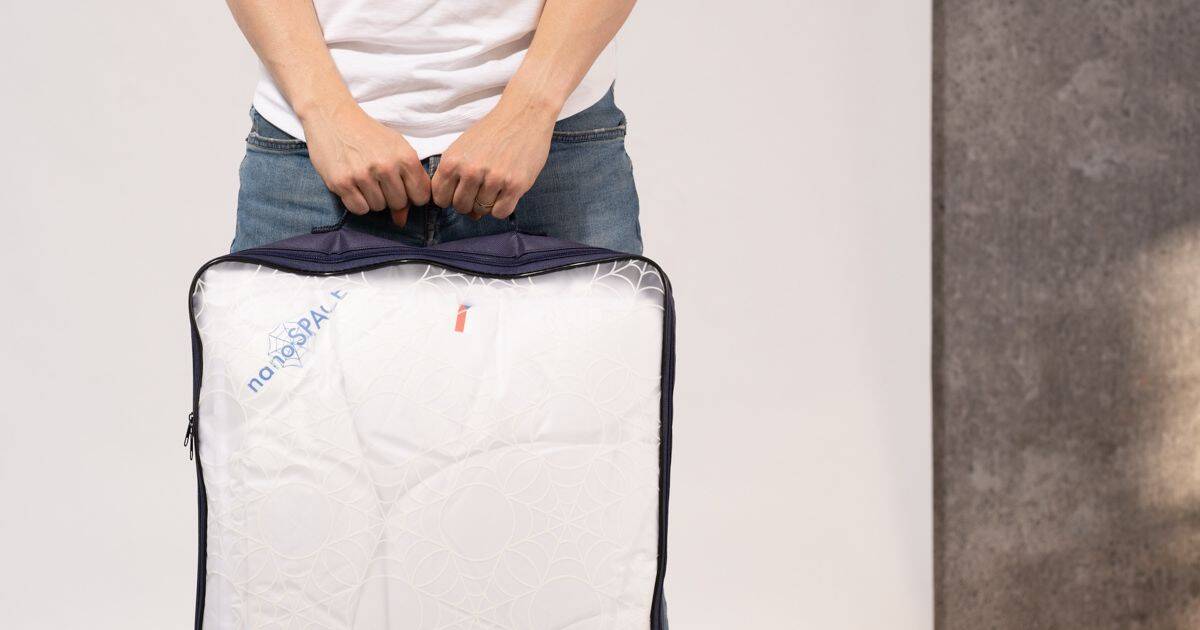
Zip-closure pillows let you adjust the amount of filling to suit your preferences. This is handy because everyone has different needs when it comes to height and firmness. Plus, filling compresses over time, so the ability to top it up is a real bonus.
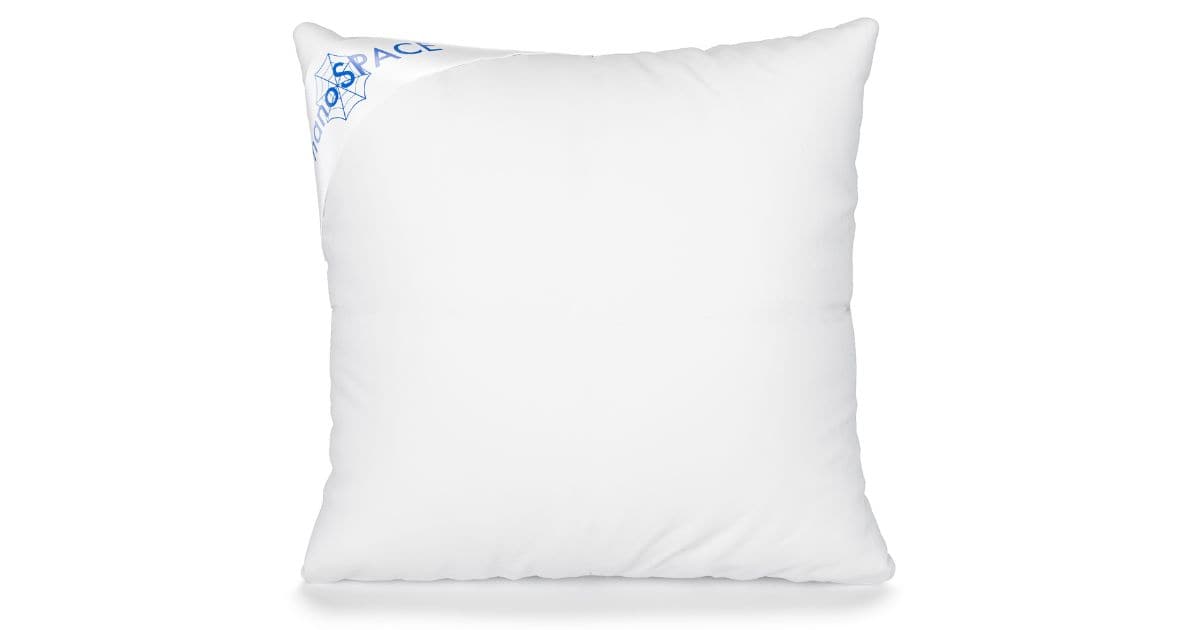
TIP: Review: Anti-dust-mite zip pillow for allergy sufferers by nanoSPACE
Double-zip pillows have the filling in a separate inner cover, which makes maintenance significantly easier. You can remove the filling before washing or replace it entirely.
Pillows without a zip are the most affordable option, but they’re not as practical when it comes to maintenance.
Size and ergonomic features
Beyond standard rectangular pillows, there are specially designed ergonomic pillows with a nanofibre membrane. These pillows are filled with viscoelastic foam that moulds to the shape of your head and neck.
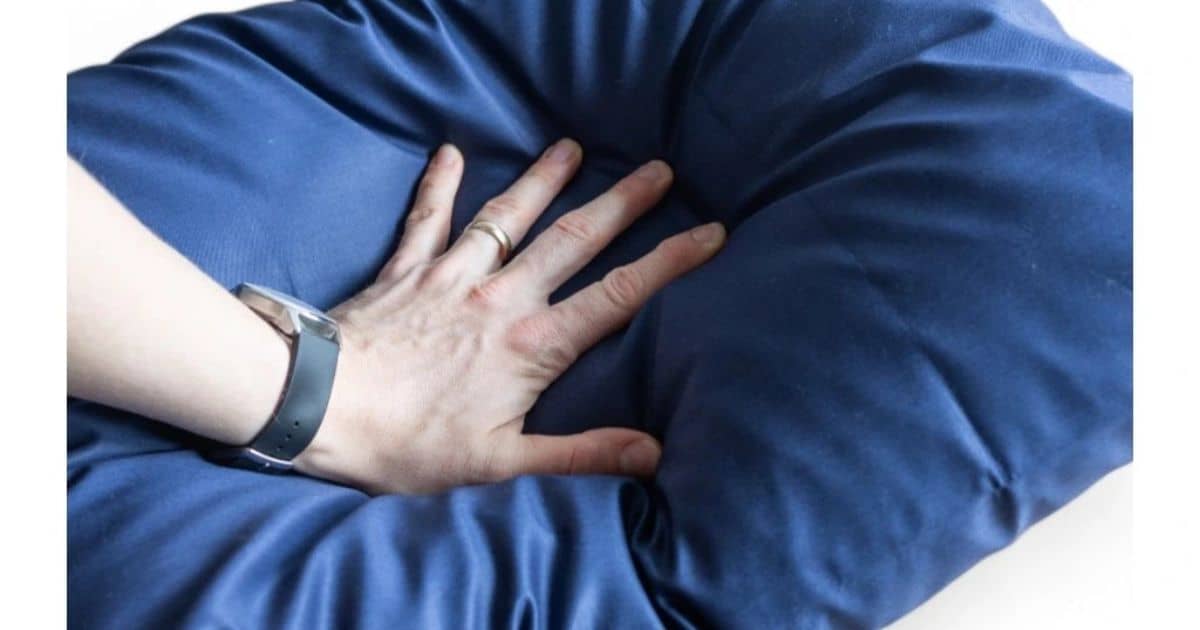
Ergonomic pillows are an ideal choice for allergy sufferers who also experience neck or back pain, as they support proper spinal alignment during sleep.
Cover material and additional protection
For people with very sensitive skin or atopic eczema, there are pillows that combine nanofibre technology with organic cotton. This combination provides maximum allergen protection while being gentle on the skin.
A comprehensive approach: more than just a pillow
Simply buying an anti-dust-mite pillow for allergy sufferers isn’t enough. If you truly want to get your allergies under control, you need to address the entire bedroom. Here’s what we recommend:
- An anti-dust-mite pillow with a nanofibre membrane,
- an anti-dust-mite duvet using the same technology,
- a mattress encasing with a nanofibre membrane (the mattress harbours the largest number of dust mites),
- regular vacuuming of mattresses and floors with a HEPA-filter vacuum cleaner,
- maintaining optimal humidity in the bedroom (40–50 %).
A comprehensive approach can reduce the severity of allergy symptoms by up to 70 %.
TIP: How can you support better sleep with natural supplements? Try lavender, chamomile, and valerian root — all in one capsule.
Myths and facts about pillows for allergy sufferers
There’s a lot of misinformation floating around about pillows for allergy sufferers. Let’s clear up the most common myths:
Myth 1: Every anti-allergy pillow protects against dust mites
Reality: The term “anti-allergy” isn’t legally protected, so on a label it means virtually nothing. Manufacturers use it even for pillows that simply don’t contain feathers but offer no protection against dust mites whatsoever.
Myth 2: Dust mites only live on the pillow surface
Reality: Dust mites burrow deep into the pillow filling, where they find ideal conditions for living and breeding. Surface-level treatment simply isn’t enough.
TIP: nanoSPACE review: Duvets, pillows and covers for allergy sufferers + 10 % discount
Myth 3: Airing in the sun kills dust mites
Reality: UV rays may kill some dust mites on the surface, but the majority of the population inside the pillow survives.
Myth 4: Nanofibre pillows are uncomfortable
Reality: Nanofibre pillows are just as comfortable as ordinary pillows. In many cases they’re actually better, because you sweat less on them.
You might also like: 5 biggest myths about dust mites
Frequently asked questions
What is the best pillow filling?
Memory foam or microfibre enclosed in a casing with a nanofibre membrane. Hollow fibre is not suitable for people allergic to dust mites.
What are the best pillows for sleeping?
Pillows with a nanofibre membrane. They block allergens, are breathable, comfortable, and effective in the long term.
How should you wash a pillow for allergy sufferers?
Wash your allergy pillow every 2–3 months at 40 °C. The nanofibre membrane retains its effectiveness even with frequent washing.
Will a nanofibre pillow help if I’m allergic to pollen or pet dander?
Yes, the nanofibre membrane captures these allergens too. What’s more, by reducing your body’s overall allergen burden, it may improve your tolerance of other allergens as well.
Can I just buy a nanofibre membrane cover for my existing pillow?
Yes, there are special anti-dust-mite covers with nanofibre technology. It’s a more economical solution, although a purpose-built nanofibre pillow is usually more comfortable.
Sources
GOTTVALDOVÁ, Petra; MANSFELDOVÁ, Klaudia. Vliv plísní na zdraví člověka.
HRABCOVÁ, Veronika. Roztoči a alergie. 2011.
LIŠKA, Martin, et al. Alergie na roztoče a plísně–novinky. Med. Pro Praxi, 2010, 7.12: 462-465.