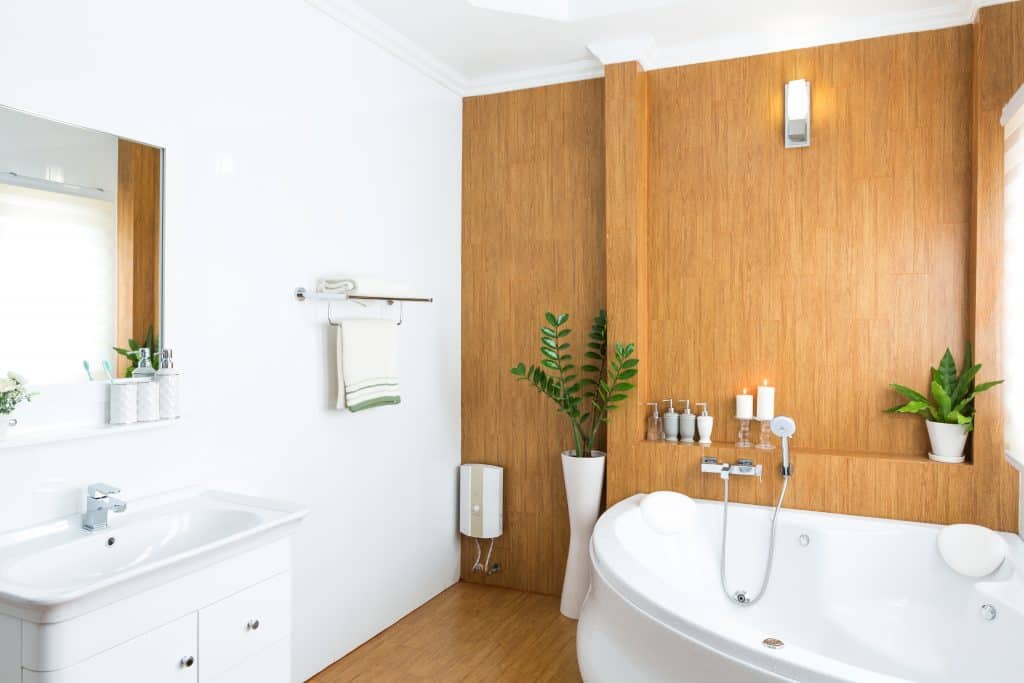
What if we told you that you’d never need to scrub your walls white again, you’d only clean a few times a year — yet everything would always sparkle — and you could finally ditch your allergy tablets? Sounds like a dream? If you kit out your home with readily available nanotechnology, that’s exactly what life can look like. Nanotechnology at home is no longer science fiction — it’s a practical, accessible way to breathe easier and clean less.
What is nanotechnology?
Nanotechnology is a field concerned with manipulating materials at the nanoscale. “Nano,” much like “milli” or “micro,” is a prefix that denotes size. To put it in perspective, one nanometre is one billionth of a metre. Nanotechnology is used across the cosmetics, electronics, pharmaceutical, and textile industries.
Hydrophobic products save time
By using a hydrophobic product containing silicon dioxide nanoparticles, you can dramatically cut down on both cleaning chemicals and the time you spend scrubbing. Treated surfaces repel liquids, which simply roll off — taking dirt particles with them. After a careful application of a hydrophobic spray to sinks, basins, bathtubs, or shower enclosures, you won’t need to clean or polish them for several months. Less chemical use, more free time.
Self-cleaning hydrophobic products for textile impregnation protect fabric from wear and repel dirt, water, oils, and even blood. They reduce dry-cleaning costs and cut household chemical use. These products work on most natural and synthetic fabrics. Ideal for all kinds of textile items — clothing, shoes, backpacks, furniture, car interiors, and carpets.
Nano-fabric bedding prevents dust mite growth
An ordinary bed is home to colonies of millions of dust mites that feed on dead skin cells. Allergy sufferers and sensitive individuals often wake up tired and irritable because of allergens — namely dust mite droppings. A bed protected by nano-fabric bedding prevents dust mites from accumulating and breeding. It offers 100% protection against allergens and is a recommended preventive measure against the development of allergies in children.
TIP: Anti-dust-mite duvet cover for allergy sufferers by nanoSPACE
Purify the air with light
If your home gets plenty of natural light, purifying the air with photocatalytic coatings is an ideal option. These coatings break down organic pollutants, VOCs, viruses, bacteria, spores, allergens, toxins, mould, odours, cigarette smoke, and even smog.
What’s more, coated surfaces stay clean. The manufacturer guarantees at least 10 years of effectiveness; longer performance hasn’t been tested yet because the technology is relatively new. However, it’s quite likely that surfaces treated with photocatalytic coatings will remain snow-white for several decades.
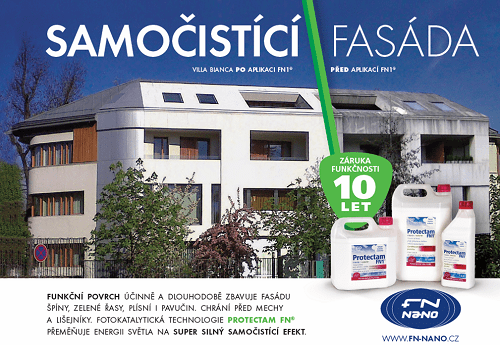
How to apply photocatalytic coating to a facade
The coating is applied in three layers. For the first layer, we recommend using Protectam FN®1. The second and third layers should be done with Protectam FN®2. To create 10 m2 of oxidising surface, you need 1/3 l of Protectam FN®1 and 2/3 l of Protectam FN®2. When applying with a roller or brush, expect higher consumption.
How to apply photocatalytic coating to interior spaces
For vertical interior walls, use the functional coating PROTECTAM FN®2. The coating is applied in three layers. 1 litre of coating is sufficient to create 10 m2 of oxidising surface (spray method). When applying with a roller or brush, expect higher consumption.
For interior ceilings, the functional coatings PROTECTAM FN®2 and PROTECTAM FN®3 are a better choice. The coating is applied in three layers. For the first layer, we recommend using PROTECTAM FN®2. The second and third layers should be done with PROTECTAM FN®3. To create 10 m2 of antibacterial oxidising surface, you need 1/3 l of PROTECTAM FN®2 and 2/3 l of PROTECTAM FN®3. When applying with a roller or brush, expect higher consumption.
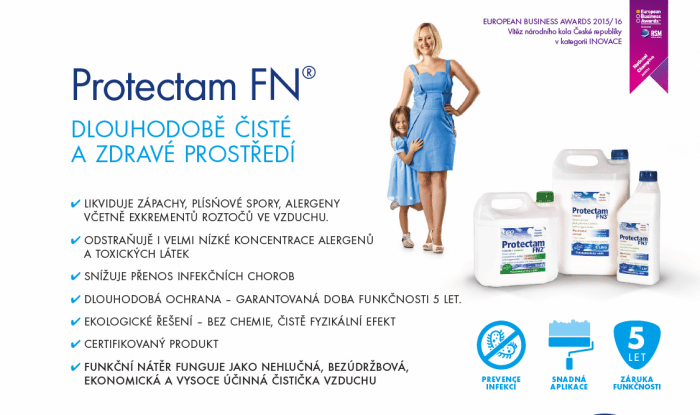
Air purifiers: an allergy sufferer’s best friend
If your rooms are on the darker side, you’d need to illuminate them with UV light for the coatings to work. In those conditions, we recommend choosing air purifiers instead — a professional-grade solution for all allergy and asthma sufferers.
Home air purifiers effectively remove pollen, bacteria, and viruses from the air. Models fitted with an activated carbon filter also absorb odours and gases — most commonly formaldehyde, which can off-gas from furniture.
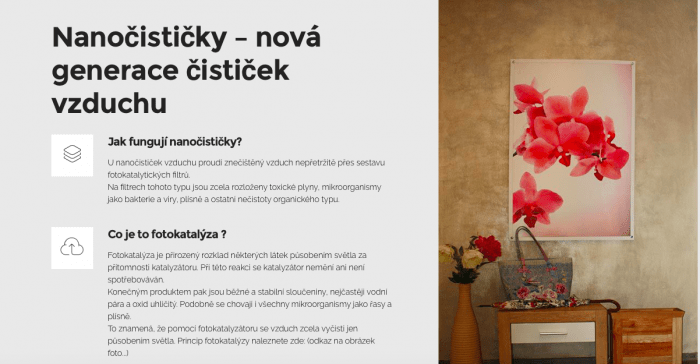
Read our guide on how to choose an air purifier.
We hope that after reading this article, nanotechnology at home no longer feels like a mystery. Give it a chance to turn your living space into the healthiest environment possible. Nanotechnology certainly won’t let you down.