
Latex allergy may be less common than other allergies, but it can be surprisingly tricky to manage. It mostly affects people who work in healthcare, though it can also catch you off guard in more intimate moments. I understand that a diagnosis like this might feel like a major complication — but there’s no need to panic. In this updated article for 2026, we’ll explore where you might encounter latex, how a latex allergy presents itself, and what alternatives exist so you can live a full life without unnecessary restrictions.
TL;DR
- Latex allergy is an immune reaction to proteins found in natural rubber. It can range from a mild skin rash to life-threatening anaphylaxis.
- The most at-risk groups include healthcare workers, cleaning staff, and people who’ve undergone multiple surgeries — all due to frequent contact with latex gloves and medical equipment.
- Up to 50% of people with a latex allergy also react to certain fruits such as bananas, kiwi, or avocado. This phenomenon is known as latex-fruit syndrome.
- The primary treatment is strict avoidance of latex. Fortunately, plenty of safe alternatives exist, such as nitrile or vinyl gloves.
- If you suspect you have a latex allergy, it’s essential to see an allergist who can carry out accurate diagnostic testing and recommend next steps.
What is latex?
Latex comes in two forms — natural and synthetic. For allergy sufferers, it’s the natural kind that matters. Natural latex is a milky fluid harvested from the trunk of the rubber tree (Hevea brasiliensis). This sap contains proteins that are the main culprits behind allergic reactions. Thanks to its elasticity and durability, natural rubber has become the basis for manufacturing a vast range of products.

Synthetic latex also exists. It’s manufactured chemically from petroleum derivatives (e.g. styrene-butadiene) and doesn’t contain the problematic plant proteins. This makes it safe for most people with a natural latex allergy. You’ll find it in paints, coatings, and adhesives.
Read more about the different allergens you might encounter.
Where is latex found?
You might be surprised at just how often we come into contact with natural latex. It’s not just about gloves and condoms. Here’s an overview of the most common sources:
Medical supplies
This is the best-known category. It includes disposable gloves, catheters, bandages, adhesive plasters, blood pressure cuff tubing, and stoppers on test tubes. This is where sensitisation occurs most frequently.
Contraception and intimate products
Most standard condoms and some diaphragms are made from latex. For allergy sufferers, these can be a source of very unpleasant local and even systemic reactions.
Household items and leisure
Inflatable balloons are a classic example. Rubber bands, erasers, certain toys, sports equipment (such as swimming caps and goggles), shoe soles, mattresses, and anti-slip rug pads also belong on this list.
Clothing and accessories
Elastic bands in underwear, socks, or waistbands may contain latex fibres. Watch out for some raincoats or workwear too — anywhere rubber elastic is used can be a potential trigger for a rubber allergy.
TIP: Tattoo Allergy: Symptoms and Treatment
How does latex allergy present itself?
Latex proteins can enter the body in several ways: through direct contact with the skin or mucous membranes (mouth, genitals), by inhaling particles (e.g. from powder on gloves), or through the bloodstream during medical procedures.
Latex allergy is a Type I immune reaction mediated by IgE antibodies. Your body mistakenly identifies a harmless rubber protein as a threat and launches a defensive response. Histamine and other inflammatory mediators are released, leading to the typical allergic symptoms. With each subsequent exposure, the reaction can become stronger and faster.
You might also be interested in: Types of Allergies and Their Symptoms
Latex allergy symptoms
Symptoms vary depending on the route of exposure and individual sensitivity. They can range from mild, localised issues to a life-threatening condition.
Skin reactions
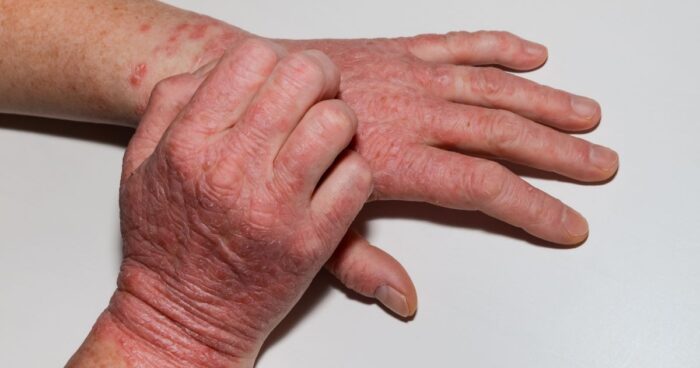
The most common is contact urticaria (hives), which appears within minutes of contact — typically on the hands after putting on gloves. It shows up as itchy welts and redness. Contact eczema can also develop. This is a delayed reaction that emerges hours to days after contact and looks like dry, scaly, cracked skin.
Mucosal and respiratory reactions
When latex comes into contact with mucous membranes (e.g. during condom use), itching, swelling, and redness of the genitals may occur (vulvitis, genital rash). Inhaling latex particles can trigger allergic rhinitis, conjunctivitis, and in more severe cases, an asthma attack.
Systemic reaction (anaphylaxis)
In the most severe cases, anaphylactic shock can occur. This is a rapid, whole-body reaction involving hives, swelling, difficulty breathing, a drop in blood pressure — and it can be fatal. It’s an acute emergency requiring immediate medical attention and an adrenaline injection.
Latex-fruit syndrome — banana, kiwi, avocado, chestnut
One of the most fascinating — and for many people, most surprising — aspects of latex allergy is the so-called latex-fruit syndrome. It’s a cross-reactive allergic response. Your immune system confuses the proteins in latex with proteins found in certain plant foods, especially tropical fruits. The reason lies in their structural similarity — specifically, proteins called class I chitinases, which are present both in the rubber tree and in these fruits.
According to data from the European Academy of Allergy and Clinical Immunology (EAACI), 30 to 50% of people with a latex allergy experience this cross-reactivity. So if you react to latex, there’s a fairly high chance that certain foods may also cause problems. A banana and kiwi allergy is typical, along with reactions to avocado or chestnut.
The reaction usually presents as oral allergy syndrome — itching and mild swelling of the lips, tongue, and palate immediately after eating raw fruit. Cooking (boiling, baking) destroys most of these allergens, but not all of them. In highly sensitive individuals, a systemic reaction can also occur.
| Food | Cross-reaction frequency | Heat stability of allergen |
| Avocado | High | Mostly labile (destroyed by cooking) |
| Banana | High | Mostly labile |
| Chestnut | High | Stable (still dangerous after cooking) |
| Kiwi | High | Labile |
| Papaya | Moderate | Labile |
| Mango | Moderate | Labile |
| Fig | Low | Labile |
| Potatoes, tomatoes | Low | Labile |
Occupational latex allergy
Although the use of latex gloves in healthcare has been declining, they still pose a significant risk. Occupational latex allergy is a recognised occupational disease. The most at-risk groups include:
- Healthcare workers: Doctors, nurses, dentists, and lab technicians. The COVID-19 pandemic made things worse due to the massive increase in protective equipment use.
- Cleaning staff: Daily use of rubber gloves is standard practice.
- Hairdressers and beauticians: Contact with gloves during hair colouring or other procedures.
- Food industry workers: Handling food often requires wearing gloves.
In these professions, a glove allergy most commonly presents as contact dermatitis on the hands, but inhaling glove powder can also lead to occupational asthma. If you’re experiencing problems at work because of gloves, it’s important to address it. Under public health legislation, your employer is obliged to provide a safe working environment and supply suitable alternative protective equipment if you suffer from an allergy.
Glove comparison — choosing an alternative
Fortunately, there are plenty of alternatives to latex gloves on the market. Your choice will depend on the type of work, the level of protection needed, and your sensitivity. Here’s a quick comparison to help you navigate your options.
| Glove type | Allergen content | Protection level | Approximate cost |
|---|---|---|---|
| Latex | High (natural rubber) | High (flexible, sensitive) | Low |
| Nitrile | None (synthetic polymer) | Very high (resistant to chemicals and punctures) | Medium |
| Vinyl (PVC) | None | Low (less flexible, tear easily) | Very low |
| Polyethylene | None | Very low (short-term contact only, e.g. at a petrol pump) | Lowest |
| Surgical (powder-free, low-protein) | Low | High | High |
For most allergy sufferers, nitrile gloves are the best choice. They offer excellent protection, contain no latex proteins, and are comfortable enough for most tasks.
How common is latex allergy?
The prevalence of latex allergy has been declining in recent years thanks to preventive measures and the wider use of latex-free materials. In the general population, it’s estimated at below 1%. The picture is dramatically different in high-risk groups, however. According to data from the Czech Society of Allergology and Clinical Immunology (ČSAKI), prevalence among healthcare workers ranges between 3 and 10%. The risk is even higher for patients who’ve undergone multiple surgeries (e.g. those with spina bifida), where prevalence can reach as high as 60%.
Even if these numbers don’t directly apply to you, they illustrate just how critical repeated contact with a sensitising substance can be. That’s why it’s important to consult a specialist if you suspect an allergy and to minimise any further exposure.
How is latex allergy diagnosed?
If you suspect you might have a latex allergy, don’t hesitate — book an appointment with an allergist. Diagnosis begins with a thorough medical history, where the doctor will ask about your symptoms, your work environment, and any possible connections with food reactions. Testing may then follow.
Skin prick tests
During these tests, a drop of solution containing latex allergens is applied to the skin of your forearm and gently pricked. If you’re allergic, an itchy welt similar to a mosquito bite will appear at the site within 15–20 minutes.
Blood tests
A blood sample is taken and tested in a laboratory for specific IgE antibodies against latex. This test is safe because it doesn’t expose you to direct contact with the allergen, and it’s often used to confirm the diagnosis.

How is latex allergy treated?
The cornerstone of treatment is strict elimination — avoiding all products made from natural latex. That might sound daunting, but with a bit of practice, it’s perfectly manageable. You’ll need to read product labels carefully and, when in doubt, opt for trusted latex-free alternatives.
To relieve acute symptoms like hives or rhinitis, your doctor may prescribe antihistamines. If you suffer from eczema, topical corticosteroid creams can help. People at risk of anaphylaxis should always carry an adrenaline auto-injector and know how to use it.
Specific allergen immunotherapy for latex allergy is not yet routinely available, and its effectiveness is still being researched. This makes prevention and allergen avoidance absolutely essential.
TIP: What Does a Drug Allergy Look Like and What Should You Do?
🧤 What to do about occupational latex allergy
If you work in a field that requires gloves, nitrile is the first choice. At home during cleaning, sensitive skin may appreciate gentler antibacterial clothing that won’t irritate like synthetics. For diagnostics, a home allergy test can help.
📖 You might also like
Conclusion
Living with a latex allergy requires a certain level of vigilance, but it’s certainly not the end of the world. What matters is understanding where the allergen lurks, recognising your symptoms, and having a plan in case of accidental exposure. Thanks to the wide availability of latex-free alternatives — from gloves to condoms — it’s entirely possible to lead a comfortable life without major restrictions. Don’t forget about potential cross-reactions with food, and always consult your allergist if you run into trouble.
If you suspect this problem might affect you, don’t delay. The first and most important step you can take today is to book an appointment with your GP and ask for a referral to an allergist. In the meantime, go through your home, bathroom, and medicine cabinet and try to identify products that might contain latex. Awareness is the first step towards a solution.
Frequently asked questions
What is natural latex?
Natural latex is a white fluid (sap) harvested from the bark of the rubber tree (Hevea brasiliensis). It contains proteins that can trigger an allergic reaction in sensitive individuals. It’s used to manufacture flexible products such as gloves, condoms, and balloons.
How is latex harvested?
Latex is harvested by making incisions in the bark of rubber trees. A milky sap flows from the cuts, is collected in containers, and is then processed and stabilised for industrial use.
What products are made from latex?
A huge number of products are made from latex. The most common include disposable gloves, condoms, balloons, rubber bands, swimming caps, certain mattresses, shoe soles, and elastic bands in clothing.
What does a condom allergy look like?
An allergy to latex condoms typically presents with localised redness, intense itching, burning, or swelling of the genitals in either partner. The reaction appears shortly after contact.
What are the symptoms of a lubricant allergy?
A lubricant allergy is rare but possible. Symptoms are similar to a condom allergy — redness, itching, or a rash at the site of application. The cause is usually fragrances, preservatives, or other added ingredients rather than latex.
What gloves should you use if you have a latex allergy?
If you have a latex allergy, nitrile gloves are the best alternative — they offer high protection and contain no allergens. For less demanding tasks, vinyl gloves will also do the job.
How quickly does a latex allergy reaction appear?
It depends on the type of reaction. An immediate reaction (hives, anaphylaxis) appears within minutes of contact. A delayed reaction (contact eczema) may take 24 to 48 hours to develop.
Are nitrile gloves latex-free?
Yes, nitrile gloves are made from synthetic rubber and are 100% latex-free. They’re considered the safest and best alternative for people with a latex allergy.
Can latex allergy be cured?
Latex allergy cannot currently be completely cured. The only reliable approach is lifelong avoidance of contact with natural latex and managing symptoms with medications recommended by your allergist.
Who is at the highest risk?
Those at the highest risk of developing a latex allergy include healthcare workers, people with congenital conditions requiring repeated surgeries (e.g. spina bifida), workers in the rubber industry, and people with atopic eczema.
Do I need to report my allergy before surgery?
Yes, absolutely. Informing the anaesthetist and surgeon about your latex allergy is vital. The medical team will then ensure a completely latex-free environment throughout the entire procedure to prevent a serious allergic reaction.