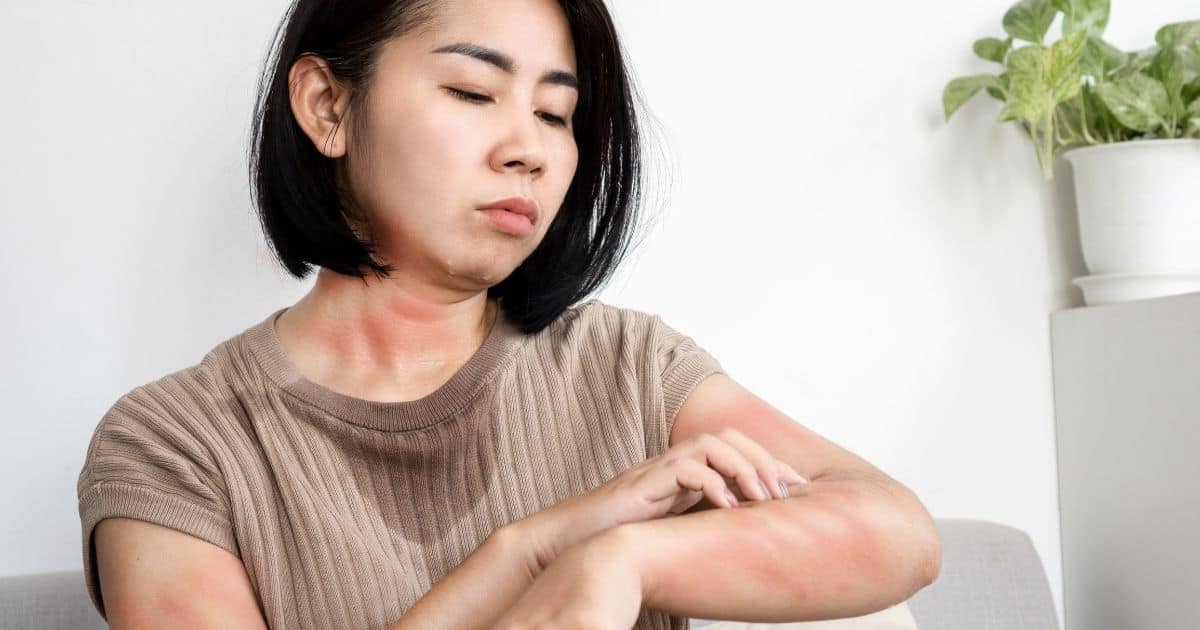
“I’m honestly at my wit’s end.” This heartfelt sigh from a fellow sufferer on a discussion forum perfectly captures how living with hives urticaria often feels. It’s not just “some rash” that disappears after popping a single tablet. For many people — and I’ve been through it myself — it’s an unpredictable, exhausting condition that can wreak havoc on your sleep, your work, and your self-confidence. The good news? Big things are happening in hives treatment. Thanks to new insights into its causes and modern biologic therapies, there’s real light at the end of the tunnel, even for those who’ve found nothing works so far. Let’s take a closer look.
TL;DR
- Hives aren’t one-size-fits-all: They’re divided into acute (under 6 weeks) and chronic (over 6 weeks). Chronic urticaria can be spontaneous (no obvious cause) or inducible (triggered by physical stimuli).
- The cause often remains unknown: Acute hives are usually triggered by an infection or medication. But in up to 70% of chronic cases, no specific cause is ever found — it’s frequently an autoimmune process.
- Treatment follows a clear pathway: The modern approach recommended by EAACI starts with antihistamines (even at higher doses), and if those don’t work, targeted biologic therapy steps in.
- A new era of treatment is here: Medications like omalizumab, plus newly approved remibrutinib and dupilumab for hives, are bringing hope of a symptom-free life even in severe cases.
- You’re not alone: Chronic hives take a huge toll on mental health. Don’t be afraid to ask for help from an allergist — or a psychologist — and connect with others in patient support groups.
What are hives — more than just a rash
Hives, medically known as urticaria (from the Latin urtica, meaning nettle), is a skin condition characterised by itchy raised welts (wheals) and/or deeper swellings called angioedema. It’s far from rare — roughly one in four people will experience it at least once in their lifetime. In the International Classification of Diseases, it’s listed under code L50.
Think of it this way: your skin contains special immune cells — tiny sentinels called mast cells. These are packed with granules full of chemical substances, most importantly histamine. When a mast cell gets “irritated” and activates, it dumps its contents into the surrounding tissue. The histamine then causes small blood vessels in the skin to widen and become leaky. Fluid seeps out into the tissue, producing the characteristic wheal and that intense, maddening itch. It’s essentially a little storm raging beneath your skin.
Acute vs. chronic hives — the 6-week boundary
The most fundamental way to classify hives is by how long they last. This single factor determines the direction of both the investigation into the cause and the treatment itself. International guidelines from expert bodies like EAACI are crystal clear on this point.
Acute hives are defined as episodes lasting fewer than 6 weeks. Most of the time, it’s a one-off event that appears and then resolves on its own. A specific trigger can often be identified — typically a reaction to a medication, a food, or an ongoing infection. It’s unpleasant, certainly, but the outlook is excellent and the problem usually doesn’t come back.
By contrast, chronic hives is a condition where wheals keep recurring or persist for more than 6 weeks. This is where things get more complicated. In adults, chronic urticaria lasts an average of 2 to 5 years, and unfortunately in about 30% of cases it persists beyond five years. In children, the outlook is thankfully better, with an average duration of 6 months to a year. What’s more, a trigger is rarely found in the chronic form — it’s estimated that in up to 70% of cases the cause remains unknown. In roughly half of patients, it turns out to be an autoimmune process, where the body produces antibodies against its own structures.
What hives look like — photos and wheal characteristics
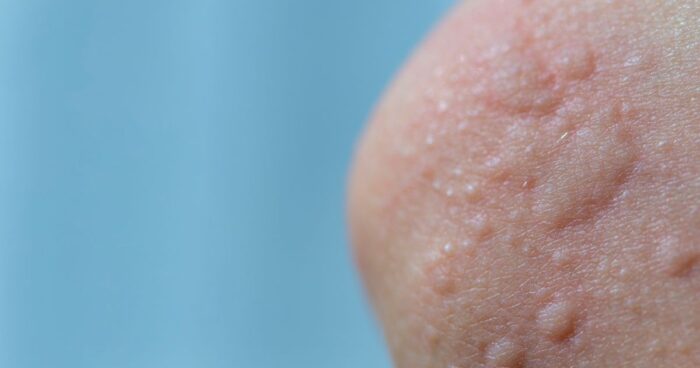
As the name suggests, the appearance resembles a nettle sting. The hallmark feature is the wheal — a well-defined, slightly raised bump that’s typically red with a paler centre. Around it you’ll often see a red rim (erythema) known as a halo. Wheals can range from a few millimetres across to large, merging patches over 15 cm in diameter. They can appear anywhere on the body and often “travel” — one day they’re on your hands, the next on your back.
An absolutely crucial characteristic is their fleeting nature. An individual wheal should not persist in the same spot for more than 24 hours. It vanishes without a trace — no scarring, no change in pigmentation. If the marks linger longer, burn rather than itch, or leave bruises behind, pay attention. This could indicate urticarial vasculitis, an inflammation of blood vessels that requires a completely different approach and confirmation through a skin biopsy. In such cases, a dermatology consultation is essential.

Angioedema — when to call an ambulance
While wheals form in the superficial layers of the skin, angioedema is a deep swelling that affects the lower skin layers and subcutaneous tissue. It presents as a pale, poorly defined, doughy swelling that tends to burn and ache rather than itch. It typically appears in areas with loose subcutaneous tissue — the eyelids, lips, tongue, as well as the hands, feet, or genitals. Studies show that angioedema accompanies chronic hives in up to 40% of patients and significantly impairs quality of life.
Most angioedema associated with hives is caused by histamine and isn’t life-threatening. However, there are several red flags that require you to call emergency services immediately:
- Swelling of the tongue, throat, or neck
- Difficulty breathing, wheezing, a feeling of a lump in the throat
- Difficulty swallowing
- Dizziness, feeling faint, confusion
These symptoms may signal anaphylaxis or airway swelling. It’s also important to know that there is a rarer but more dangerous type of angioedema (e.g. hereditary angioedema) that isn’t caused by histamine, doesn’t come with hives, and doesn’t respond to standard treatment. That type requires specific diagnosis and management by specialists.
Causes of acute hives — when the culprit is clear
With acute hives, we can fortunately often identify what’s behind them. The triggers differ by age.
In children, infections are by far the most common cause. Studies show that viruses (e.g. EBV causing mononucleosis, CMV, herpes viruses) or bacteria (typically streptococcus causing tonsillitis) account for 30–50% of all childhood acute hives cases.
Other frequent culprits are medications. Watch out especially for non-steroidal anti-inflammatory drugs (NSAIDs) like ibuprofen or aspirin, antibiotics (particularly penicillins), and blood pressure medications (ACE inhibitors).
Foods are a common cause mainly in young children, where allergies to milk, eggs, nuts, or wheat lead the way. In adults, foods tend to play more of a role as non-specific triggers in the chronic form rather than as a primary cause of acute episodes. Insect stings (wasps, bees) and contact with plants (the classic nettle sting) or materials like latex also belong here.
Causes of chronic hives — chasing a ghost
With the chronic form, it’s detective work with an often unclear outcome. Chronic hives are divided into two main groups, which can also overlap.
Chronic spontaneous urticaria (CSU) and its autoimmune roots
As the name suggests, in chronic spontaneous urticaria (CSU) the wheals appear spontaneously, without any external trigger. You simply wake up one morning covered in hives. We now know that in roughly 40–50% of CSU patients, it’s an autoimmune disease. The immune system goes haywire and starts producing antibodies against the body’s own structures. Scientists have described two main mechanisms:
Type IIb (autoimmune)
The body produces IgG antibodies that bind directly to mast cells and signal them to release histamine.
Type I (autoallergic)
The body produces IgE antibodies against its own proteins — for example, against thyroid components or the newly discovered interleukin-24 (IL-24).
Diagnosing these subtypes is complex and carried out at specialised centres using tests like ASST (autologous serum skin test) or basophil activation tests (BHRA). What matters for you, though, is this: if you have CSU, it’s worth having your doctor check your thyroid function, because autoimmune thyroiditis frequently occurs alongside CSU.
Physical / inducible urticaria (CIndU) — when the body reacts to the world
The second major group is chronic inducible urticaria, or CIndU for short. Here, the trigger is clear and reproducible — it’s a physical stimulus. Wheals appear every time you’re exposed to a given stimulus.
Dermographism (skin writing)
The most common form, where wheals appear at the site of scratching or pressure on the skin. Run a fingernail across your back, and a red, itchy line appears shortly afterwards.
Cold urticaria
A reaction to cold. It can occur after contact with cold air, cold water (be careful swimming outdoors!), or even from holding a cold drink. It’s diagnosed with a simple ice-cube test applied to the forearm.
Delayed pressure urticaria
Unlike dermographism, this produces a deep, often painful swelling with a delay (typically 4–6 hours) at sites of sustained pressure — under backpack straps, waistbands, or after sitting on a hard chair for a long time.
Cholinergic urticaria
Here the trigger is a rise in core body temperature — during exercise, a hot shower, stress, or even eating spicy food. It presents as characteristically tiny, pinpoint bumps surrounded by a large red flare, mainly on the trunk.
Solar and aquagenic urticaria
Rarer forms where the reaction is triggered by sunlight (UV) or by contact with water regardless of its temperature.
Hives treatment — a modern algorithm for relief
The goal of treatment isn’t just to ease the symptoms — it’s to achieve complete control. We want to reach a point where hives no longer limit your life in any way. International guidelines (EAACI 2024) have laid out a clear, three-step approach that every doctor should follow. Hives treatment has well-defined rules.
Step 1: Second-generation antihistamines at standard dose
The foundation of treatment is second-generation antihistamines (e.g. cetirizine, levocetirizine, desloratadine, fexofenadine). Unlike older types, these don’t cause drowsiness. You start with a standard dose of one tablet daily. If full symptom control isn’t achieved within 2–4 weeks, you move to the next step.
Step 2: Updosing antihistamines
If the standard dose isn’t enough, the next step is to increase it to two to four times the standard daily dose (e.g. up to 4 tablets of cetirizine a day). There’s no need to worry about this — it’s safe and recommended by experts. This is unfortunately where things often go wrong, with patients left on a single ineffective tablet. Data show that only about 21% of people achieve good control at the standard dose.
Step 3: Biologic therapy (Omalizumab)
If even a fourfold antihistamine dose doesn’t work, it’s time for modern targeted therapy. The first-line option is omalizumab. It’s a monoclonal antibody that captures and neutralises IgE antibodies in the body — antibodies that play a key role in activating mast cells. It’s given as a subcutaneous injection once every 4 weeks. In clinical trials, 30–40% of patients who hadn’t responded to anything else achieved complete symptom clearance with omalizumab.
As a last resort for the most severe cases (Step 4), the immunosuppressant ciclosporin remains an option, but due to its side effects, doctors are increasingly moving away from it in favour of newer, safer medications.
Biologic therapy 2024–2026 — a breakthrough in treatment
Right now, we’re witnessing a quiet revolution in chronic hives treatment. After years when omalizumab was the only option after antihistamines failed, entirely new molecules are entering the scene, targeting different parts of the immune-inflammatory pathway.
Remibrutinib is a tablet-form medication (an oral BTK inhibitor) expected to be approved in 2025. It blocks a key enzyme inside the mast cell, preventing histamine release. In the REMIX-1 and REMIX-2 trials, it showed a very rapid onset of action (often within the first week), and by one year, nearly half of patients had achieved complete disease control.
Another newcomer is dupilumab for hives, a drug already well known from treating atopic eczema and asthma, which was approved in 2025 for chronic spontaneous urticaria as well. It blocks the signalling pathways for interleukins IL-4 and IL-13. The CUPID trials also demonstrated good efficacy.
Further medications are in development too, such as barzolvolimab, which can directly eliminate mast cells from the skin. These new options represent enormous hope for everyone who hasn’t found relief with existing treatments.
Hives in children — what’s different?
Hives in children have several distinct features. As I mentioned earlier, the acute form is extremely common in kids and is linked to an ongoing viral infection in up to 80% of cases. The good news is that 90% of these episodes resolve spontaneously within two weeks. Chronic hives are rarer in children than in adults and carry a better prognosis — in 50% of young patients, they disappear completely within 5 years.
The biggest challenge in children is the intense itching, which drives them to scratch and risks introducing infection into the skin. Antihistamines are the cornerstone of treatment here too, but dosing is adjusted for age and weight. For example, cetirizine can be given to children from age 2 (2.5 mg dose) and from age 6 (5 mg dose). Dosing should always be discussed with a paediatrician or paediatric allergist.
Living with chronic hives — impact on mental health and quality of life
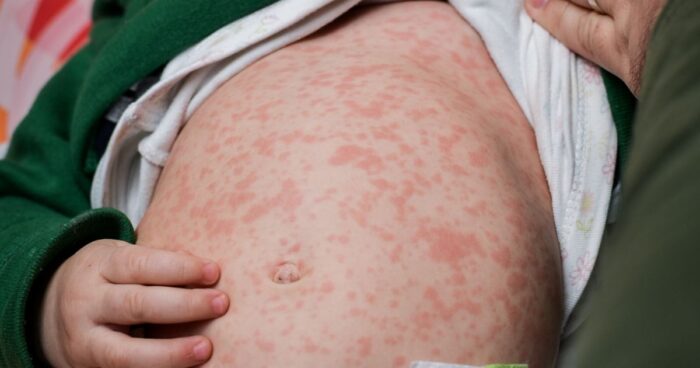
Talking about hives as just “bumps on the skin” would be a massive oversimplification. The chronic form, in particular, has a devastating impact on mental health. The unpredictability — not knowing whether you’ll wake up with a swollen face or break out in hives during an important meeting — is immensely stressful. I remember that feeling of helplessness and frustration all too well, when the wheals appeared for no apparent reason.
Specialists use dedicated questionnaires to assess the disease’s impact, such as the UAS7 (Urticaria Activity Score), where you record the number of wheals and itch intensity over seven days, or the CU-Q2oL, which measures quality of life. Studies consistently confirm that chronic hives negatively affect sleep, work performance, social life, and intimate relationships. It’s no wonder that up to 30% of people with chronic urticaria develop anxiety or depression. If you feel the condition is destroying you mentally, there’s absolutely no shame in seeking help from a psychologist or joining online patient support groups (there are both local and international ones on Facebook) where you’ll find understanding from people going through the same thing.
Conclusion
Hives are a far more complex condition than they might seem at first glance. While the acute form is usually just an unpleasant but temporary episode, the chronic type can be a years-long, exhausting battle. It’s important to understand that chronic hives often aren’t a classic allergy at all, but rather an internal malfunction of the immune system. Hunting for a “culprit” in your diet is frequently a dead end.
If you’ve been fighting hives for more than a few weeks, don’t hesitate — book an appointment with an allergist. Modern medicine has a clearly defined pathway to help you. Ask your doctor about increasing your antihistamine dose, and if that doesn’t work, about targeted biologic therapy. Keep a log of your symptoms (a diary or an app works brilliantly for this) so your doctor has the best possible information to work with. And above all, don’t lose hope. With the new treatments now available, the chance of living free from itching and wheals is higher than ever before.
🆘 What helps during an acute flare-up
For acute hives, the combination that works best for me is: a cold compress + cetirizine 10 mg + a soothing AtopCare cream. I wear soft antibacterial clothing that doesn’t irritate the skin. The moment hives persist for more than 6 weeks = chronic — time to see an allergist.
📖 You might also be interested in
Frequently asked questions
Are hives contagious?
Hives are not contagious. They are an immune system reaction, not an infection. You cannot catch them through touch or pass them from one person to another.
Are hives dangerous?
Most cases of hives are not dangerous. The risk arises if hives are part of an anaphylactic reaction, or if angioedema (swelling) occurs in the throat or airway area, potentially obstructing breathing. In such cases, you must call emergency services immediately.
How quickly do hives go away?
An individual wheal should disappear within 24 hours. An entire episode of acute hives usually resolves within a few days to weeks. Chronic hives, as the name implies, last longer and can persist for months or even years.
How long do hives last?
The crucial distinction is between the acute and chronic forms. Acute hives last, by definition, fewer than 6 weeks — though they usually clear up much sooner. Chronic hives persist for more than 6 weeks, with an average duration of 2–5 years in adults.
Can hives be cured completely?
Acute hives almost always resolve on their own for good. Chronic hives often go into spontaneous remission (symptoms disappear) — for example, in 30–55% of patients within five years. The goal of modern treatment is to achieve a symptom-free state, even though the condition may continue to “sleep” in the body.
Do I need to see an allergist?
If you’ve had a one-off, short episode with a clear cause (e.g. after a medication), a consultation with your GP may be sufficient. However, if your hives keep coming back or last longer than a few weeks, seeing an allergist or dermatologist is absolutely the right move for a proper diagnosis and treatment plan.
Are biologics like omalizumab covered by insurance in the Czech Republic?
Yes, biologic therapy (omalizumab) is covered by public health insurance in the Czech Republic for patients with severe chronic spontaneous urticaria in whom high-dose antihistamine treatment has failed. The treatment must be prescribed and managed by a specialised centre.
What diet helps with hives?
With acute hives, it makes sense to look for a food allergen if there’s reason to suspect one. With chronic spontaneous urticaria, however, diet usually doesn’t help because the cause isn’t in the food. Some people find temporary relief from a low-histamine diet, but it shouldn’t be followed long-term without medical advice, as it’s very restrictive.
When should you go to A&E with hives?
Seek immediate medical attention if hives are accompanied by swelling of the tongue, lips, or throat, difficulty breathing, wheezing, dizziness, or a feeling of faintness. These symptoms may indicate a serious allergic reaction (anaphylaxis).