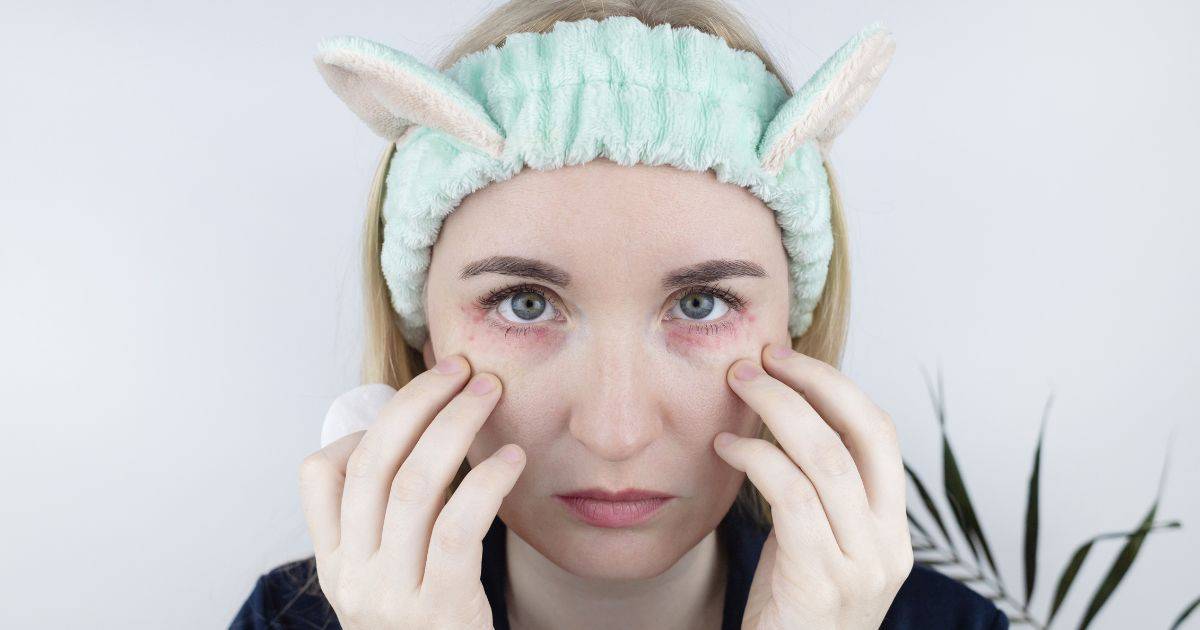
Red, itchy, irritated skin after trying a new moisturiser or foundation? That’s a scenario I know all too well — and one that can really ruin your day. A cosmetic allergy is becoming increasingly common and can be incredibly frustrating, especially when you have no idea which specific ingredient is the culprit. Let’s take a closer look at how to identify it with certainty, which substances to avoid, and what to do to get your skin back to a calm, happy state.
TL;DR
- A cosmetic allergy is a delayed immune reaction (type IV), typically appearing 24–72 hours after contact.
- The most common culprits are fragrances, preservatives (MIT/MCI), and metals in pigments (nickel, cobalt).
- The only reliable way to pinpoint specific triggers is epicutaneous testing (patch testing) carried out by a dermatologist.
- Learn to read ingredient lists (INCI). Watch out for “red flags” such as Parfum, Methylisothiazolinone, and formaldehyde releasers.
- The label “hypoallergenic” is no guarantee of safety. Always patch-test new products on a small area of skin, such as the inside of your forearm.
What is a cosmetic allergy?
When we talk about a “cosmetic allergy,” what we’re usually dealing with is allergic contact dermatitis (ACD). It’s a type IV immune reaction, which means it’s delayed. Unlike hay fever, where symptoms hit almost instantly, the trouble here doesn’t show up until 24, 48, or even 72 hours after you’ve applied the product. That’s precisely why tracking down the culprit is so difficult — by then, you often can’t even remember everything you put on your skin that day.
It’s important, though, to distinguish ACD from irritant contact dermatitis (ICD). ICD isn’t a true allergy — it’s direct irritation of the skin caused by an aggressive substance (a harsh cleanser, for instance). It shows up as stinging and redness almost immediately and can happen to anyone who overdoes it with a particular product. An allergic reaction, on the other hand, requires your immune system to “memorise” the substance (the allergen) and launch an inflammatory defence the next time it encounters it. This process is called sensitisation, and it can happen at any point in your life — even with a product you’ve used for years without a problem.
TIP: How do I know if I have an allergy?
Symptoms of a cosmetic allergy
An allergic reaction to cosmetics can manifest in various ways, but you’ll typically see the hallmarks of contact eczema. Don’t expect them straight after applying a cream — as I mentioned, the reaction usually peaks 1–3 days later.
Redness and intense itching
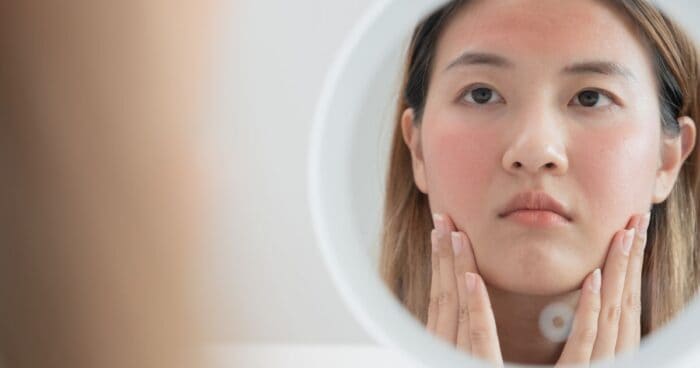
This is usually the first and most obvious symptom. The skin at the application site (and sometimes the surrounding area) turns red and itches relentlessly. It feels hot and tight to the touch.
Rash, bumps, and blisters
A rash often appears on the reddened skin in the form of small bumps or blisters filled with clear fluid. Once these burst, they leave weeping patches that eventually crust over. This is the classic picture of acute eczema.
Swelling
In areas with thinner skin — such as the eyelids or lips — the reaction can be accompanied by significant swelling. An allergy to eyeshadow or mascara, for example, often presents as puffy, red eyelids.
Dry and flaking skin
Once the acute phase subsides (or with chronic exposure to low concentrations of an allergen), the skin becomes very dry and rough, peeling in flakes. It may also crack, which is painful and raises the risk of infection. The same applies to cosmetic allergies in general.
You might also like: Allergic reaction on the face: How to recognise it and what helps?
Most common allergens in cosmetics
The list of potential allergens in cosmetics is, unfortunately, very long — and it keeps changing as the industry evolves. The perennial offenders that affect the most people fall into three main groups: metals, fragrances, and preservatives. When it comes to a cosmetic allergy, these are the ones to keep in mind.
- Metals (nickel, cobalt, chromium): Nickel remains the undisputed king of contact allergens in Europe, despite EU regulations limiting its release. Up to 18 % of the population is sensitised to it, predominantly women. You’ll find it not only in costume jewellery but also as an impurity in colour pigments used in eyeshadows and foundations.
- Fragrances: Fragrance allergy affects up to 16 % of eczema patients. The problem is that the single ingredient “Parfum” or “Fragrance” can conceal a blend of dozens to hundreds of different chemicals. Natural essential oils are deceptive too. Linalool, for instance — common in “natural” cosmetics — oxidises on exposure to air and turns into a potent allergen. That’s why a cream you’ve used for months without issues can suddenly start causing trouble.
- Preservatives: These substances prevent bacteria and moulds from growing in products, but they’re also a frequent cause of allergies. Parabens used to be the main concern; nowadays, other substances are on the rise — more on those in a moment.
TIP: Allergic rash: What does it look like and when does it go away?
Make-up allergy – which ingredients react
Decorative cosmetics are unique in that they contain a large number of pigments along with adhesion and longevity agents — and allergens often lurk among them. If you’re dealing with a make-up allergy, here are the most common suspects across different product types.
| Product | Typical allergen | Note |
|---|---|---|
| Foundation | Fragrances, preservatives (MIT/MCI, formaldehyde releasers), chemical UV filters | Often the first product where a fragrance allergy shows up, due to the large area covered and long wear time. |
| Eyeshadow | Nickel, cobalt, chromium (in colour pigments) | These metals are a common impurity in green, blue, and purple shades. The reaction appears on the delicate skin of the eyelids. |
| Mascara | Paraphenylenediamine (PPD), FD&C dyes, shellac | PPD is an extremely potent allergen, related to substances found in hair dyes. It causes severe swelling and redness of the eyelids. |
| Lipsticks and balms | Balsam of Peru, carmine (CI 75470), lanolin, propylene glycol | Balsam of Peru is a resin mixture and a common allergen. Carmine is a red pigment derived from insects that can cause reactions. |
| Nail polish | Tosylamide/formaldehyde resin, acrylates | Paradoxically, the allergy may not appear on the nails but on the face or neck — areas we frequently touch (so-called ectopic dermatitis). |
MIT/MCI and Cocamidopropyl betaine – hidden troublemakers
In recent years, dermatologists have been dealing with an epidemic of allergies to two groups of substances that are found almost everywhere.
Methylisothiazolinone (MIT) and Methylchloroisothiazolinone (MCI) are preservatives that came into widespread use after 2005 as a replacement for the then-vilified parabens. The result was a massive wave of contact allergies across Europe. In response, the European Union banned MIT in leave-on products (creams, toners) in 2017 and restricted its concentration in rinse-off products (shampoos, shower gels) to just 0.0015 %. Despite this, MIT/MCI allergy remains one of the most common. If you suspect it, look for the names Methylisothiazolinone or Methylchloroisothiazolinone on ingredient lists.
Cocamidopropyl betaine (CAPB) is a surfactant — a foaming agent found in virtually every shampoo, shower gel, and liquid soap. It’s what makes products lather up and cleanse. Unfortunately, impurities generated during its manufacture can turn it into an allergen. The American Contact Dermatitis Society even named it “Allergen of the Year” in 2004. If you’re struggling with an itchy scalp and suspect a shampoo allergy, CAPB is one of the prime suspects.
How to read cosmetics labels
Reading cosmetics ingredient lists (INCI) might feel like rocket science, but you only need to know a few basic rules. INCI stands for International Nomenclature of Cosmetic Ingredients, and it’s mandatory across the EU.
- Order matters: Ingredients are listed in descending order of concentration. The first five to seven ingredients typically make up over 90 % of the product. Allergens, however, can often lurk in much lower concentrations too.
- The 1 % threshold: Ingredients present at below 1 % can be listed in any order at the end of the list.
- “Parfum” or “Fragrance”: This is the biggest catch. Behind this single word can hide a blend of dozens of different fragrance chemicals. The EU requires mandatory declaration of the 26 most common fragrance allergens (e.g. Limonene, Linalool, Geraniol) if their concentration exceeds 0.001 % in leave-on products and 0.01 % in rinse-off products. From 2026, this list will expand by an additional 56 substances.
Ingredients to watch out for (red flags):
The most common offenders include: Fragrance/Parfum, Methylisothiazolinone, Methylchloroisothiazolinone (MIT/MCI), Formaldehyde and its releasers: Quaternium-15, DMDM Hydantoin, Imidazolidinyl Urea, Diazolidinyl Urea, Balsam of Peru (Myroxylon Pereirae), Propylene Glycol, Lanolin, Cocamidopropyl Betaine, and dyes containing metals (CI 77492 – iron oxides, CI 77288 – chromium oxide green).
How is a cosmetic allergy treated?
If you suspect an allergy, your first step should be a visit to a dermatologist or allergist. They’re the only ones who can confirm the diagnosis and help you identify the specific trigger. The cornerstone of treatment, however, always depends on your cooperation — and with a cosmetic allergy, that’s doubly true.
The absolute foundation is identifying and completely eliminating the allergen from your life. And here’s where the patience test begins. Even once you stop using the allergen, your skin “remembers” it. It can take 6 to 8 weeks for the inflammation to settle down and for you to see a significant improvement. Full restoration of the skin barrier can take 3 to 6 months. During this period, your skin is extremely sensitive and may react to things that never bothered it before.
In the acute phase, when the skin is weeping and itching, your doctor will most likely prescribe short-term topical corticosteroids to calm the worst of the inflammation. For sensitive areas like the face, topical immunomodulators (tacrolimus, pimecrolimus) are preferred instead. The real backbone of care, though, is consistent use of suitable emollients (barrier creams) to help restore the damaged skin barrier.

TIP: Hives: What do they look like and how long do they last?
Patch testing at the dermatologist – when and what to expect
If you’ve been struggling with chronic dermatitis for more than 6 weeks and standard treatment isn’t working, it’s high time for epicutaneous testing — better known as patch testing. It’s the gold standard and the only reliable way to uncover the cause of your contact allergy. When it comes to a cosmetic allergy specifically, this is a crucial step.
How does it work? The doctor applies special adhesive patches to your back, each containing small chambers with tiny amounts of the most common allergens. The standard set used is the European Baseline Series, which includes approximately 35 of the most prevalent allergens in Europe (metals, preservatives, fragrances, etc.). Depending on your occupation or hobbies, the doctor may add additional specialised panels — for example, a hairdressing, dental, or cosmetics panel, which can include around 70 extra substances.
The patches stay on your back for 48 hours (2 days). During this time, you mustn’t shower or sweat too much, as the patches could come loose. After 48 hours, the nurse removes them and the doctor performs the first reading. Where you’re allergic, a small patch of eczema (redness, bumps) will appear. Further readings are equally important, however — at 72 and often 96 hours — because the delayed immune reaction is peaking around that time.
When referred by a dermatologist or allergist, patch tests are fully covered by health insurance. If you chose to pay privately, the cost ranges between 2,500 and 4,000 CZK depending on the scope of allergens tested.
Prevention: How to avoid a cosmetic allergy
The best treatment is, of course, prevention. Once patch testing has revealed your allergens, you’re already halfway there. But even without test results, you can significantly reduce the risk of a reaction.
Choose products for sensitive skin
Look for products labelled for sensitive skin or fragrance-free. They tend to be gentler, but always check the full ingredient list regardless. Products developed specifically for allergy sufferers are usually the safest bet.
Read ingredient lists (INCI) carefully
Once you know your allergens, keep a list on your phone and cross-check it with the ingredient list on the packaging every time you shop. It’s detective work, but it pays off.
Test every new product
Before applying anything new to your face, test it first. Apply a small amount to the inside of your forearm or behind your ear. Repeat this for 2–3 consecutive days. If no reaction appears within 72–96 hours, the product is likely safe for you.
Buy from trusted retailers
In pharmacies or specialist shops, trained staff can often give you helpful advice. They may also provide samples for you to try — which is ideal.
TIP: What does a drug allergy look like and what should you do?
Cosmetics for allergy-prone skin
Hypoallergenic cosmetics — or cosmetics for allergy sufferers — are the best route to preventing reactions while still caring for your skin. Bear in mind, however, that the term “hypoallergenic” isn’t legally regulated and may simply mean the product omits the best-known allergens such as fragrance. It could still contain a substance that bothers you specifically.
One reliable brand is GALLINÉE, which makes skincare for people with very sensitive skin, allergy sufferers, and those prone to atopic eczema. Their products focus on supporting the skin microbiome and undergo rigorous clinical testing.
Natural cosmetics can also be a good choice, but proceed with caution. “Natural” doesn’t automatically mean “non-allergenic.” Plant extracts and essential oils are among the most common allergens. Always focus on the specific ingredient list and scientific testing, not just marketing claims.
You might also like: How to recognise atopic eczema
🧴 What I use on sensitive skin
For my face and body, I rely on the AtopCare range — free from fragrance, MIT/MCI, and SLS. For an initial indication of what you react to, a home allergy test can be helpful. However, diagnostic patch tests can only be carried out by a dermatologist.
📖 You might also enjoy
Conclusion
Living with a cosmetic allergy takes patience and a bit of detective work, but it absolutely doesn’t mean you have to give up all skincare. I understand how exhausting it is to keep trying new products only to have your skin protest every time. The key is realising this isn’t your fault — it’s a specific response from your immune system. Armed with knowledge of the most common allergens, the ability to read INCI lists, and the support of a dermatologist, you can take back control.
If you’re struggling with irritated skin and suspect an allergy, take the first step today. Book an appointment with a dermatologist and discuss the possibility of patch testing. In the meantime, go through your make-up bag and check the ingredients of the products you use most often. You may well spot some of the “red flags” we’ve talked about. Every small step counts on the road to calm, happy skin.
Frequently asked questions
How to calm an allergic reaction on the face?
Remove all cosmetics immediately using a gentle cleanser and lukewarm water. Cold compresses and a non-irritating barrier cream from the pharmacy can help soothe the skin. If the reaction doesn’t subside or is severe, see a doctor who may prescribe topical corticosteroids.
What to do about an allergic reaction to a cream?
If you develop a cream allergy, stop using the product immediately. Wash the affected area and apply a soothing cream free from fragrance and preservatives. For more severe reactions (swelling, weeping), consult a dermatologist who can determine the right course of treatment.
What does dermatitis mean?
Dermatitis is a general medical term for inflammation of the skin, characterised by redness, itching, and a rash. Contact dermatitis is a specific type caused by contact with an irritating substance or allergen.
What is hypoallergenic cosmetics?
Hypoallergenic cosmetics are formulated to minimise the risk of an allergic reaction. They usually omit the most common allergens such as fragrances or certain dyes. However, this is no guarantee that the product will be 100 % suitable for you.
How quickly does a cosmetic allergy appear?
A true allergic reaction (contact dermatitis) is delayed. Symptoms like redness, itching, and bumps typically appear 24 to 72 hours after contact with the allergen. Immediate stinging is more likely a sign of irritation rather than an allergy.
Is hypoallergenic really allergen-free?
Unfortunately, no. The term “hypoallergenic” isn’t legally regulated and simply means the manufacturer has reduced the risk of a reaction by omitting the best-known allergens. It can still contain an ingredient that bothers you personally, so testing is always essential.
Will a patch test at the dermatologist help me?
Yes, absolutely. Epicutaneous (patch) tests are the gold standard for diagnosing contact allergies. They pinpoint exactly which substances are causing your problems, so you can then make targeted efforts to avoid them.
Can I use baby cream instead?
Baby skincare isn’t automatically safer for adults with allergies. It can contain fragrance, lanolin, or plant extracts — all of which are common allergens. Always check the ingredient list, just as you would with any other product.
Does washing the product off during the day help?
If it’s an irritant reaction (immediate irritation), rinsing quickly can help. With a true allergic reaction, however, washing won’t make a difference because the immune cells in the skin have already been activated — the reaction will still unfold with a delay even after the product has been removed.