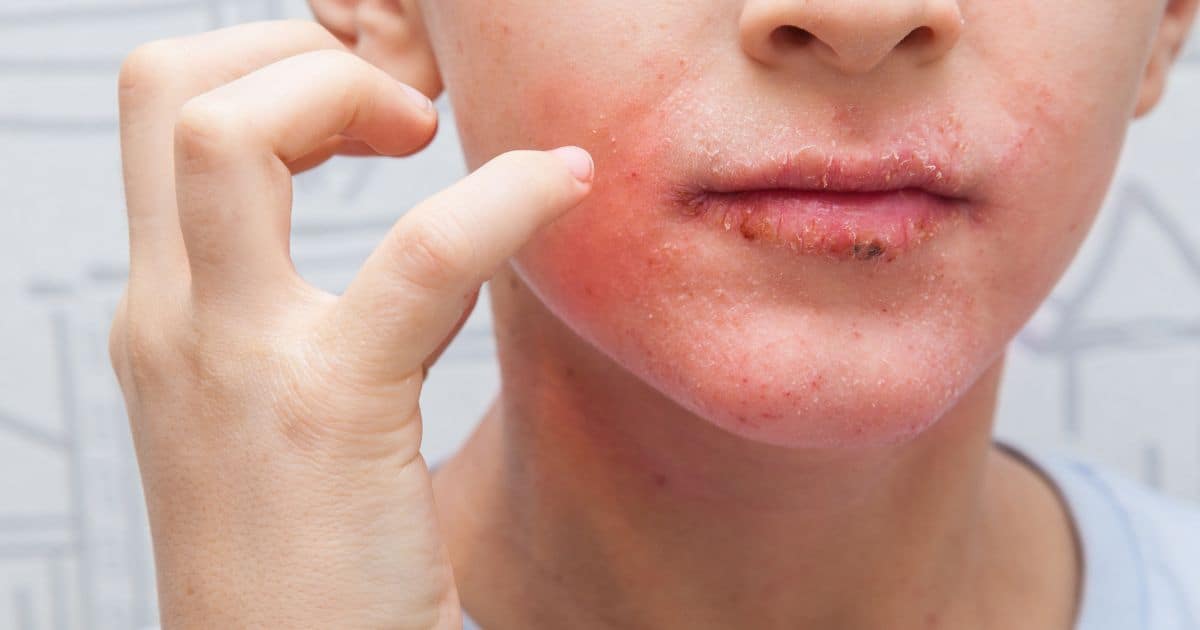
Have you noticed unusual bumps on your face? Don’t just brush them off. They might not be acne at all — they could be an allergic reaction on your face triggered by something your body doesn’t tolerate well. In this article, we’ll take a detailed look at exactly what a facial allergic reaction looks like, what causes it, and how to treat it effectively and safely.
TL;DR
- Unlike acne, an allergic reaction on the face appears suddenly — often within hours to days of contact with an allergen — and is mainly characterised by itching, redness, and swelling.
- The most common culprits are contact allergens in cosmetics (fragrances, preservatives, metals), foods, and inhaled allergens such as pollen and dust mites.
- A specific form is perioral dermatitis, which isn’t a true allergy but an irritant reaction — for example to fluoride in toothpaste or overuse of skincare products.
- Acute, severe swelling of the lips, eyelids, or tongue (Quincke’s oedema) accompanied by difficulty breathing is a medical emergency requiring immediate action.
- The cornerstone of treatment is identifying and eliminating the trigger. In the acute phase, antihistamines help, and topical products recommended by a dermatologist can calm the skin.
How does an allergic reaction on the face differ from acne?
An allergic reaction on the face is an immune response to contact with an allergen — whether that’s an ingredient in cosmetics, a food, or an inhaled allergen. By contrast, acne is a chronic inflammatory disease of the sebaceous glands, driven by genetics, hormonal changes, and bacterial activity.
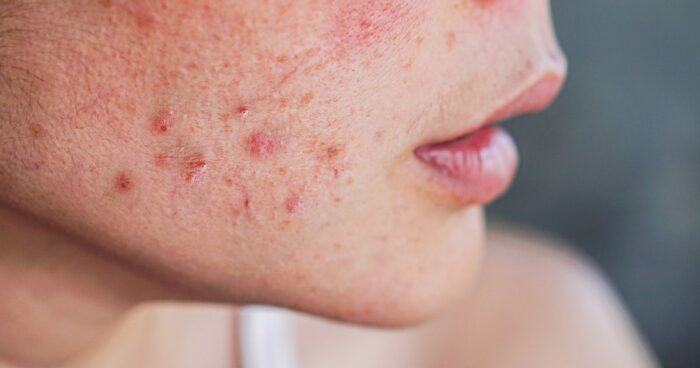
The key difference lies in how quickly symptoms appear and what they look like. Allergy symptoms come on suddenly and relatively quickly after exposure — with contact allergy, typically within 48–72 hours. Acne develops gradually over weeks and months. The appearance differs too: acne presents as comedones (blackheads and whiteheads), papules, and pustules concentrated around the sebaceous glands (the so-called T-zone), whereas an allergic rash takes the form of red patches, tiny bumps, blisters, or hive-like wheals (welts) that aren’t tied to hair follicles and are accompanied by intense itching.
How to recognise a facial allergy
Telling an allergy apart from other skin problems can be tricky. From personal experience, I know how frustrating it is to search for the cause when your face is burning and swelling up. Focus on these telltale signs to help you get your bearings — they’re especially important when dealing with an allergic reaction on the face.
Red patches and rash
Sudden, sharply defined or merging red patches are often the first signal. They may be accompanied by a fine rash, tiny blisters, or weeping — all typical of contact eczema.
Intense itching
One of the main distinguishing features is facial allergy itching. While acne can feel tender or painful, an allergic reaction typically itches relentlessly. This sensation is caused by the release of histamine and other inflammatory mediators in the skin.
Swelling (oedema)
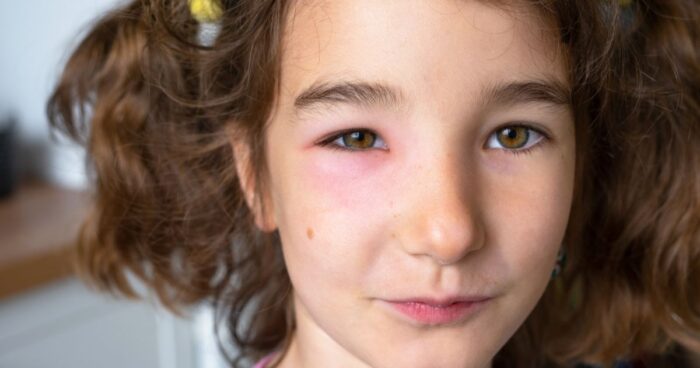
A severe allergic reaction often leads to swelling. Typical allergic facial swelling affects soft tissues such as the eyelids, lips, or ears. It can range from mild puffiness to dramatic angioedema.
Accompanying respiratory and eye symptoms
If the reaction is triggered by inhaled allergens (e.g. pollen), additional symptoms often join in: a runny nose, sneezing, burning and watery eyes, or a feeling of nasal congestion. These symptoms are absent in purely skin-related issues like acne. Remember, an allergic reaction on the face can behave differently from other types of allergic responses.
Causes of an allergic reaction on the face
Even when a reaction seems to appear out of nowhere, there’s always a trigger. Identifying it is the foundation of successful treatment. The most common causes include:
Contact allergens in cosmetics and creams
This is by far the most frequent cause. The skin on your face is thinner and more sensitive than elsewhere on your body. The most problematic ingredients include fragrances (up to 16 % of patch-tested patients are allergic), preservatives, and metals. In recent years, we’ve seen an epidemic of allergies to the preservative methylisothiazolinone (MIT/MCI), whose prevalence reached as high as 8 % in 2014. After it was banned from leave-on cosmetics in the EU in 2017, prevalence dropped to roughly 2.9 %, but we still encounter it in rinse-off products (shampoos, shower gels) that can trickle onto the face. When thinking about an allergic reaction on the face, always keep this in mind.
Pollen and environmental allergens
Pollen, mould spores, and house dust mites are classic inhaled allergens, but they can also provoke a skin reaction through direct contact with the face. A good example is so-called pollen dermatitis, which causes redness and itching on the eyelids, neck, and face during pollen season. The same applies if you’re dealing with an allergic reaction on the face.
Food allergens
Certain foods can trigger an immediate reaction that presents as hives and swelling of the face, lips, and tongue. This may be part of a systemic anaphylactic reaction. Other foods can worsen chronic eczema, but here the link is more complex and requires careful diagnosis.
Medications
We shouldn’t forget about allergic reactions to medications either. These can manifest as a wide range of skin symptoms, from a simple rash to life-threatening conditions. Always inform your doctor about every medication you’re taking.
Make-up allergy: which ingredients react most often
Make-up allergy is a specific form of contact dermatitis and poses a major problem for many women. The reaction isn’t immediate — it’s a type IV delayed hypersensitivity that typically appears 24 to 72 hours after application. This often makes it hard to pinpoint the culprit. Below you’ll find an overview of the most common problem ingredients in specific products.
| Product | Typical allergen | Time to reaction onset |
|---|---|---|
| Foundation / Primer | Fragrances (Linalool, Limonene, Geraniol), preservatives (parabens, formaldehyde releasers) | 24–72 hours |
| Eyeshadow / Eyeliner | Metals (nickel, cobalt, chromium — often as impurities in pigments), preservatives (MIT/MCI in liquid eyeliners) | 24–72 hours |
| Mascara | Nickel, cobalt (in black pigments such as iron oxide), lanolin, shellac | 24–72 hours |
| Lipstick / Lip balm | Balsam of Peru, fragrances, castor oil, propolis | 24–72 hours |
| Nail polish* | Formaldehyde resins (tosylamide/formaldehyde resin), acrylates | 24–72 hours |
*With nail polish, the reaction paradoxically doesn’t appear on the nails themselves but on areas you frequently touch — typically the eyelids, neck, and around the mouth.
My recommendation: Before using any new cosmetic product, do a simple tolerance test. Apply a small amount to a sensitive area of skin — the inside of your wrist or behind your ear works well. Leave it for 48 hours and watch for any redness, itching, or rash.
Perioral dermatitis — rash around the mouth
I very often see clients who confuse an allergy with a condition called perioral dermatitis. Although it appears on the face, it isn’t a classic allergy — it’s an inflammatory skin condition resulting from irritation and a compromised skin barrier. It presents as small red bumps (papules), sometimes with a pustular head, typically clustered around the mouth. An important diagnostic clue is that the rash spares a narrow rim of skin directly bordering the lips.
The main triggers include:
- Topical corticosteroids: Paradoxically, creams containing corticosteroids — often used to calm eczema — can trigger or dramatically worsen perioral dermatitis when applied to the face. This creates a so-called steroid skin dependency.
- Heavy and occlusive cosmetics: Rich creams, greasy make-ups, and waterproof sunscreens clog pores and disrupt the skin’s natural function.
- Fluoride toothpaste: The foam from toothpaste that lingers on the skin around your mouth during brushing can act as a chronic irritant.
The fundamental and absolutely crucial step in treatment is what’s known as “zero therapy”. This means radically discontinuing ALL cosmetic products — creams, serums, make-up. You wash your face with lukewarm water only. The first few days may bring a flare-up, but your skin needs time to rebuild its natural barrier. If this approach isn’t enough, a dermatologist may prescribe topical treatment (e.g. metronidazole or ivermectin cream) or, in more severe cases, systemic antibiotics (doxycycline, tetracycline), which are used for their anti-inflammatory effect.
What works for an allergic reaction on the face?
If you notice any of the symptoms described above, it’s essential to act systematically. Identifying the trigger is absolutely key to proper treatment. In the acute phase — and after consulting a doctor — the following approaches are used:
Antihistamines
These are the mainstay of treatment for itchy symptoms like hives and mild swelling. They block the effects of histamine, which the body releases during an allergic reaction. Modern, non-drowsy second-generation antihistamines are the preferred choice (e.g. those containing cetirizine, loratadine, or bilastine), as they don’t affect alertness.
Topical treatments (ointments and creams)
To calm inflammation, topical corticosteroids may be used short-term. However, they must be chosen very carefully for the face — only mild-potency formulations and for the shortest possible duration — to prevent skin thinning or triggering perioral dermatitis. A more modern and safer alternative for longer-term use is topical immunomodulators (calcineurin inhibitors), which suppress inflammation without the risks associated with corticosteroids.
Elimination and diagnosis
The most important step is finding and removing the cause. When contact allergy is suspected, the gold standard is epicutaneous (patch) testing, carried out by a dermatologist or allergist. These tests can pinpoint exactly which chemical substance you’re reacting to.
Quincke’s oedema — when to call an ambulance
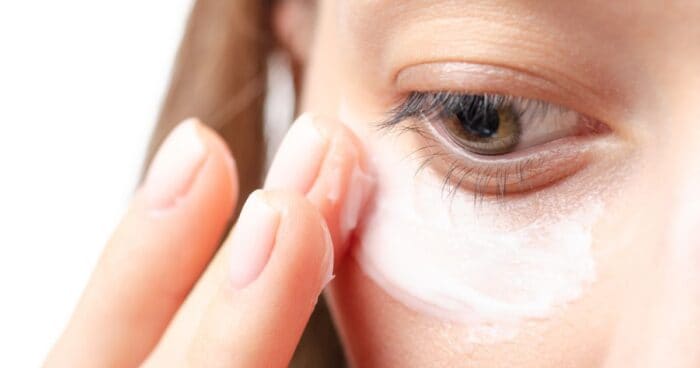
It’s absolutely vital to distinguish between ordinary allergic eyelid swelling and a life-threatening condition. Quincke’s oedema, medically known as angioedema, is a massive, rapidly developing swelling of the deeper layers of the skin and subcutaneous tissue. It typically affects the lips, eyelids, and tongue, but can also involve the hands or genitals. While mild eyelid swelling after allergen contact is unpleasant but usually resolves with antihistamines, angioedema can be fatal.
Call emergency services immediately if any of these warning signs appear:
These are clear signs of anaphylaxis — a systemic allergic reaction. Watch especially for rapidly worsening swelling of the tongue or throat, which can lead to suffocation, a feeling of tightness in the throat, difficulty breathing or wheezing, dizziness or feeling faint, rapid pulse, nausea and vomiting, or loss of consciousness. In such a case, you need to act immediately. If you have an adrenaline auto-injector (EpiPen, Jext), inject it into the outer thigh muscle and call emergency services right away.
Preventing an allergic reaction on the face
Once you know your trigger, consistent prevention is the key. That means not just treatment, but also adjusting your lifestyle and the environment you spend time in.
If you’re affected by respiratory allergens, the foundation is keeping the air at home clean. An air purifier with a quality HEPA filter can effectively remove airborne pollen, mould spores, and dust mite droppings that can irritate not just your airways but your skin too.
High humidity favours mould and dust mites. Ideal indoor relative humidity should stay between 40 and 60 %. If yours is higher, consider getting a dehumidifier to help keep the environment inhospitable for allergens.
Against dust mites — a common trigger for facial eczema, especially around the eyelids — anti-dust-mite bedding is highly effective. Thanks to a tightly woven fabric structure, it forms an impenetrable physical barrier between you and the allergens in your pillow and duvet.
For cosmetic allergies, prevention comes down to careful product selection. Choose products with the simplest possible ingredient list (INCI), ideally free from fragrances and dyes. Look for cosmetics labelled hypoallergenic or designed for sensitive, reactive skin. Learn to read ingredient lists and avoid any substances you have a confirmed allergy to.
📖 You might also find useful
Conclusion
An allergic reaction on the face is more than just a cosmetic nuisance — it’s a signal that your immune system is fighting something it sees as a threat. Understanding the differences between an allergy, acne, and other skin conditions like perioral dermatitis is the first step towards a successful resolution. While mild reactions can be managed with proper skincare and over-the-counter medications, it’s important not to ignore warning signs and to know when professional help is needed — and above all, when severe swelling means calling emergency services.
What can you do today? Go through your make-up bag and bathroom shelf. Check the ingredients of the products you use on your face daily. If you recently introduced a new product and a reaction appeared, try cutting it out for a week and see whether things improve. It’s a simple first diagnostic step that can tell you a great deal — and one you can take yourself before booking that dermatologist appointment.
🧴 First aid for your face
To calm facial reactions, I use gentle fragrance-free products — the AtopCare range has worked really well for me. During seasonal pollen reactions, a nano respirator outdoors and an air purifier at home also help.
Frequently asked questions
How to calm an allergic reaction on the face?
For immediate relief of a mild reaction, a cold compress and an oral antihistamine can help. A long-term solution requires identifying and removing the allergen. It’s always advisable to consult a doctor, who can recommend suitable topical creams.
What to put on an allergic reaction on the face?
Only products recommended by a doctor should be used on the face. Mild corticosteroid ointments are often prescribed short-term, or safer topical immunomodulators. Avoid experimenting with heavy or fragranced creams, which can make things worse.
What does a pollen allergic reaction look like on the face?
Pollen dermatitis typically presents as redness, swelling, and intense itching of the eyelids, but it can spread to the entire face and neck. It’s often accompanied by classic hay fever and conjunctivitis.
Does an allergic reaction cause facial swelling?
Yes, facial swelling is one of the typical symptoms. It can range from mild swelling of the eyelids or lips to severe Quincke’s oedema, which can compromise the airways and requires immediate medical attention.
What to do for acute facial swelling?
For mild swelling with no other symptoms, take an antihistamine and apply a cold compress. If the swelling is severe, spreading quickly, affecting the tongue or throat, or accompanied by breathing difficulties, call emergency services immediately. It could be life-threatening anaphylaxis.
How quickly does a make-up allergy appear?
A make-up allergy is a type of delayed hypersensitivity (type IV). This means the reaction doesn’t appear immediately but typically 24 to 72 hours after contact with the allergen. This often makes it difficult to determine which product caused it.
Does hydrocortisone help with facial allergy?
Yes, over-the-counter hydrocortisone cream can help calm inflammation and itching in the short term. On the face, however, it should be used for no more than a few days. Long-term use can lead to skin thinning, visible blood vessels, or trigger perioral dermatitis.
Why do I only have a reaction on my cheeks?
A localised reaction points to contact dermatitis — a reaction to something that touched the skin directly in that area. It could be blusher, a new cream, but also allergens transferred by your hands or even nickel from a mobile phone pressed against your cheek.
How to tell an allergic reaction from eczema?
An acute allergic reaction (e.g. hives) has a rapid onset, presents as itchy wheals, and resolves quickly. Eczema (atopic dermatitis) is a chronic condition with phases of remission and flare-ups; the skin is typically dry, thickened, and scaly, and patches tend to appear in characteristic locations (e.g. elbow and knee creases, neck).