
After spending a long time in strong sunshine, some people notice a red rash appearing on their skin. The rash is often accompanied by an unpleasant prickling sensation — a tell-tale sign of a sun allergy. In this article, we’ll take a closer look at what a sun allergy really is, whether it might affect you, and how to treat it.

What is a sun allergy?
Sun allergy is a skin reaction to sunlight. When your skin comes into contact with solar radiation, it can trigger an abnormal immune response that manifests in several different ways. The severity of the reaction varies from person to person.
Types of sun allergy
There are several types of allergic reaction to the sun. Below, we’ve listed the individual types of sun allergy from the most common to the rarest.
Polymorphous light eruption
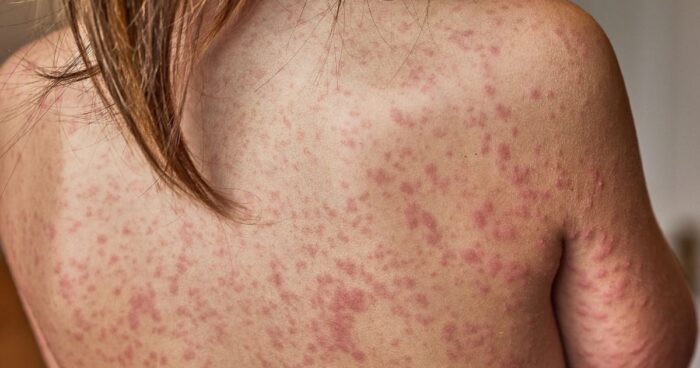
Polymorphous light eruption (PLE) is the most common type of sun allergy, and it presents as a rash. The sun rash takes the form of red dots or small bumps. It can appear on the face, neck, hands, and legs shortly after sun exposure.
Phototoxic and photoallergic reactions
These types of sun allergy occur when sunlight interacts with certain chemicals (medications, cosmetics) or plants and foods (citrus fruits, celery, St John’s wort, parsley). A phototoxic reaction presents as redness and swelling, while a photoallergic reaction may resemble a sun rash accompanied by itching and burning.
Mallorca acne
Mallorca acne is caused by a combination of several factors: sun exposure, the use of sunscreens or ointments with a high oil content, and excessive sweating. Together, these factors can clog the skin’s pores, ultimately leading to acne on the chest, shoulders, and back.
Solar urticaria
Solar urticaria is the rarest form of sun allergy. It can appear within minutes of sun exposure. You’ll recognise it by itchy bumps appearing on your skin. Nausea, a drop in blood pressure, and dizziness are also typical. It’s an immune-mediated reaction of sensitive skin to sunlight.
TIP: Hives: What do they look like and how long do they last?
What does a sun allergy look like?
As you’ve already learned, sun allergy comes in several forms with distinct symptoms. For a quick overview, here’s a summary of the most common sun allergy symptoms:
- Rash and redness – After sun exposure, an itchy rash in the form of red patches may appear on the skin.
- Blisters and swelling – In some people, sunlight causes blisters and swelling on the skin.
- Fever – A severe sun allergy can often lead to fever.
- Photosensitivity – People with a sun allergy may suffer from heightened sensitivity to light, meaning their skin reacts even to mild sunlight.
- Headaches and fatigue – Sun allergy can also be associated with headaches, fatigue, and general weakness.
Read more about other types of allergies and their symptoms.
Causes of sun allergy
The exact cause of sun allergy isn’t fully understood, but several factors can trigger or worsen an allergic reaction to sunlight. The main causes include:
- Genetics – Some types of sun allergy may have a genetic predisposition. You can inherit a sun allergy from your parents, and your children may inherit it from you.
- Immune system – Immune system disorders can cause an excessive reaction to UV radiation.
- Medications and chemicals – Certain medications and chemicals can increase your skin’s sensitivity to sunlight, triggering an allergy.
- Hormonal changes – Hormonal imbalances can also play a role in the development of a sun allergy.
You might also like: How do I know if I have an allergy?
Risk groups
Sun allergy affects people of all ages, but some individuals are more susceptible. At-risk groups include:
- Children and infants – The most common cause of sun allergy in children is their sensitive skin.
- People with low melanin levels – Melanin is one of the body’s natural defences against sunlight. The less melanin you have, the higher the likelihood of developing a sun allergy.
- People with weakened immunity – Immunosuppressive treatment or a compromised immune system increases the risk of sun allergy.

TIP: What does a sun allergy look like in children?
What helps with sun allergy?
Nowadays, there are quite a few ways to fight back against sun allergy. However, how well they work depends on the severity and type of your reaction.
The most common form of protection is sunscreen. Use a high-quality natural sunscreen that protects against both UVA and UVB rays. These creams shield your skin as soon as you apply them. They spread easily and don’t leave white marks on your skin, which is especially handy with children.
Don’t forget to reapply regularly. After every swim, towel-dry, or heavy sweat, reach for that sunscreen again and apply it thoroughly. Even with sunscreen on, you shouldn’t spend too long in direct sunlight. Keep sun exposure to a minimum between 12 and 2 pm, when the sun is at its strongest.
Read about how to choose the right sunscreen.
Wear protective clothing. Grab a hat, sunglasses, and clothing with UV protection. If you have a severe sun allergy, opt for long sleeves and trousers. Just make sure you choose clothing made from breathable materials.

Try to avoid sunbeds, as they can also trigger a sun allergy. After all, your health should always come before your tan.
Antihistamines and corticosteroids can also help manage a sun allergy by easing the allergic reaction. However, any medication should be discussed with your doctor first.
TIP: How to get rid of a sun allergy
Key takeaways
If you struggle with a sun allergy, you don’t have to spend the whole summer indoors. All it takes is good prevention: sunscreen with UV protection, protective clothing, and — for more severe cases — medication. Then you can head off on a holiday to warmer climates with confidence. See an allergist as soon as you suspect a sun allergy or if your symptoms get worse.
TIP: It’s easy to forget about the sun during sports and other outdoor activities. Whether you’re at the beach with the kids, teaching them to ride a bike, or playing football, always keep sun protection in mind.
Frequently asked questions
What does a sun rash look like?
A sun rash typically appears as red patches accompanied by an itchy sensation.
How do you treat a sun allergy?
Sun allergy can be treated with antihistamines and corticosteroids prescribed by your doctor. You should also apply sunscreen with UV protection, wear a hat, sunglasses, and, if needed, long-sleeved clothing.
What should you put on a sun rash?
A sun rash responds well to after-sun lotions that have a cooling effect and help soothe the skin.
When does a sun rash go away?
It depends on the severity of your allergy. Typically, a sun rash clears up within a few days. If it persists for an unusually long time, seek professional medical help.
Is sun allergy hereditary?
Yes, you can have a genetic predisposition to sun allergy — in other words, you may inherit it from your parents. However, there are multiple possible causes of sun allergy.