Sound familiar? You wake up in the morning with a stuffed-up nose, as if you’d been breathing chalk dust all night. Your skin itches at night, you toss and turn, and you can’t fall asleep — even though you’ve already tried switching to a fifth laundry detergent. During the day you’re exhausted, your eyes burn, and you keep sneezing long after pollen season is over. If this rings a bell, the problem probably isn’t tiredness or a cold — it’s your invisible bed-mates: dust mites in bed. The worst part? No matter how much you clean, that morning stuffiness and restless sleep keep coming back. I know exactly what you’re going through, because I’ve been there myself. Let’s look at how to finally break the cycle.
TL;DR
- Dust mites are a problem because of allergens in their droppings (mainly Der p 1), not because they bite. Symptoms can start even at low concentrations.
- The key is to keep humidity below 50 % and bedroom temperature at 18–20 °C. Without moisture, dust mites die.
- Anti-dust-mite encasings (ideally with a nanofibre membrane) are the foundation, because they physically block 100 % of mites and their allergens inside the bedding.
- No single measure is enough. A successful strategy combines encasings, washing bedding at 60 °C, vacuuming with a HEPA vacuum, and regular ventilation.
- You can verify your efforts with a home test such as the Acarex test, which measures the actual level of allergen contamination.
What are dust mites and why should you get rid of them?
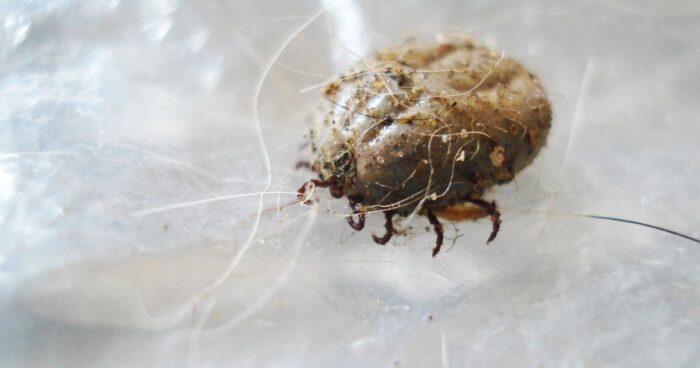
Dust mites are microscopic creatures from the arachnid family that live in mattresses, pillows, and bedding. They’re not parasites in the true sense — they don’t bite or suck blood. They feed on dead flakes of human skin, which are most plentiful right where we sleep, and where conditions are perfectly warm and humid for them.
The problem isn’t the mites themselves but their droppings. These contain aggressive enzymes (allergens), the best known being Der p 1. When you inhale these microscopic particles, your immune system can overreact. This triggers a dust mite allergy, which manifests as year-round rhinitis, a blocked nose, sneezing, coughing, or eczema. In sensitive individuals, dust mites can worsen asthma and lead to further respiratory problems.
How to tell if there are dust mites in your bed
Every bed contains dust mites to some degree — there’s no avoiding that. What matters is whether their presence is causing you problems. If you often wake during the night, have a blocked nose in the morning, sneeze or cough, it could be a sign of a dust mite allergy. Typically, symptoms get worse at night and upon waking, because you’re in direct contact with the allergens. Even if you don’t have a full-blown allergy, don’t underestimate an excessive mite population. If you suspect a problem, the best step is to visit an allergist who can carry out skin or blood tests and confirm the diagnosis.
Threshold levels — when dust mites become a problem
You might be wondering how many mites is “too many.” Allergists have clear answers and have established internationally recognised threshold values, measured in micrograms (µg) of the main allergen Der p 1 per gram of dust.
Sensitisation threshold: 2 µg/g of dust. At this concentration, sensitive individuals — especially children — risk their immune system beginning to produce antibodies. It’s the first step towards developing an allergy.
Symptom-triggering threshold: 10 µg/g of dust. If you already have an allergy, concentrations above 10 µg/g are considered a trigger for acute asthma symptoms and significant allergic rhinitis. A study published in the New England Journal of Medicine showed that children growing up in environments with concentrations above 10 µg/g had nearly five times the risk of developing asthma.
Here’s the crucial bit: an average unprotected mattress typically contains 5 to 15 µg of allergens per gram of dust. That means most of us sleep in an environment that exceeds the risk thresholds. You can measure the concentration at home using an over-the-counter test like the Acarex test, which shows you how contaminated your bed or sofa really is.
5 tips to get rid of dust mites in bed
Fortunately, there are plenty of ways to get rid of dust mites and their allergens today. It’s not about one big deep-clean — it’s about building a few regular habits. Here are the most effective ones that have helped me the most.
1. Ventilate regularly and reduce indoor humidity
This is the absolute foundation, and it costs nothing. Dust mites love moisture. Without relative humidity above 50 %, they can’t absorb water from their surroundings and die of dehydration. When you sweat at night and make the bed straight away in the morning without airing the room, you create the perfect incubator for them. Get into the habit of burst ventilation — open the window wide for 5–10 minutes in the morning after waking and again in the evening before bed. The air gets exchanged, but the walls don’t cool down.
If you live in an older house or generally struggle with dampness, ventilation alone may not be enough. In that case, a dehumidifier is a fantastic helper. Modern units automatically monitor the set humidity level and can keep it steadily below the critical 50 % mark.
2. Try anti-dust-mite encasings that mites can’t get through
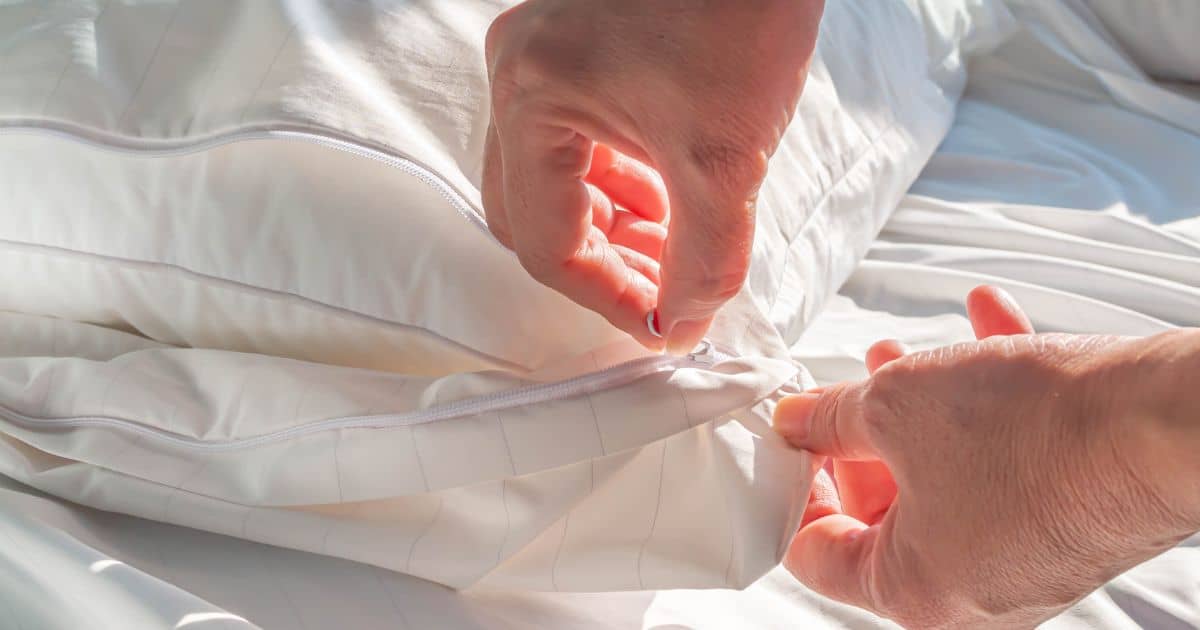
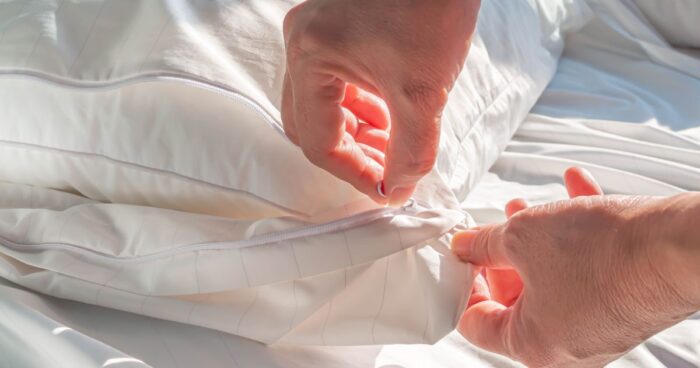
This was the single biggest game-changer for me. You can’t wash a mattress, pillow, or duvet — yet that’s exactly where millions of mites and massive amounts of their allergens accumulate. The solution is anti-dust-mite encasings. You slip them directly onto the mattress, pillow, and duvet (under your regular bed linen) and seal everything up completely. The mites stay trapped inside without access to food (your skin flakes), and their allergens can’t reach you.
The most effective encasings feature a nanofibre membrane that acts as an impenetrable mechanical barrier. You can either buy standalone covers or go for ready-made anti-dust-mite pillows and duvets. It’s an investment, but it brings immediate relief and more restful sleep.
3. Vacuum floors, carpets — and your bed too
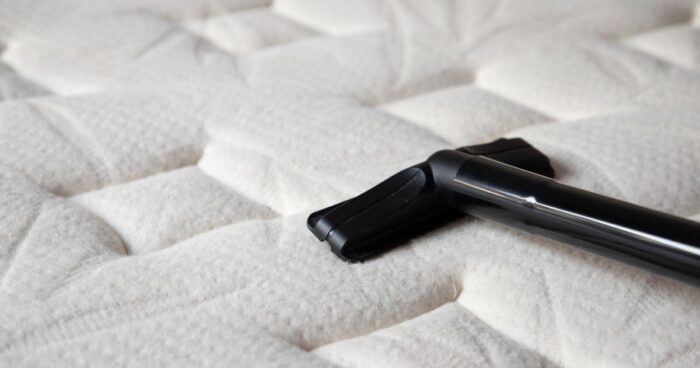
Regular vacuuming is a must, but you need to be smart about it. A standard vacuum without proper filtration simply sucks up dust with allergens and blows it back into the room through the exhaust, making things worse. For allergy sufferers, the only real option is a vacuum with a certified HEPA filter (class H13 or H14) and a well-sealed body. This captures even the tiniest particles and actually removes allergens rather than just moving them around.
Vacuum at least once or twice a week, and do it slowly so the nozzle has time to draw dust out of carpet fibres properly. Don’t forget upholstered furniture, and occasionally go over your mattress too (if you don’t have an encasing yet). When it comes to dust mites in bed, this matters doubly.
4. Wash bedding at 60 °C and freeze soft toys
The Czech Society of Allergology and Clinical Immunology (ČSAKI) recommends washing sheets and pillowcases ideally every week — at least once a fortnight — at a minimum temperature of 60 °C. This temperature reliably kills live dust mites and also destroys (denatures) the proteins in their allergens, so they stop irritating the immune system. Washing at 40 °C, unfortunately, leaves mites alive.
And what about those beloved soft toys that wouldn’t survive a hot wash? Pop them into a plastic bag and leave them in the freezer at –18 °C for 24 hours. The cold kills dust mites reliably. Afterwards, you can run the toy through a gentle wash cycle to remove dead bodies and allergens. When dealing with dust mites in bed, this is an important step.
5. Get an air purifier
How can an air purifier help with dust mites in bed? Dust mite allergens are relatively heavy and mostly sit on surfaces. But they get stirred up with every movement — making the bed, changing the sheets, or kids playing on the carpet. That’s exactly when a purifier with a HEPA filter comes into its own. It quickly captures airborne allergens before you breathe them in or they settle again, helping keep your bedroom air cleaner — something you’ll especially appreciate at night.
Nanofibre vs. woven barrier — what actually works
Once you decide on anti-dust-mite encasings, you’ll come across two main types of material: tightly woven microfibre and nanofibre membrane. What’s the difference? It’s a big one.
A woven barrier is made from very tightly woven polyester. The gaps between individual threads are small, typically around 6–8 micrometres (µm). That’s enough to stop dust mite droppings (10–40 µm) from getting through. However, the actual Der p 1 allergen molecules, which are much smaller, can theoretically pass through. Over time, washing and use can loosen the fabric structure slightly, reducing effectiveness.
A nanofibre membrane is an entirely different technology. It’s not a woven fabric but an ultra-thin layer of polymer fibres forming a chaotic, extremely dense mesh with pores just 80 nanometres (nm) across. For comparison: a dust mite measures about 420,000 nm (5,250 times larger than a single pore) and its droppings around 20,000 nm. It’s like trying to push a football through the eye of a needle — physically impossible. Nanofibre therefore provides 100 % capture of both mites and their faecal pellets. The effectiveness of this barrier has been confirmed by testing at the Technical University of Liberec, the Textile Testing Institute in Brno, and the National Institute of Public Health in Prague.
Acarex test at home — measure it yourself
Not sure whether the main source of allergens is the mattress, the carpet, or grandma’s old armchair? You don’t have to guess. You can check with a home Acarex test. It costs around 400 CZK and works on a simple principle — it doesn’t measure Der p 1 directly but guanine, a substance abundantly present in dust mite droppings that serves as a reliable indicator of their concentration.
It’s easy to use. With a special vacuum attachment, you collect a dust sample from the surface you’re testing (e.g. 1 m² of mattress). You mix the dust in an ampoule with a solution and after a short wait compare the resulting colour with the enclosed scale. The scale has four classes (0 to 3) and clearly shows how heavy the contamination is. Classes 2 and 3 indicate a risky concentration requiring immediate action — either thorough cleaning, using a barrier encasing, or in the worst case discarding the piece of furniture. The same goes for dust mites in bed.
What the Cochrane review says — and why people often get it wrong
You may have come across studies — for instance from the prestigious Cochrane organisation — claiming that encasings alone don’t improve asthma. And that’s true. The important catch, however, is in the word alone. Most of these studies tested encasings as an isolated measure — the patient received a mattress cover but continued sleeping under an old duvet in a room with high humidity and carpet.
Allergists see it differently. Dust mite allergy is a complex problem that demands a complex solution. Think of it like Swiss cheese. Each measure (encasing, dehumidifier, HEPA vacuum, washing) is one slice with holes. Use just one slice and allergens slip through the holes easily. But stack several slices on top of each other and the holes overlap, creating a solid barrier. Studies that tested this multi-layered approach (encasing + humidity control + HEPA vacuum + family education) demonstrated clear clinical benefit — fewer symptoms, lower medication use, and better quality of life. Isolated measures don’t work; a comprehensive strategy does. When it comes to dust mites in bed, keep that in mind.
🛏️ What works in my own bed
After years of trial and error, I know what works: nanofibre bedding encasings on the mattress + pillow + duvet, an air purifier with a HEPA filter running in the room, and during the heating season a dehumidifier keeping humidity below 50 %. A combination, not a single fix.
📖 You might also find useful
Conclusion
Fighting dust mites in bed can feel like a never-ending battle. I know it sounds like a lot of work and a lot of changes. But you don’t have to do everything at once. The important thing is to understand that there’s no single miracle product — it’s a system of smart habits that together bring allergen levels below the threshold that harms you. The foundation is a dry environment, a physical barrier in the bed, and regular removal of allergens from your surroundings. Every small step counts and gradually leads to the goal: peaceful nights and mornings without a blocked nose.
If you’re not sure where to start, do just one thing today. When you get home, strip the bed, grab your vacuum, and slowly, thoroughly go over the entire mattress from every side. Before you go to sleep, open the window wide and air out the bedroom for a good five minutes. It’s a small but concrete step in the right direction. Tomorrow you can add the next one. And if your symptoms persist, don’t hesitate to talk to your allergist about further options. When it comes to dust mites in bed, that goes double.
Frequently asked questions
What kills dust mites?
Dust mites are reliably killed by temperatures above 60 °C (washing, steam), freezing below –18 °C (freezer), and a dry environment with humidity below 50 %. Chemical sprays can also kill them, but they don’t remove the allergens.
How to get rid of dust mites in a mattress?
Since you can’t wash a mattress, the most effective solution is to completely enclose it in an anti-dust-mite encasing. This traps the mites and allergens inside and prevents them from multiplying.
How often should I wash bedding to get rid of dust mites?
Allergists recommend washing sheets and pillowcases every 1–2 weeks at a minimum temperature of 60 °C. This temperature reliably kills dust mites and destroys their allergens.
Does sunlight help fight dust mites in bed?
Yes, direct sunlight and heat help dry out and kill dust mites. Exposing a mattress or bedding to sunshine on a hot summer day is a great supplementary step alongside regular cleaning.
Can dust mites transmit diseases?
No, house dust mites do not carry infectious diseases. The sole problem is their allergens, which trigger allergic reactions in sensitive individuals and can worsen asthma.
How do I know if I have dust mites in my bed?
Typical symptoms include a blocked nose in the morning, sneezing, itchy eyes or skin that gets worse at night or upon waking. For certainty, visit an allergist or use a home Acarex test that measures the concentration of allergens in dust.
How often should you replace a mattress because of dust mites?
If you use a quality anti-dust-mite encasing, the mattress lasts significantly longer because it’s protected from colonisation. Without an encasing, replacement is generally recommended after 7 to 10 years, as a large amount of allergens accumulates over time. When it comes to dust mites in bed, this is an important consideration.
Do anti-dust-mite encasings really help?
Yes, they’re a cornerstone of any effective strategy. On their own, however, they’re not enough. They work as an impenetrable barrier that isolates a huge amount of allergens in the mattress and pillow, but they need to be combined with humidity control and regular cleaning.
How quickly do dust mites multiply without intervention?
Under ideal conditions — around 25 °C and humidity above 60 % — their population can double every two to three weeks. That’s why it’s so important to maintain an environment that doesn’t suit them.
Do dust mite sprays work?
Acaricidal sprays can kill live dust mites, but they don’t solve the main problem. Dead bodies and millions of droppings — the primary source of allergens — remain in the mattress. Physical barriers and cleaning are therefore a far more effective and long-lasting solution.