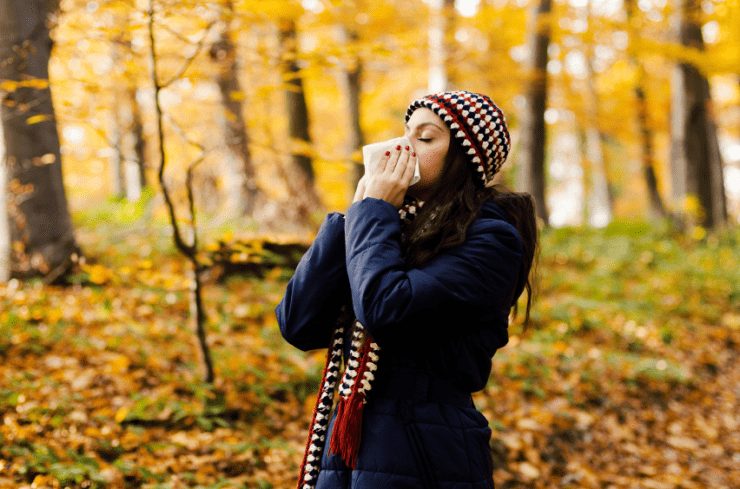
If you’re still asking yourself “why am I sneezing?” long after pollen season has ended, we have the answer. The triggers behind autumn allergies are different from those in spring and summer, yet they cause the very same symptoms. In this article, we’ll take a closer look at what’s making you miserable once the leaves start to turn.
What causes autumn allergies?
The biggest culprit is ragweed (genus Ambrosia), which starts releasing pollen during the first cool nights in August — and its season can stretch well into September or even October. Around 75 % of people who are allergic to spring pollens also react to ragweed.
Even if ragweed doesn’t grow near you, its pollen can travel hundreds of kilometres through the air. People who are allergic to ragweed may also have trouble with certain fruits and vegetables — for example bananas, melons, or cucumbers.

Mould is another major autumn allergy trigger. It can lurk in bathrooms, basements, and other damp areas of your home. Outdoors, you’ll often find it on piles of wet leaves. Mould can also grow on food, although a true allergy to it is relatively rare. If you spot a mouldy pepper at home, throw the whole thing in the compost — the mould has spread throughout the vegetable even if you can’t see it.
Don’t forget about dust mites. When you switch on the heating for the first time, they get stirred into the air and are a common cause of dust allergy. Dust mites can also trigger atopic eczema, which shows up as red, itchy skin on the face, scalp, and in the folds of the arms and legs (inner elbows, backs of knees, wrists). For the best ways to protect yourself against dust mites, head over here.
What are the symptoms of autumn allergies?
Symptoms naturally vary from person to person, but the most common ones include:
- Runny or stuffy nose – One of the most widespread signs of autumn allergies is a runny or blocked nose. People with allergic rhinitis often have congested nasal passages that make breathing difficult.
- Watery eyes – Itchy, watery eyes are another hallmark symptom. An allergic reaction to pollen or mould can leave your eyes irritated, red, and uncomfortably itchy.
- Constant sneezing – Autumn allergies can trigger frequent sneezing or coughing. Airborne allergens irritate the nasal lining and airways, setting off sneezing or coughing reflexes.
- Dark circles under the eyes – A blocked nose or itchy eyes can lead to poor sleep, fatigue, and irritability. The constant battle with an allergic reaction is exhausting and can take a real toll on your overall wellbeing.
- Itchy skin.

How to prevent allergic reactions
Your first step should be a visit to an allergist, who can give you a proper diagnosis. An allergist will take a thorough medical history and may carry out skin-prick tests to identify the allergens you’re sensitive to. An accurate diagnosis helps you understand your symptoms better and choose the right treatment.

When pollen counts are at their highest (usually in the morning and around midday), it’s best to stay indoors and keep your windows closed.
Before you turn on the heating for the first time in the season, clean the filters and vents. Bits of mould and allergens can get trapped in the ducts over summer and flood the air the moment you fire up the system.
- Use a dehumidifier to keep indoor humidity between 35 % and 50 %.
- Invest in barrier bedding made from nano-fabric and wash it once or twice a year.
- Wear a nano-fabric face mask when raking large piles of leaves.
Autumn allergies in children
Autumn allergies can affect children too. Keep a close eye on any of the symptoms listed above and, if needed, take your child to a paediatrician or allergist.
Read more about how to manage allergies in children.
Autumn allergies can be really unpleasant, but with the right care you won’t have to spend this beautiful, colourful season constantly sneezing and blowing your nose. Pay attention to how severe your symptoms are, and if things are getting worse, talk to your doctor or allergist about the best course of action.
TIP: Spring allergies
Frequently asked questions
What are autumn allergens?
Autumn allergens can include grass pollen, mould, and certain types of weeds. More specifically, the main offenders are ragweed (Ambrosia), birch, and moulds found in damp, fallen leaves.
When does ragweed bloom?
Ragweed is a plant that blooms in late summer and autumn, typically from August to October. During this period, its pollen concentration in the air is at its highest. Ragweed is one of the most common allergens and triggers allergic reactions in sensitive individuals.
How to recognise a pollen allergy
Pollen allergy typically presents with itchy eyes, watering, sneezing, a runny nose, and worsening asthma symptoms. These signs usually appear when airborne pollen levels are high. If you suspect you have a pollen allergy, see a doctor who can give you a proper diagnosis and recommend an appropriate treatment plan.
When does mugwort bloom?
Mugwort (Artemisia vulgaris) typically blooms in summer, specifically between July and September. It is a well-known allergen, and its pollen can cause allergic reactions.
Can allergies go away?
Allergies can combine, disappear, and come back again. This cycle is known as the allergic march.
Do I have allergies or a cold?
It’s often tricky to tell allergies apart from a common cold because some symptoms overlap. As a general rule, allergies tend to be recurring and long-lasting, while a cold usually clears up within a few days. If you keep getting symptoms like itchy eyes, sneezing, and a runny nose, allergies are the more likely culprit.
How long does an allergic reaction last?
The duration of an allergic reaction depends on the specific allergy and your body’s individual response. In general, allergy symptoms can last anywhere from a few hours to several days. With proper treatment and allergen avoidance, symptoms usually improve gradually. However, if you remain exposed to the allergen, they may get worse.