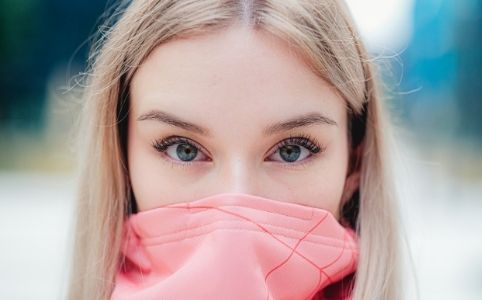
The antiviral scarf with a nanofibre membrane is a stylish alternative to nano face masks and FFP2 respirators. These scarves are officially recognised in the Czech Republic as a substitute for respirators and can be reused and washed repeatedly. You can wear them as an elegant yet effective form of protection against coronaviruses, during flu epidemics, or as a shield against smog and pollen.

Nano filter effectiveness in the nanoSPACE antiviral scarf
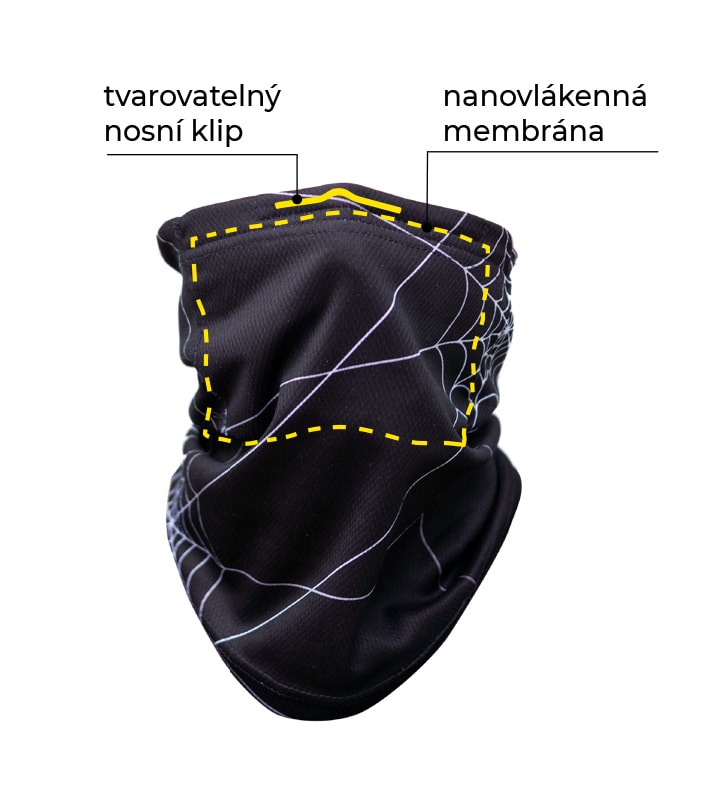
The nanoSPACE antiviral scarf contains a nanofibre filter — the same one used by the company PARDAM in the production of FFP3 and ANTI COVID respirators. The nanofibre membrane has a verified virus and bacteria capture rate of 97–99.9%. On top of that, the nano filter contains Nanosilver nanoparticles with antimicrobial properties.
How does the nanofibre filter in antiviral scarves work?
Think of the nanofibre filter as a dense mesh woven from incredibly thin fibres — nanofibres. The openings in the nanofibre membrane measure only a few tens of nanometres across, which means that virus-laden droplets, which are many times larger, simply cannot pass through.
What is the antiviral scarf made of?
The scarf itself is made from Coolmax, a material hugely popular among performance clothing manufacturers. And for good reason — it’s extremely lightweight, breathable, wicks sweat efficiently, and dries fast. Coolmax has a natural cooling effect and feels very comfortable against the skin, which is why it’s commonly used in clothing designed for extreme weather. The nanofibre filter is made from 95% polypropylene and 5% polyamide.
Why are Nanosilver nanoparticles used in the nanofibre membrane?
Silver has been used for healing purposes since ancient Greece and Rome, thanks to its antibacterial properties. In ancient Rome, for example, food was stored in silver vessels and silver coins were dropped into milk to keep it fresh for longer. Rulers didn’t use silver tableware merely for show — they were protecting their health. In essence, silver is a natural antibiotic.
Today, silver nanoparticles are used in wound-healing plasters and in clothing to reduce odour caused by perspiration. The nanofibre membrane in nanoSPACE antiviral scarves contains Nanosilver® nanoparticles. These prevent micro-organisms from surviving and multiplying within the scarf’s structure, while also helping to eliminate sweat-related odour.
When and where to wear an antiviral scarf
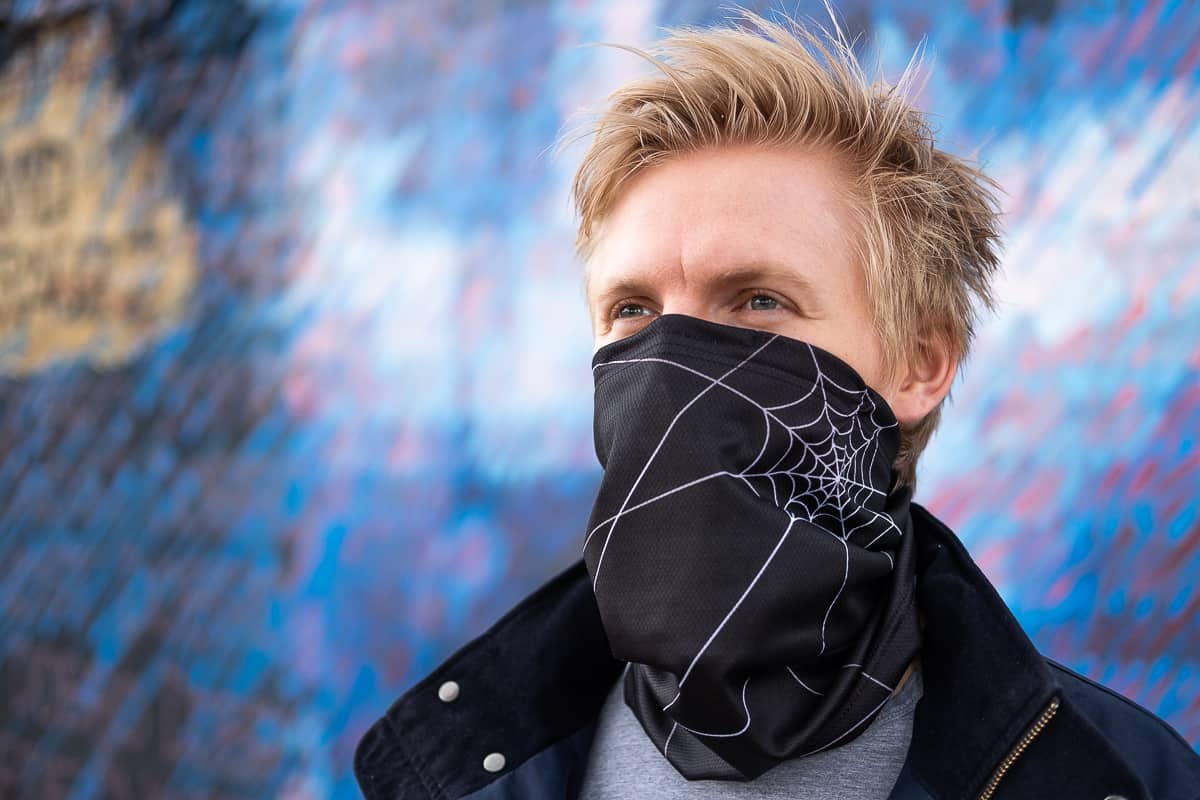
A nano scarf is ideal whenever there’s a heightened risk of respiratory disease transmission — particularly on public transport, in doctors’ waiting rooms, or in crowded spaces. NanoSPACE antiviral scarves also come in handy when travelling to smog-affected cities in Asia or during pollen season.
Who are antiviral scarves designed for?
Antiviral scarves are particularly well suited for allergy sufferers, people with asthma, and those with chronic conditions who need protection from viral infections, smog particles, or allergens. They’re also an excellent choice for anyone during flu epidemics or a coronavirus pandemic. The scarves are highly breathable and suitable for people with weakened immune systems.

How to care for antiviral scarves
Nanofibre scarves are washable at 40 °C. We recommend using a laundry disinfectant that kills bacteria, mould, and viruses at all temperatures. However, this disinfectant should not contain chlorine, bleach, fabric softener, or other harsh chemicals. The scarf must not be tumble-dried or ironed.
How long do viruses and bacteria survive on an antiviral scarf?
Bacteria and viruses need favourable conditions to survive. In most cases, they die within a few hours on fabric surfaces. COVID-19 is an exception, however — the virus can persist on clothing for up to 24 hours.
Where are nanoSPACE antiviral scarves manufactured?
NanoSPACE is a Czech nanotechnology company that develops and manufactures its products in southern Bohemia. Their nano scarves use exclusively Czech-made nanofibre membranes, and the entire production process takes place in the Czech Republic.
What colours are available?
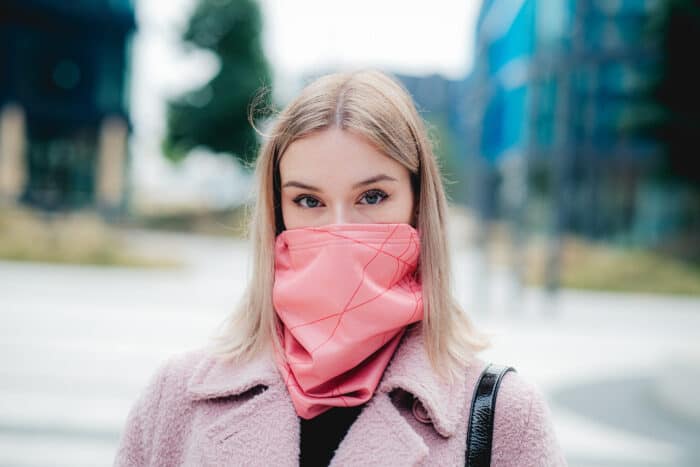
NanoSPACE antiviral scarves are available in grey, black, and pink.