
You’ve almost certainly heard of conjunctivitis — and there’s a good chance you’ve experienced it first-hand. But did you know it can be a direct result of your body’s contact with an allergen? That’s exactly why today we’re breaking down how to tell allergic conjunctivitis apart from other types, how to treat it effectively, and most importantly, how to prevent it from coming back.
TL;DR
- Allergic conjunctivitis is a non-contagious immune reaction to allergens — not an infection.
- The hallmark symptom that sets it apart is intense, often unbearable itching in both eyes, made worse by rubbing.
- Treatment relies on modern eye drops (antihistamines for quick relief, mast cell stabilisers for prevention) and consistent allergen avoidance.
- There are two main forms — seasonal (pollen) and perennial (dust mites, mould) — each requiring a different long-term management approach.
- Lifestyle measures such as cold compresses, temporarily ditching contact lenses, and using a HEPA air purifier are essential parts of treatment.
What is the conjunctiva?
The conjunctiva is a thin, transparent mucous membrane that lines the inner surface of the eyelids and extends over the white of the eye up to the edge of the cornea. Think of it as an ultra-sensitive protective barrier. It’s threaded with a network of blood vessels and nerve endings. Its primary job is to shield the eye from mechanical damage and the entry of foreign bodies, dust, and microorganisms. It also contributes to the tear film that keeps the eye moist and allows the eyelids to glide smoothly.
Causes of conjunctivitis: What triggers it?
Conjunctivitis is one of the most common eye conditions out there. It’s not a single disease, though — it’s a collection of symptoms that can have very different causes. Telling them apart is crucial for getting the right treatment.

Viral and bacterial conjunctivitis
Infectious forms of conjunctivitis are highly contagious. Viral conjunctivitis, often caused by adenoviruses, presents with watery discharge, redness, and a gritty sensation — typically affecting both eyes. Bacterial conjunctivitis, commonly caused by staphylococci, is characterised by thick, yellow-green purulent discharge that glues the eyelids shut in the morning. It often starts in one eye and easily spreads to the other. Both types call for a visit to the doctor, who can identify the culprit and prescribe the right treatment — usually antibiotic drops or ointment for bacterial forms.
Allergic conjunctivitis
Unlike the infectious types, allergic conjunctivitis is not contagious. It’s an overblown immune response to substances in the environment that are normally harmless. When an allergen comes into contact with the conjunctiva, immune cells (known as mast cells) release large amounts of histamine and other inflammatory mediators. These cause the blood vessels to dilate (redness), increase their permeability (swelling), and irritate nerve endings — leading to the classic symptoms. The most common triggers are inhaled allergens such as grass, tree, and weed pollens, mould spores, animal dander, and the ever-present dust mites.

Allergic conjunctivitis: Symptoms
If I had to pick a single symptom that sets allergic conjunctivitis apart from the rest, it would be intense, almost unbearable itchy eyes. Patients describe an urge to constantly rub their eyes — which, paradoxically, triggers even more histamine release and makes everything worse. Beyond the dominant itching, you’ll also see marked redness, excessive tearing (the discharge is typically clear and watery, not purulent), swollen eyelids, and sometimes swelling of the conjunctiva itself (known as chemosis). Light sensitivity (photophobia) and a burning or foreign-body sensation are common too. An important diagnostic clue is that allergic eye disease almost always affects both eyes at the same time and is often accompanied by other allergic symptoms — a runny nose, sneezing, or nasal congestion. This overlap is called rhinoconjunctivitis.
TIP: How do I know if I have an allergy?
Allergic conjunctivitis in children
In children, allergic conjunctivitis presents with very similar symptoms, but the course can be more dramatic. A child’s immune system is still developing and may react more forcefully. Children also cope less well with intense itching and have a stronger tendency to rub their eyes, leading to more pronounced swelling and redness. It’s also important to distinguish ordinary allergic conjunctivitis from a more serious form called vernal keratoconjunctivitis (VKC), which primarily affects boys with an atopic predisposition and can even damage the cornea. If your child has significant light sensitivity or complains of pain on top of itching and redness, see an eye specialist without delay.
You might also like: The most common allergies in children
Seasonal vs. perennial allergic conjunctivitis
For effective management, it’s essential to work out whether your symptoms are tied to the time of year or persist regardless of the calendar. Based on that, allergic conjunctivitis falls into two main categories:
Seasonal allergic conjunctivitis (SAC) is the most common form. As the name suggests, it’s linked to the pollen season. Symptoms typically kick off in spring with tree pollination (birch, alder), continue through summer when grass pollen allergy peaks, and taper off in autumn with weed pollen (mugwort, ragweed). Symptom intensity tracks the pollen calendar, and patients usually feel better after rain or when indoors.
Perennial allergic conjunctivitis (PAC) bothers sufferers all year round, although even here there may be noticeable fluctuations. Symptoms tend to be milder but chronic and exhausting. The main culprits are indoor allergens — above all dust mites, whose concentration is highest in bedding, along with mould spores (in damp areas like bathrooms and basements) and pet allergens (cats, dogs, rodents).
Besides these two main types, there are more serious but less common forms, including the already-mentioned vernal keratoconjunctivitis (VKC) in children and atopic keratoconjunctivitis (AKC), which typically occurs in young adults with severe atopic dermatitis and can lead to serious complications including corneal damage and vision loss.
How to treat allergic conjunctivitis
Treatment for allergic conjunctivitis rests on two pillars: immediate symptom relief and long-term prevention. Modern pharmacology in 2026 offers a wide range of topical preparations (eye drops) that target different phases of the allergic reaction. Systemic treatment with oral antihistamines has only a supporting role for eye symptoms — topical application is always more effective. The foundation of success, however, is always minimising contact with the offending allergen. In some cases, particularly severe ones, an allergist may recommend allergen immunotherapy, which is the only treatment that addresses the root cause of the allergy.
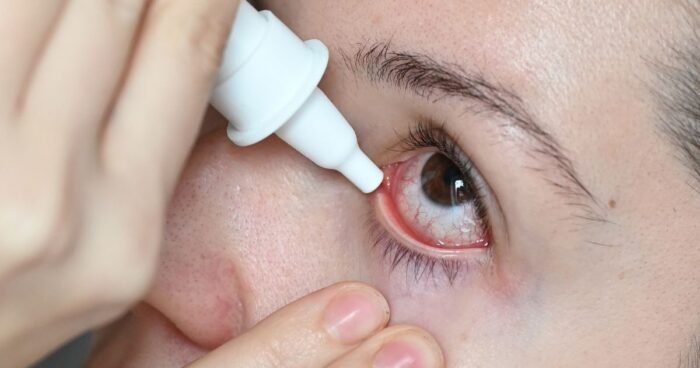
Eye drops by type — what to use when
Navigating the world of eye drops can be confusing. Not all eye drops for allergic conjunctivitis work the same way. The table below will help you understand which type suits your situation.
| Drop type | How it works | Onset of action | Duration | Example products |
|---|---|---|---|---|
| Antihistamines | Block H1 receptors, immediately counteracting the effect of histamine already released. Ideal for acute allergy-related eye itching. | Very fast (minutes) | 8–12 hours | Azelastine (Allergodil), Olopatadine (Opatanol), Levocabastine (Livostin) |
| Mast cell stabilisers | Prevent mast cells from releasing histamine. Work preventively, not on an already active reaction. | Slow (days to weeks) | Requires regular daily use | Sodium cromoglicate (Allergocrom), Lodoxamide (Alomide) |
| Combination products | Combine the fast action of an antihistamine with the preventive effect of a mast cell stabiliser. | Very fast | 12 hours | Ketotifen (Zaditen) |
| NSAIDs (non-steroidal anti-inflammatory drugs) | Reduce inflammation and pain but are less effective against itching. Used more commonly after eye surgery. | Fast | 6–8 hours | Diclofenac (Uniclophen), Ketorolac (Acular) |
| Corticosteroids | Very potent anti-inflammatory effect. Prescription only, for severe cases and short-term use under an ophthalmologist’s supervision. | Moderate (hours) | Short-term use | Fluorometholone (Flucon), Dexamethasone (Maxidex) |
| Preservative-free artificial tears | Mechanically flush allergens from the eye’s surface and moisturise the irritated conjunctiva. A supportive treatment. | Immediate | Short | Sodium hyaluronate (Hyabak, Hyal-Drop) |
Home remedies and lifestyle measures
Beyond medication, there are plenty of steps you can take on your own to ease symptoms and improve comfort.
Cool it down. Cold causes vasoconstriction (narrowing of blood vessels), which reduces redness and swelling. The simplest option is a cold compress placed over closed eyelids. A great trick is to store your preservative-free artificial tears in the fridge — the chilled drops feel doubly soothing. Rinsing your eyes with cold saline solution works well too.
Hands off your eyes! From both professional experience and personal life, I know that rubbing your eyes is almost a reflex — but it’s the worst thing you can do. The mechanical friction causes a massive release of histamine from mast cells on the conjunctiva, fuelling a vicious cycle of itching and inflammation.
Give your contact lenses a break. Wearing contact lenses during an active flare-up is a bad idea. The lens acts as a mechanical irritant, and allergens can build up on its surface. If you absolutely can’t go without them, choose daily disposable lenses over monthlies so you’re putting in a sterile pair every day — free of accumulated allergens.
Create a safe zone at home. If you suffer from perennial allergies, the bedroom is key. Investing in a quality HEPA air purifier can remove most airborne allergens from the room. If dust mites in your bed are the problem, use anti-dust-mite encasings on your mattress, pillow, and duvet, and wash your bedding regularly at 60 °C.
How to prevent allergic conjunctivitis
The most effective prevention is always identifying and then eliminating the triggering allergen. That’s naturally easier with indoor allergens than with pollen — but even there, you can make a real difference.
Monitor pollen forecasts and on high-count days for your allergen, limit time outdoors — especially around midday. After coming home, shower and change your clothes to wash off pollen grains. Don’t forget your hair. Keep car windows closed while driving and use a cabin air filter. The connection between the nose and the eyes is very close; a regular nasal rinse with a neti pot can ease eye symptoms too.
Protect your eyes outdoors. Good-quality, well-fitting sunglasses act as a physical shield, blocking a large proportion of pollen from reaching your eyes.
Minimise irritants. During a flare-up, avoid smoky environments, use hypoallergenic cosmetics, and be very gentle when removing make-up. Even these non-specific factors can further aggravate an already irritated conjunctiva.
📖 You might also like
Conclusion
Allergic conjunctivitis is unpleasant, no doubt — but in most cases it’s very manageable. The key is understanding what causes it and combining the right topical treatment with practical lifestyle changes. Don’t accept that your eyes have to make you miserable every spring or all year round. Modern medicine offers effective, safe options to take control of your symptoms and dramatically improve your quality of life.
Try a quick audit today: when do your eyes itch the most? In the morning after waking up in bed, after a walk through a blossoming park, or after contact with a pet? The answer to that question is the first and most important step towards identifying your trigger — and finding a targeted solution. If you’re not sure, don’t hesitate to book an appointment with an allergist.
💧 What helps me with itchy eyes
During dust mite and pollen season, this combo works for my eyes: a nasal rinse in the morning (it activates the nose-eye connection), a HEPA air purifier running non-stop indoors, and a respirator outside during peak pollen.
Frequently asked questions
When should I see a doctor about conjunctivitis?
Don’t delay a visit to the doctor if your symptoms are severe, accompanied by pain, light sensitivity, blurred vision, or purulent discharge. Only a professional can reliably distinguish allergic conjunctivitis from an infectious form and prescribe the right treatment.
Which eye drops work for allergic conjunctivitis?
For acute itch relief, antihistamine drops (e.g. azelastine, olopatadine) are the best choice. For long-term prevention, mast cell stabilisers or combination products are more suitable. Preservative-free artificial tears are always a helpful addition.
How long should I use eye drops for conjunctivitis?
Always follow your doctor’s advice or the patient information leaflet. Relief drops are used as needed, while preventive drops (stabilisers) require regular, long-term use throughout the entire allergy season or period of allergen exposure.
What can I give my child for conjunctivitis?
Always take your child to a paediatrician or eye doctor first to rule out infection and confirm the diagnosis. Specific products and dosages are approved for children. As a first-aid measure, you can use cold compresses and artificial tears.
How long does allergic conjunctivitis last?
It depends on the type. Seasonal conjunctivitis lasts for the duration of the relevant pollen season (weeks to months), while the perennial form can persist at varying intensity all year round until the allergen source (e.g. dust mites) is removed.
Why does only one eye itch?
Involvement of just one eye is actually quite unusual for allergies, since airborne allergens typically reach both eyes. If only one eye is bothering you, mechanical irritation (e.g. an eyelash or foreign body) or an early infection is more likely. Allergies can occasionally affect one eye — for instance, if you transfer an allergen directly with your hand.
Can I wear contact lenses with allergies?
During an active flare-up, wearing lenses is not recommended as they can further irritate the eye. Outside of peak season or with milder symptoms, daily disposable lenses are a better option since they minimise allergen build-up. Always apply eye drops before inserting your lenses, not after.
Which over-the-counter drops work best?
For fast itch relief, the most effective OTC drops contain second-generation antihistamines such as azelastine or levocabastine. For preventive care, drops with a mast cell stabiliser (sodium cromoglicate) are a good choice. Always check with your pharmacist for the most suitable product.
Does allergen immunotherapy help with eye symptoms?
Yes — and significantly so. Allergen immunotherapy (AIT) is the only treatment that tackles the root cause of allergy by training the immune system to tolerate the allergen. It has been shown to substantially reduce not just nasal but also eye symptoms, and can lead to long-lasting remission.