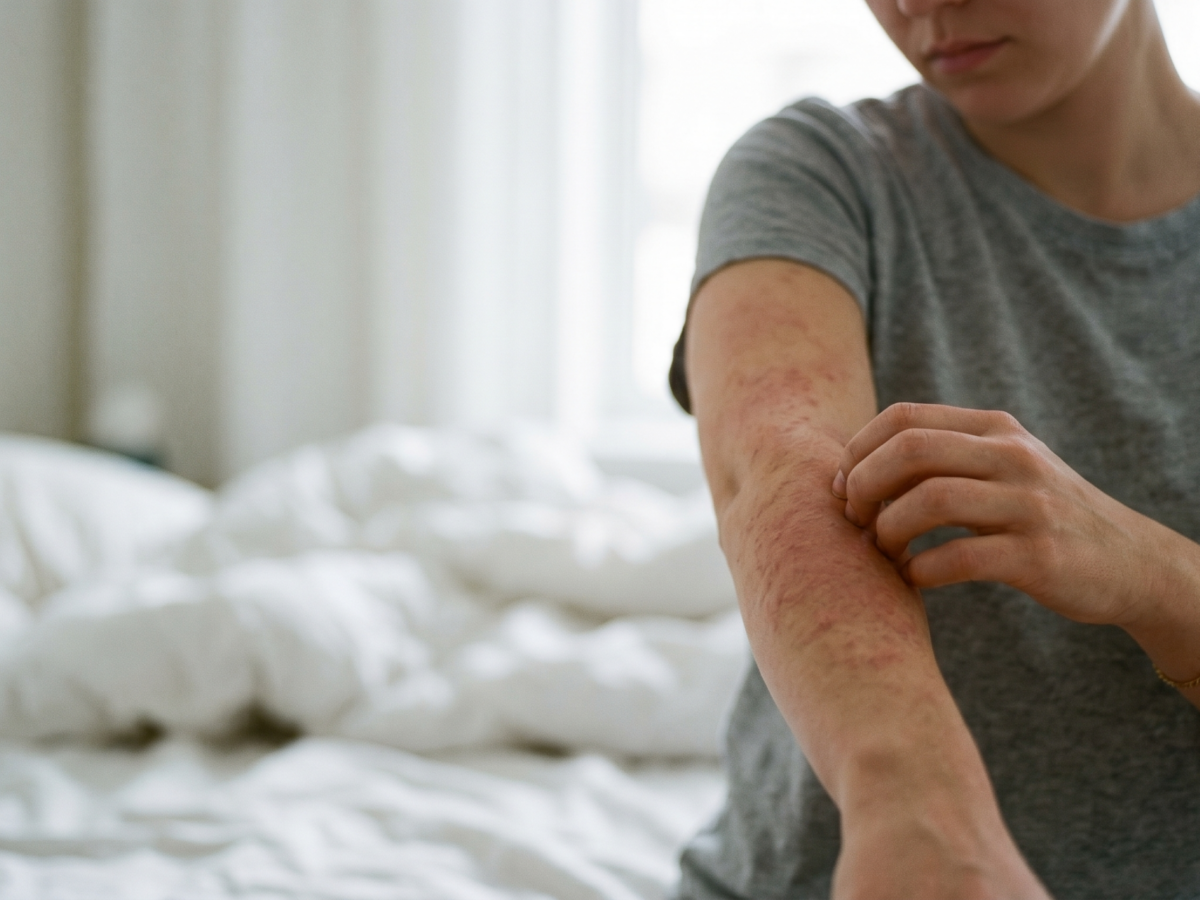
Do you wake up in the morning with itchy red bumps and immediately think of dust mite bites? You’re not alone. It’s one of the most common concerns people come to me with. The idea that millions of microscopic creatures are living in our beds and biting us at night is, frankly, terrifying. I completely understand the uncertainty and frustration of not knowing what’s causing your problems when all you want is a peaceful, itch-free night’s sleep. I’ve been through it myself. The good news? The reality is a little different — and, more importantly, fixable. In this article, we’ll go step by step through what’s really behind those supposed “dust mite bites,” how to tell them apart from flea or bed bug bites, and exactly what you can do for both immediate relief and a lasting solution. Get ready — we’re about to bust one big myth and replace it with practical, actionable steps.
TL;DR
- Dust mites don’t bite or sting. Their mouthparts aren’t designed for it — they feed on dead skin cells, not blood.
- So-called “dust mite bites” are actually a skin allergic reaction (rash) triggered by their droppings and body fragments.
- The rash appears as red, itchy bumps, eczema patches, or dry, irritated skin.
- Unlike bed bug or flea bites, “dust mite bites” aren’t arranged in lines and don’t leave blood spots on your sheets.
- The solution isn’t extermination — it’s reducing allergen exposure through barrier covers, humidity control, and proper cleaning.
Do dust mites bite? The short answer first
Let’s get this out of the way right at the start, loud and clear: No, dust mites do not bite or sting. While the image of biting creatures in your bed is incredibly vivid, it’s a myth. The question of whether dust mites bite has a simple answer rooted in their biology. House dust mites (Dermatophagoides pteronyssinus and Dermatophagoides farinae) feed on dead human skin cells, dander, and other organic debris in dust. Their mouthparts are designed for scraping and gathering this food — not for piercing skin and sucking blood the way mosquitoes, fleas, or bed bugs do. What you’re perceiving as dust mite bites is actually something else entirely.
What actually causes “dust mite bites”
If dust mites don’t bite, then what’s behind those itchy red bumps that look like dust mite bites? The culprit is an allergic reaction. The problem isn’t the mites themselves — it’s their droppings and decomposing body shells. These microscopic particles contain potent allergens, particularly digestive enzymes such as Der p 1. If you’re sensitive to these allergens, your immune system overreacts.
In people with a compromised skin barrier — typically those with atopic tendencies — these enzymes can penetrate into the deeper layers of the skin. There they encounter immune cells (mast cells), which respond by releasing histamine and other inflammatory substances. It’s the histamine that causes the itching, redness, and formation of bumps or eczema patches. What you’ve been mistakenly calling dust mite bites is actually a form of contact allergic dermatitis or a flare-up of existing atopic eczema. It’s not an attack from outside — it’s your own body’s reaction. A better term would be dust mite allergy rash. If you’d like to learn more about what a dust mite actually is and how it works, have a look at my earlier article.
Dust mite bites vs. fleas vs. bed bugs (comparison)
The confusion is understandable. Itchy bumps in bed can have several causes, and telling them apart is crucial because each one requires a completely different approach. With dust mites you’re dealing with allergens; with fleas and bed bugs you need to eliminate parasites. The table below will help you work out which is which.
| Criterion | “Dust mite bites” (rash) | Flea bites | Bed bug bites |
|---|---|---|---|
| Cause | Allergic reaction to dust mite droppings and body fragments (not actual bites). | Piercing and blood-sucking by fleas (usually from a pet). | Piercing and blood-sucking by the common bed bug. |
| Appearance | Variable: red dots, small bumps, eczema patches, dry skin. Often without a clear centre. | Small, firm, red bumps, often with a dark dot in the centre. Surrounded by a red halo. | Red, swollen bumps, sometimes with a blister. Larger than flea bites. |
| Pattern | Scattered, irregular, often covering larger areas. No clear pattern. | In irregular clusters, typically 3–4 bites close together. | Characteristic lines or clusters of 3 or more bites (“breakfast, lunch, dinner”). |
| Location | Areas with thin skin or skin folds (inner elbows, backs of knees, neck, face), but also the torso. | Most commonly around the ankles, shins, and waistline — areas easily reached from the floor. | Exposed body parts during sleep (hands, arms, neck, face, shoulders). |
| Itching | Intense, widespread itching that can be constant. | Very intense, often worsened by scratching. | Intense itching that may not appear until hours or even days later. |
| Other clues | None. Only skin symptoms. | Tiny black specks (flea droppings) in the pet’s bed. Visible jumping fleas. Learn more about flea bites in bed. | Small blood spots on the sheet, dark specks (droppings) on the mattress, shed skins. |
What a dust mite allergic reaction looks like
Now that we know we’re not dealing with dust mite bites but a skin reaction, let’s describe what a dust mite rash actually looks like. The symptoms can vary widely and are often confused with other skin conditions — which is why a consultation with a doctor is always a good idea. Generally, though, there are several typical forms.
Atopic dermatitis (eczema)
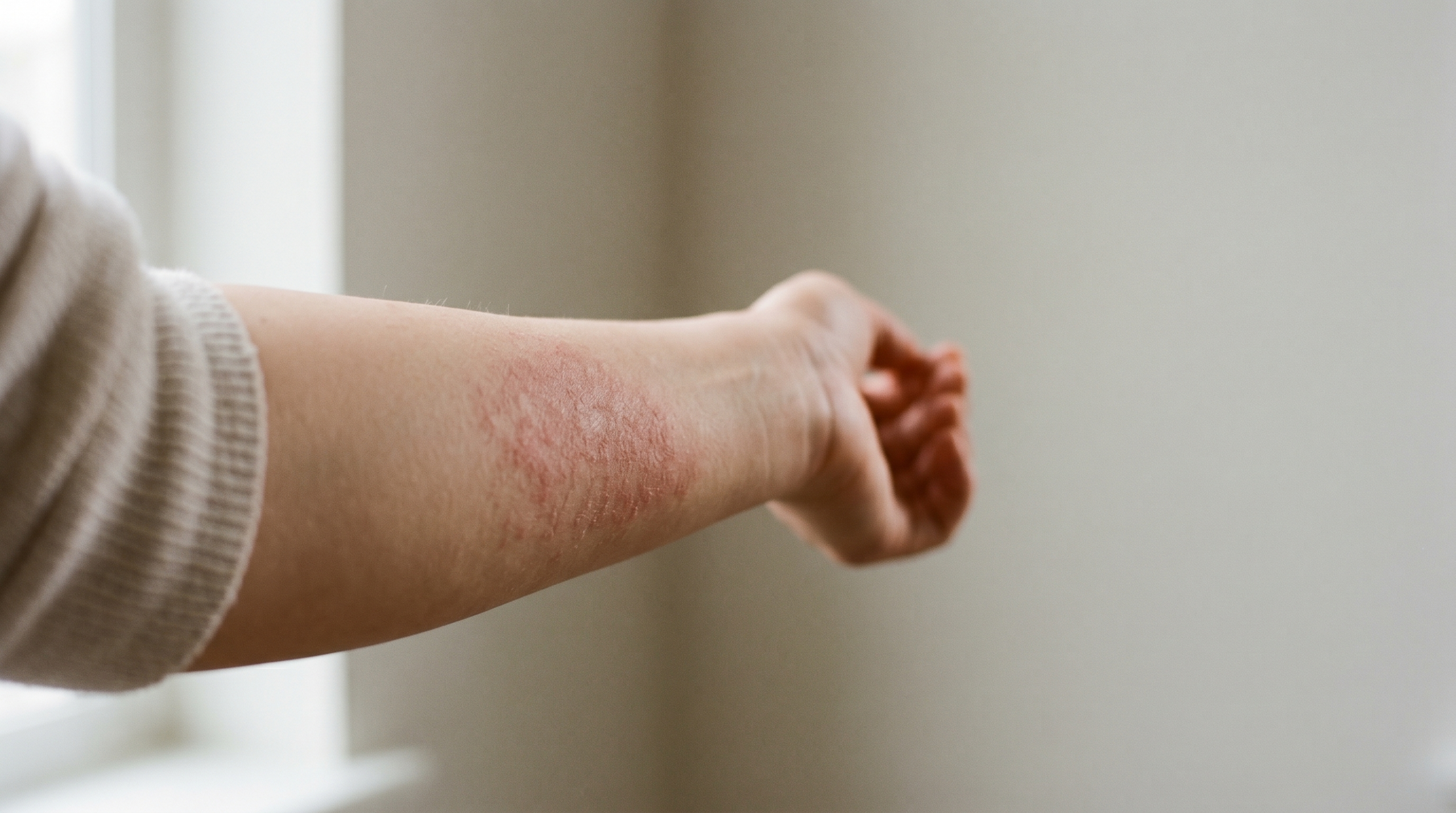
This is the most common manifestation, especially in children and adults with an atopic predisposition. Dust mite allergens act as a powerful trigger or aggravating factor for eczema. The skin is red, dry, flaky, and intensely itchy. Weeping patches can also develop, particularly after scratching. These aren’t individual “bites” — they’re more like continuous areas of inflamed skin.
Hives (urticaria)
Less commonly, direct contact with a high concentration of mite-laden dust — for example while cleaning an old attic or handling bedding that hasn’t been washed in a long time — can trigger acute hives. These are itchy, raised welts (wheals) that look like nettle stings. They usually disappear within a few hours but can reappear with the next exposure.
Itchy red bumps (papular rash)
Sometimes the reaction shows up as small, scattered red bumps that can most closely resemble dust mite bites. Unlike insect bites, however, they lack a central puncture mark and are more a sign of widespread skin irritation. They typically appear after a night spent in an environment with a high allergen concentration. This is the form that causes the most diagnostic mix-ups.
It’s important to realise that skin symptoms are only one part of the picture. They’re often accompanied by other signs of dust mite allergy, such as a stuffy nose on waking, sneezing, itchy eyes, or a morning cough. If you have these respiratory issues alongside a rash, the diagnosis is almost certain. You can read more about the various symptoms in my article on allergic rashes.
Where the rash most commonly appears
The location of the rash often gives the game away. While insects bite wherever they can easily reach you, a dust mite allergic reaction typically shows up where the skin is most sensitive or where there’s the most friction and contact with bedding.
The most common sites include:
Joint creases
The inner elbows and backs of the knees are a classic location for atopic eczema worsened by dust mites. The skin here is thin and tends to sweat more.
Neck and face
These areas are in constant contact with your pillow — one of the biggest reservoirs of dust mite allergens. Facial skin is also particularly sensitive.
Torso and back
Areas that spend the entire night pressed against the sheet and mattress. Friction during sleep can mechanically disrupt the skin barrier and make it easier for allergens to penetrate.
Wrists and ankles
More areas of thin skin where a rash can easily develop.
If bumps appear symmetrically in your joint creases and are accompanied by dry skin, it’s very likely that you’re not dealing with dust mite bites at all — but rather eczema.
What to do right away — quick relief
When your skin is unbearably itchy, you need immediate help — not a long lecture on prevention. Here are a few steps for fast relief from acute symptoms that resemble dust mite bites:
- Cold compress: The simplest and quickest fix. Soak a clean handkerchief or small towel in cold water, wring it out, and hold it against the affected area for 10–15 minutes. The cold constricts blood vessels, reduces inflammation, and dampens the itching sensation.
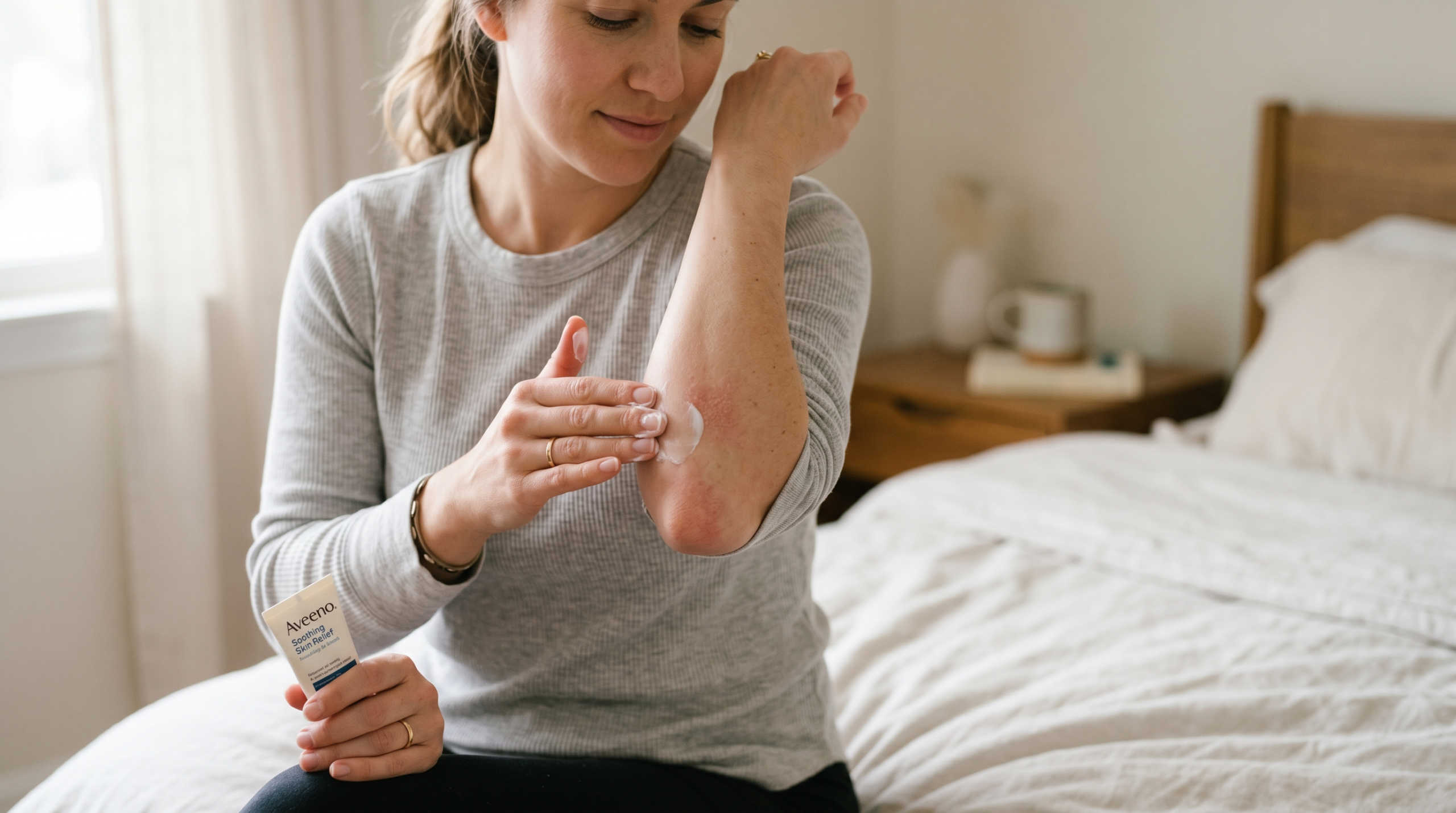
- Soothing cream or gel: Over-the-counter creams containing zinc, panthenol, or oat extracts can help calm irritated skin. Avoid fragranced products — they could make things worse.
- Short-term hydrocortisone: For small, highly inflamed patches, you can use an over-the-counter low-dose hydrocortisone cream after checking with your pharmacist. Apply a thin layer once or twice a day, but don’t use it long-term without a doctor’s recommendation.
- Antihistamines: If the itching is very intense and widespread, an over-the-counter antihistamine tablet (e.g. cetirizine or loratadine) can help. It blocks the effect of histamine in the body, easing both the itch and the redness.
- Don’t scratch! I know it’s nearly impossible, but scratching damages the skin, releases more histamine, and opens the door to bacterial infection. Instead, try gently tapping or pressing the itchy spot. Keep your nails trimmed short.
These measures will bring you temporary relief. They don’t, however, address the root cause — the presence of dust mite allergens in your bed and home.
Long-term solutions — bedding, humidity, cleaning
The real solution to those supposed dust mite bites lies in consistently reducing the allergens you’re exposed to — especially while you sleep. It’s a long game, but the results are worth it. Focus on three key areas.
1. Turn your bed into an impenetrable fortress
Your bed is ground zero. You spend a third of your life in it, and it’s the ideal incubator for dust mites. The goal is to create a barrier between you and their allergens.

Barrier covers
This is the single most important step. Get allergen-proof encasings for your mattress, pillow, and duvet. The best ones feature a nanofibre membrane that physically blocks even the tiniest allergens while remaining breathable. The covers seal existing allergens inside and prevent new mites from colonising. It’s the cornerstone of tackling dust mites in your bed.
Washing at 60 °C
Wash all regular bed linen (duvet covers, pillowcases, sheets) every 7 to 14 days at a minimum of 60 °C. This temperature reliably kills dust mites and denatures (destroys) their allergens, as recommended by the Czech Society of Allergology and Clinical Immunology (ČSAKI).
2. Control air humidity
Dust mites can’t drink — they absorb all their moisture from the air. Their survival depends on relative humidity. Keep it below 50 % and they start to die off.
Measure and reduce
Get a hygrometer and monitor the levels, especially in your bedroom. Aim to keep humidity between 40 and 50 %.
Air the room in short bursts
Instead of leaving a window slightly open all day, throw the windows wide open for 5–10 minutes several times a day. This exchanges the air quickly without cooling down the walls.
Use a dehumidifier
During a rainy autumn or in older houses, an electric dehumidifier is an invaluable ally.
3. Clean smarter, not harder
The goal isn’t a sterile home — it’s removing allergens without stirring them up into the air.
HEPA vacuum cleaner
Invest in a quality vacuum with an H13 or H14 HEPA filter that captures even microscopic allergens instead of blowing them back into the room. Vacuum at least once a week.
Damp-dust
Forget dry dusters. Use microfibre cloths slightly dampened with water. That way you pick up dust rather than spreading it around.
Minimise dust traps
Remove carpets, heavy curtains, upholstered furniture, and piles of decorative cushions from the bedroom. Smooth, wipeable surfaces are your best friend.
When to see a doctor
While there’s plenty you can do on your own, some situations call for a trip to the doctor. Don’t put it off if:
- The rash isn’t improving: If, despite lifestyle changes and over-the-counter treatments, the rash hasn’t faded within a week — or is actually getting worse.
- Symptoms are severe: The skin is heavily weeping or painful, or you suspect an infection (yellow crusts, pus).
- You’re unsure about the cause: If the table above didn’t help and you’re still wondering whether you have dust mite bites, bed bugs, or something else entirely. A dermatologist can give you a precise diagnosis.
- You have other symptoms too: If skin issues are joined by a night-time cough, shortness of breath, wheezing, or persistent year-round rhinitis. These point to a systemic allergy, and you should see an allergist.
A doctor (allergist or dermatologist) can make an accurate diagnosis using skin prick tests or blood tests for specific IgE antibodies. Confirming the diagnosis gives you certainty and allows targeted treatment to be set up, which may include prescription medication or allergen immunotherapy.

💡 Lucie’s recommendation
If you’re waking up with an itchy rash and your Acarex test shows class 2–3, nanofibre mattress barrier covers have worked really well for me. They seal the entire bed so allergens can’t escape. You should see results within 4–6 weeks. Also have a look at the full range of anti-dust-mite bedding.
📖 You might also be interested in
Conclusion
Our investigation into the mystery of dust mite bites has led us to a clear conclusion: dust mites don’t bite. What’s been bothering you is an allergic rash caused by their allergens. This matters, because it changes the entire approach to solving the problem. Instead of panicking about parasites, you can focus on effective, science-backed steps to reduce the allergen load in your home. Trust me — the feeling of waking up without itching and with clear skin after putting these measures in place is priceless.
Don’t wait for the problem to get worse. Start today with one small but concrete step. Check the current humidity in your bedroom with a hygrometer. Is it above 50 %? Open the windows wide and get a good cross-draught going. Plan to wash all your bedding at 60 °C this weekend. Every step like this brings you closer to peaceful nights and days free of those unpleasant skin symptoms you’ve been mistakenly blaming on dust mite bites.
Frequently asked questions
Do dust mites really bite?
No, house dust mites genuinely do not bite or sting. Their mouthparts aren’t built for it — they feed on skin flakes, not blood. What people perceive as dust mite bites is a skin allergic reaction to mite allergens.
What is the difference between a dust mite rash and eczema?
Often there isn’t a difference — the two are closely connected. Dust mite allergens are one of the most common triggers and aggravating factors for atopic eczema. A dust mite rash may therefore be a direct manifestation of eczema that has appeared or worsened due to high allergen exposure.
Can I get “dust mite bites” even if I have no other allergies?
Yes, it’s possible. An allergy can manifest solely on the skin, without rhinitis or asthma. Skin symptoms may be the first and only sign of sensitisation to dust mite allergens, particularly in people with sensitive or compromised skin barriers.
Why does the rash mainly appear in the morning?
Because in bed you’re exposed to the highest concentration of dust mite allergens throughout the entire night. Over eight hours of sleep, your immune system has plenty of time to react to allergens from the mattress and pillow, which is why redness and itching show up right after you wake.
Will “dust mite bites” go away on their own?
An acute rash may fade during the day once you leave the allergen-rich environment (e.g. after getting out of bed). However, if you don’t tackle the root cause — the high concentration of allergens in your bedding — the problem will recur every night and can become chronic.