That feeling when your throat starts tingling after something you’ve eaten is one of the worst. A thousand questions race through your mind in an instant. Is it just a mild reaction? Will it pass on its own? Or is this spiralling into something far more serious? The uncertainty is paralysing. I know exactly what I’m talking about, because as someone living with allergies, I’ve been through that spiral of fear and doubt more times than I can count. And the biggest fear that surfaces in those moments has a name: anaphylaxis. A severe, systemic allergic reaction that can strike within minutes — and without the right anaphylaxis first aid, it can be fatal.
The aim of this article isn’t to scare you. Quite the opposite. I want to give you a clear, accessible, and above all practical guide to what anaphylaxis actually is, how to recognise it reliably, and exactly what to do when it happens. We’ll walk through correct first aid step by step, based on the latest recommendations from European allergists, how to use an adrenaline auto-injector, and why adrenaline is the only medication that truly saves lives in this situation. None of this is guesswork — I’m drawing on data and protocols from organisations like EAACI (the European Academy of Allergy and Clinical Immunology) and WAO (the World Allergy Organization).
TL;DR
- Anaphylaxis is a medical emergency: It is the most severe allergic reaction, life-threatening and requiring immediate action.
- Adrenaline is the only rescue: Antihistamines and corticosteroids will not stop acute anaphylaxis. The first-line treatment is always adrenaline injected into the muscle.
- Know the symptoms: Anaphylaxis presents as a combination of symptoms across multiple organ systems (skin, airways, circulation, digestive system).
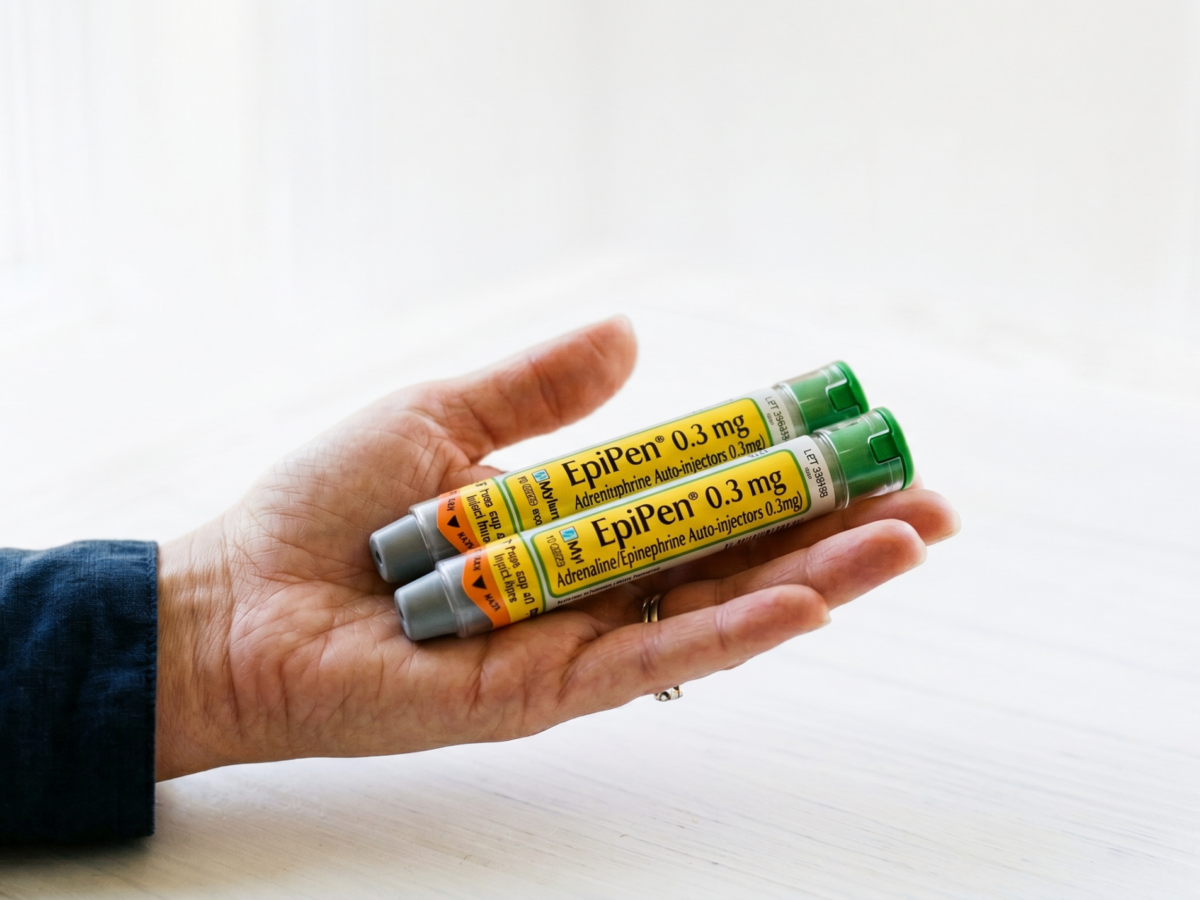
- Have a plan and two auto-injectors: Every at-risk allergy sufferer should have a written action plan and always carry TWO adrenaline auto-injectors (e.g. EpiPen).
- Always call emergency services after using an auto-injector: After administering adrenaline, call an ambulance and remain under medical supervision due to the risk of a second wave of symptoms.
What is anaphylaxis and why is it life-threatening
Imagine an ordinary allergic reaction as a localised fire — say, hives on your hand after touching a plant. Unpleasant, but contained. Anaphylaxis, by contrast, is a fire that engulfs the entire house. It is a severe, life-threatening, systemic reaction of the immune system to an allergen. The word “systemic” is key here — it means the reaction doesn’t just affect one area (like the skin) but strikes multiple organ systems at once.
The World Allergy Organization (WAO) refined the definition in 2020 to make recognition as fast as possible. In simple terms, we call it anaphylaxis when symptoms suddenly appear on the skin or mucous membranes (e.g. widespread hives, swelling of the lips and tongue) AND are accompanied by either breathing difficulties (shortness of breath, wheezing) or a drop in blood pressure (dizziness, weakness, collapse). The second criterion states that anaphylaxis can also occur solely as a sudden drop in blood pressure or bronchospasm after contact with a known allergen — even without any skin symptoms at all.
And that’s precisely where the greatest danger lies. Up to one in five fatal anaphylaxis cases occur without a single rash. A person may mistakenly believe they’re having an asthma attack when, in reality, their circulatory system is failing. Speed is another critical factor. With insect stings or intravenous medication, a reaction can reach full force within 5 to 30 minutes. Analyses show that roughly half of all deaths occur within one hour of symptom onset. There is no time to hesitate.
Symptoms — how to tell anaphylaxis from a normal allergic reaction

Telling a mild reaction apart from the start of anaphylaxis is the hardest — yet most important — task for a non-medical person. While a mild reaction is merely unpleasant, anaphylaxis is the body crying out for help. The key difference is that anaphylaxis affects multiple systems simultaneously.
Most often (in about 90 % of cases), it all starts on the skin. There may be itching on the palms, soles of the feet, or scalp that rapidly spreads. Flushing follows, along with an eruption of hives across the entire body. Angioedema may develop too — swelling of soft tissues, typically the lips, eyelids, tongue, or throat. However, if symptoms remain limited to the skin, it is usually not a life-threatening situation.
You need to pay close attention the moment another system becomes involved. The table below will help you tell the difference.
| Organ system | Mild allergic reaction | Anaphylaxis (life-threatening symptoms) |
|---|---|---|
| Skin and mucous membranes | Localised allergic rash, itching, mild hives in one area, slight redness. | Widespread hives all over the body, swelling of lips, tongue, throat (angioedema), facial flushing and a sensation of heat. |
| Respiratory system | Runny nose, sneezing, nasal itching. | Shortness of breath, feeling of throat tightening, wheezing, stridor, hoarseness, persistent cough, blue-tinged lips. |
| Heart and blood vessels | No symptoms. | Rapid and weak pulse, dizziness, feeling faint, pallor, cold sweats, confusion, loss of consciousness (signs of anaphylactic shock). |
| Digestive system | Mild itching in the mouth. | Cramping abdominal pain, persistent vomiting, diarrhoea. |
| Nervous system | No symptoms. | Anxiety, a feeling of “impending doom” (this is a genuine medical symptom!), confusion. |
The crucial rule is this: If you have symptoms from two or more systems (e.g. hives + shortness of breath, or vomiting + dizziness), it is anaphylaxis and you must act immediately.
Most common triggers (food, medication, insects, latex)
Anaphylaxis triggers vary by age. In children, food is by far the leading cause, responsible for more than half of all cases. In infancy, it’s typically cow’s milk and egg; in older children and teenagers, peanuts and tree nuts dominate — such as nut allergies involving cashews or walnuts.
In adults, the picture shifts. Although food still plays a role, drug allergies (especially antibiotics like penicillin) and venom from stinging insects (bees, wasps, hornets) take the top spot. Anaphylaxis from an insect sting tends to be particularly rapid and dangerous in adults. Other, less common triggers include latex, which can be a problem for healthcare workers or people who have undergone multiple surgeries.
There is also a specific form called exercise-induced anaphylaxis. In some people, physical exertion alone is enough to trigger a reaction. More commonly, however, it involves a combination where exercise triggers the reaction only after prior consumption of a particular food (most often wheat). Exertion increases gut-wall permeability, allowing a larger amount of allergen to enter the bloodstream. Co-factors such as alcohol or painkillers (NSAIDs) can make things worse by lowering the threshold for triggering a reaction even further.
Anaphylaxis first aid — EAACI 2021 protocol
The first-aid approach has undergone a revolution in recent years. In 2021, the European Academy of Allergy and Clinical Immunology (EAACI) published updated guidelines that put everything on a single card: adrenaline. Forget the old advice about giving antihistamines and waiting. Correct anaphylaxis first aid now follows a clear, uncompromising protocol.
Step 1: Immediately inject adrenaline into the muscle
If symptoms involve two or more organ systems (see the table above), don’t hesitate for a second. The first and only line of treatment is adrenaline injected into the outer thigh. Adrenaline works on multiple fronts: it constricts dilated blood vessels (raising blood pressure and reducing swelling), strengthens heart function, relaxes constricted airways, and halts further release of mediators from allergy cells. It is the only drug that addresses every life-threatening aspect of anaphylaxis.
Step 2: Position the person correctly
Positioning is just as important as the medication. During anaphylaxis, blood vessels dilate massively, and blood “pools” in the extremities. If the affected person stands up, there is an immediate risk of collapse and cardiac arrest due to insufficient blood returning to the heart.
If blood pressure drops (dizziness, weakness)
Lie on your back and raise your legs.
If you’re struggling to breathe (but not dizzy)
Stay seated, leaning slightly forward — this makes breathing easier.
If unconscious (but breathing)
Place them in the recovery position (on their side).
Pregnant women
Lie on the left side so the uterus doesn’t compress the inferior vena cava.
Step 3: Call emergency services
Immediately after administering adrenaline, call for an ambulance. Always state that this is anaphylaxis and that adrenaline has been given. Transport to hospital for further monitoring is essential.
Step 4: Give a second dose if needed
If there is no improvement within 5 minutes — or the condition is worsening — administer a second dose of adrenaline from a second auto-injector.
EpiPen, Jext and Emerade — how to use an auto-injector step by step

An adrenaline auto-injector is a pre-filled pen designed so that even a complete novice under stress can use it. The most common brands are EpiPen, Jext, and Emerade. Although they differ slightly in design, the principle is the same.
How to use an EpiPen (the most common device):
1. Grip the pen firmly in your fist. Imagine you’re holding a dagger. Your thumb must not be over either end.
2. Remember the rhyme: “Blue to the sky, orange to the thigh.”
3. Remove the blue safety cap. This arms the device.
4. Place the orange tip firmly against the outer thigh. The needle will go through clothing (jeans, trousers). There’s no need to undress.
5. Press firmly into the thigh until you hear a click. That means the needle has deployed and the adrenaline is being delivered.
6. Hold it in place and count slowly to three. (The old recommendation was 10 seconds, but newer studies have shown that 3 seconds is sufficient.)
7. Pull the pen away from the thigh. The needle retracts automatically into its housing.
8. Gently massage the injection site for about 10 seconds to help the medication absorb.
Always call emergency services after using the pen. Anyone at risk of anaphylaxis should carry TWO auto-injectors at all times. The reasons are straightforward: the first injection may not go smoothly, the device mechanism could fail, or a single dose may simply not be enough to halt the reaction.
Why antihistamines are not enough for anaphylaxis
One of the most dangerous myths is that you can treat anaphylaxis by taking an antihistamine such as cetirizine or diphenhydramine. That is simply not true. According to the 2021 EAACI guidelines, antihistamines are not part of the initial treatment of anaphylaxis.
The reason is straightforward: they work far too slowly (taking tens of minutes to kick in) and, more importantly, they do absolutely nothing to address life-threatening symptoms. Antihistamines may ease itching and hives, but they won’t prevent throat swelling, raise your blood pressure, or open up constricted airways. Relying on them in an acute situation is like trying to extinguish a house fire with a bucket of water.
The view on corticosteroids (e.g. prednisolone, methylprednisolone) has shifted similarly. They used to be given routinely in the belief that they would prevent a second wave of reaction. We now know their effects don’t kick in for 4–6 hours, so they are useless in the acute phase. Giving them may even create a false sense of security and delay the administration of life-saving adrenaline. As a result, their routine use in first aid is no longer recommended. The answer for anaphylaxis is, plainly, adrenaline.
Biphasic anaphylaxis — a second wave within 1–72 hours
Successfully managing the initial attack may not, unfortunately, be the end. A phenomenon known as biphasic anaphylaxis refers to a situation where symptoms return after completely subsiding — without any further contact with the allergen. It is essentially a second wave of the reaction.
Studies suggest that a biphasic reaction occurs in roughly 7 % of patients. It most often arrives about 8 hours after the first episode, but the range is enormous — from 1 hour to up to 72 hours. It is precisely because of this risk that every patient must remain under medical observation in hospital after anaphylaxis.
The single biggest risk factor for biphasic anaphylaxis is delayed adrenaline administration. When adrenaline is given more than 30 minutes after symptoms begin, the risk of a second wave rises more than threefold. This underscores just how vital it is not to hesitate and to act quickly.
Action plan for allergy sufferers (and families)
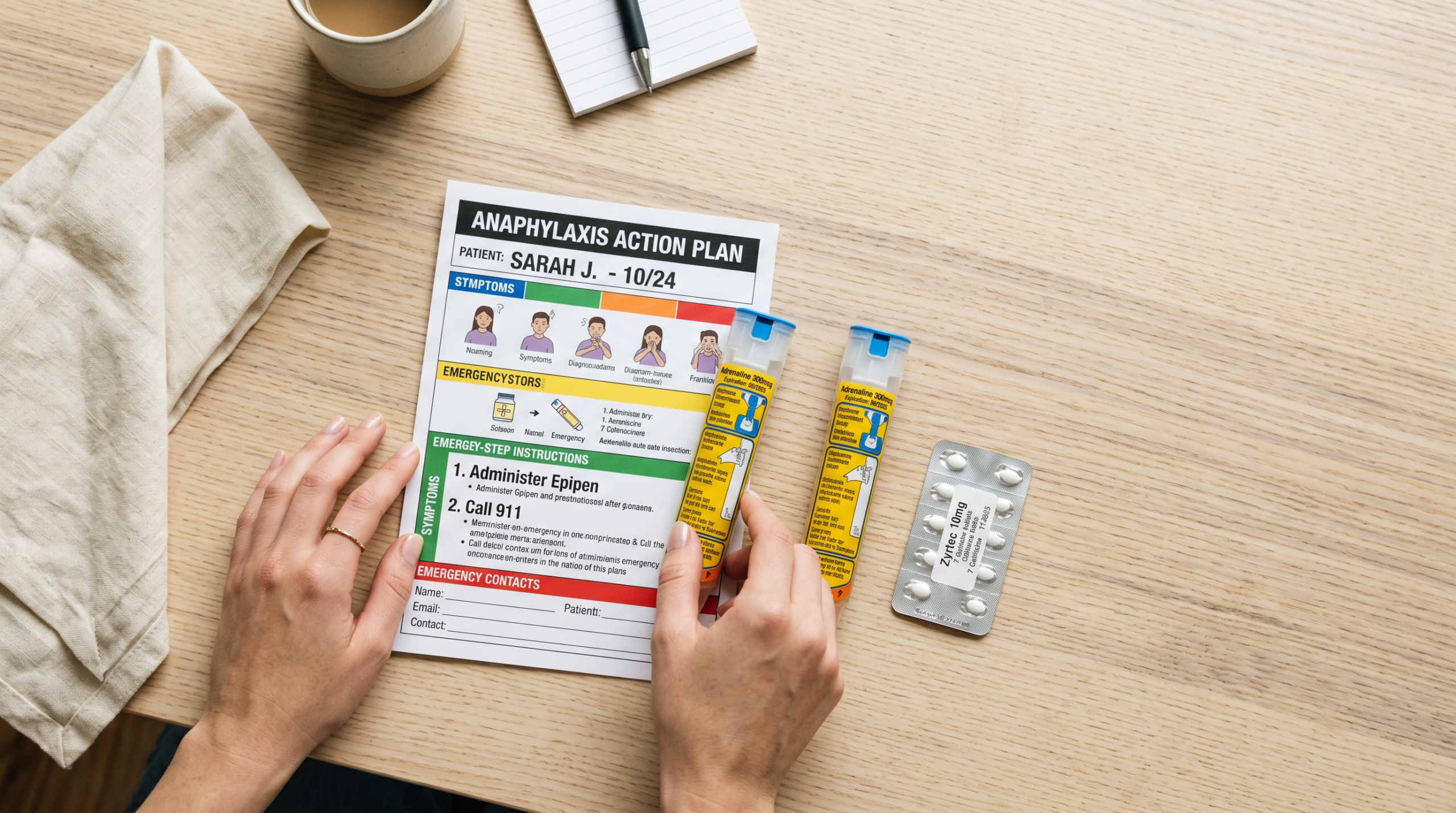
Living with the risk of anaphylaxis is mentally tough. The best weapon against fear is preparedness. Every patient at risk of a severe allergic reaction should have a so-called Anaphylaxis Action Plan drawn up by their allergist.
It’s a simple, often colour-coded A4 document that you keep with you at all times (in your wallet, in your bag), with copies held at school, nursery, or work. The plan clearly and concisely sets out:
1. Your name and what you’re allergic to.
2. Symptoms of a MILD reaction and what to do (e.g. take an antihistamine and monitor).
3. Symptoms of a SEVERE reaction (ANAPHYLAXIS) and what to do (immediately administer an adrenaline auto-injector, call emergency services).
4. Contact details for parents/next of kin.
This plan eliminates the need to think and make decisions under stress. It gives you and those around you a clear algorithm to follow. If you don’t have one yet, book an appointment with your allergist and ask them to create it. It is the absolute foundation of your safety.
Anaphylaxis in children — key differences

Anaphylaxis in children has several unique features to be aware of. Young children, especially infants and toddlers, cannot describe what they’re feeling. Instead of complaining about a “lump in their throat,” they may simply be unusually tearful, listless, drool excessively, or develop sudden hoarseness.
The triggers also differ, as we’ve already mentioned — most commonly milk and egg. Adrenaline dosing is strictly based on body weight:
- Children under 6 years (approx. 15–30 kg): 150 mcg dose (e.g. EpiPen Jr.).
- Children aged 6 to 12 (over 30 kg): 300 mcg dose (standard EpiPen).
- Adolescents and adults: 300 mcg or 500 mcg dose (Emerade).
Educating those around the child is absolutely vital. Parents must ensure that everyone involved in the child’s care — nursery and school teachers, grandparents, camp leaders — knows how to recognise anaphylaxis, where the adrenaline auto-injector is kept, and how to use it. Most schools require an action plan directly from the child’s doctor.
How long to stay under observation after a reaction
After every episode of anaphylaxis — even if it seems to have resolved completely following adrenaline — transport to hospital and subsequent observation are essential. The reason is precisely the risk of a biphasic reaction.
The length of monitoring depends on the severity of the initial reaction. In milder cases that responded quickly to a single dose of adrenaline, a minimum of 4–8 hours is recommended. If the reaction was severe, required multiple doses of adrenaline, or involved a drop in blood pressure, observation for up to 24 hours may be necessary. The decision is always made by the treating doctor in the emergency department.
📖 You might also find helpful
Conclusion
I know the topic of anaphylaxis is frightening. But knowledge and preparedness are the best antidote to fear. When you know what to do, you stop being a passive victim and become an active manager of your own health. Remember the most important thing: anaphylaxis is a race against time, and adrenaline is the only thing that wins it. Antihistamines are just spectators in the stands.
If you’ve been diagnosed with a serious allergy and are at risk of anaphylaxis, do one thing today. Check that you’re carrying TWO adrenaline auto-injectors with a valid expiry date. Review your action plan. If you don’t have one, book an appointment with your allergist. It’s the single most important step you can take for your safety. And remember — when in doubt, it’s always better to give adrenaline unnecessarily than not to give it at all. That said, always discuss the precise protocol for your individual case with your doctor.
Frequently asked questions
What is the difference between anaphylaxis and anaphylactic shock?
Anaphylactic shock is the most severe form of anaphylaxis. It is the state in which the reaction causes a massive drop in blood pressure and circulatory failure. The person is pale, weak, has a rapid and barely palpable pulse, and may lose consciousness. Any episode of anaphylaxis can develop into anaphylactic shock.
Can anaphylaxis happen for the first time in adulthood, even if I’ve never had allergies?
Yes, unfortunately it can. While food allergies typically manifest in childhood, allergies to medications or insect venom can appear at any point in life without prior warning. That’s why it’s worth knowing the symptoms even if allergies don’t seem to affect you.
Can I harm myself by using adrenaline by mistake?
Expert recommendations are clear: when in doubt, it is always safer to give adrenaline. The risk of untreated anaphylaxis is incomparably greater than the risk of adrenaline side effects (palpitations, tremor, headache), which are temporary and self-limiting. Never wait until things are “really bad.”
Why do I always have to go to hospital after using an EpiPen?
For two main reasons. First, the effect of adrenaline is relatively short-lived, and the reaction may return. Second, monitoring is necessary because of the risk of biphasic anaphylaxis — a second wave of symptoms that can occur even hours later. In hospital, they can provide further treatment and keep you under observation.
Is an adrenaline auto-injector covered by insurance?
If prescribed by a specialist (allergist, paediatrician, dermatologist) due to the risk of anaphylaxis, the auto-injector is typically fully or partially covered by health insurance. Two devices are usually prescribed at a time. It’s important to keep track of the expiry date and get a new prescription in good time.