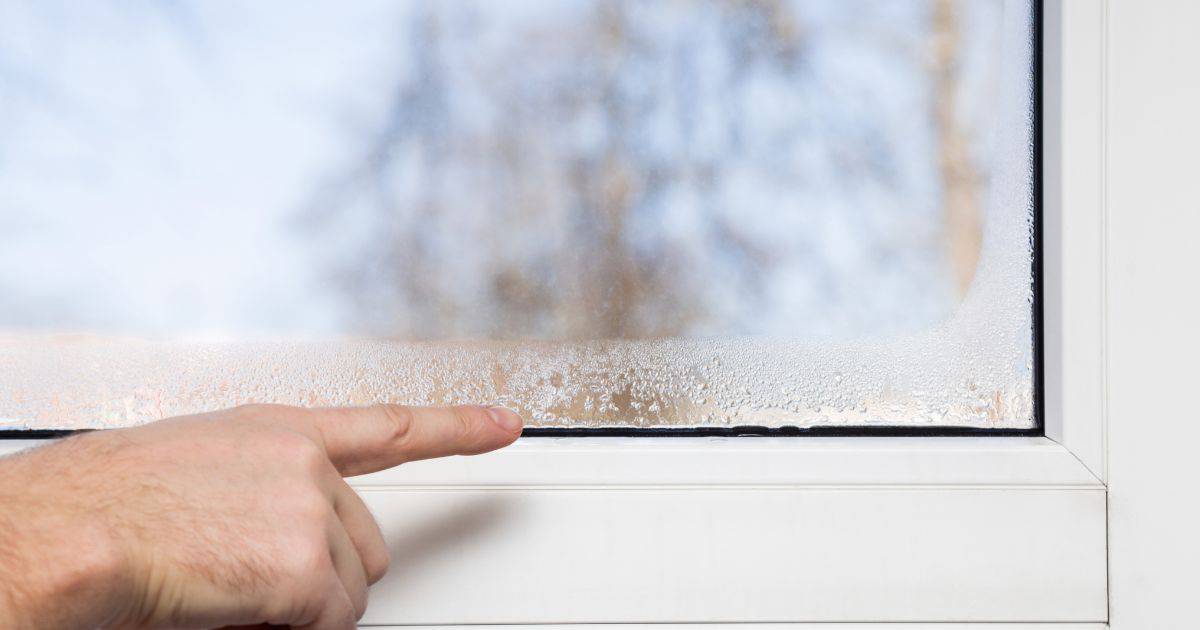
Indoor humidity is often overlooked, yet it can have a huge — and negative — impact on your health, especially if you suffer from allergies. Regardless of the season, you should be actively managing the moisture levels in your home. In this updated 2026 guide, we’ll focus on how to reduce humidity in your home and avoid unnecessary health problems.
TL;DR
- Measure your humidity: Get a digital hygrometer and find out what’s actually going on at home. Without measuring, you’re just guessing.
- Aim for 40–50%: This is the ideal sweet spot. Above 60%, dust mites and mould thrive; below 30%, your mucous membranes suffer.
- Ventilate briefly but intensely: Open windows wide for 5–10 minutes in the morning and evening. Leaving a window cracked all day in winter just cools the flat without effectively reducing humidity.
- Invest in a dehumidifier: During autumn and damp months, an electric dehumidifier is the most reliable way to keep humidity under control.
- The bedroom is your priority: You produce up to half a litre of moisture overnight. Airing out the bedroom each morning and monitoring humidity by the bed is essential.
Why humidity is such a problem for allergy sufferers (Ideal is 40–50%)
For most people, humidity is just about comfort. For allergy sufferers, it’s a health issue. The relative humidity in your home directly affects our two biggest enemies: dust mites and mould. And the science is clear on this.
Humidity and dust mites go hand in hand. Dust mites don’t drink water in the conventional sense — they absorb it from the surrounding air. For this process to work, they need relative humidity above 60%, according to studies (e.g. Arlian, 1992). If humidity drops below 50% for an extended period, they rapidly lose water, stop reproducing, and gradually die off. Keeping your home below this threshold is one of the most effective ways to decimate their population.
The story with mould is similar. Mould spores are everywhere around us, but to actually start growing on walls or in corners, they need moisture. They typically begin growing at humidity levels above 65%. Visible black spots on a wall are just the tip of the iceberg — a signal that something is seriously wrong.
On the other hand, air that’s too dry isn’t great either. When humidity drops below 30% — which commonly happens in overheated flats during winter — the mucous membranes in your nose and throat dry out, making them less resistant to viruses and bacteria. That’s why allergists, including recommendations from the Czech Society of Allergology and Clinical Immunology (ČSAKI), advise maintaining humidity between 40 and 50%. In this sweet spot, dust mites and mould can’t thrive, and your mucous membranes stay in good condition. Keep this in mind when trying to reduce humidity in your home.
How to accurately measure humidity at home
Before you start figuring out how to lower humidity, you need to know the actual level. Guessing “by feel” or based on condensation on windows is unreliable. The only dependable method is using a hygrometer. When it comes to how to reduce humidity in your home, this is doubly important.
Forget about old analogue models and get yourself a simple digital hygrometer. They cost just a few hundred crowns (typically around 300 CZK) and give you accurate readings. Many also come with a built-in thermometer, which is ideal.
Where should you place it? Get at least one for the bedroom, since that’s where you spend the most time and where humidity rises significantly at night. Ideally, have another in the living room and possibly in the bathroom so you can monitor the entire home. Place the hygrometer in an open spot — on a shelf or bedside table, for example. Never put it directly on a wall, next to a window, or above a radiator. These locations have their own microclimates that distort the readings (e.g. humidity near a cold wall will always read higher).
Where does excess humidity come from? Most common causes
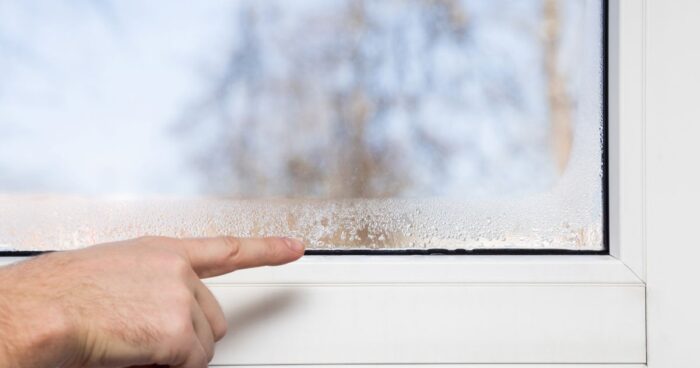
Humidity doesn’t just appear out of thin air. We largely create it ourselves through everyday living. A family of four can produce up to 12 litres of water vapour per day. Where does it all come from?
The main culprit is condensation on windows and walls. This happens when warm, humid air hits a cold surface — typically window glass in winter or the corner of a room. The moisture in the air condenses on the surface. Other major contributors are everyday activities like cooking, showering, drying laundry indoors, and ironing. We ourselves are a source too — through breathing and perspiration, each person releases roughly 1–1.5 litres of water per day.
Structural issues can also be to blame. Moisture can enter your home through a leaking roof, gutters, poorly sealed windows, or cracks in the foundations. In modern, tightly sealed flats with plastic windows, humidity builds up because it has no natural escape route — unlike older houses with their natural draughts.
High humidity shows itself through several telltale signs. The most obvious is mould growth — typically black or green patches on walls. Other warning signs include a musty smell, regularly condensed windows, peeling plaster, or air that feels damp and clammy.
Seasonal fluctuations: When is humidity worst?
Humidity problems aren’t the same year-round. They shift with outdoor temperature and humidity, which directly affects dust mite populations too. Understanding this annual cycle helps you plan your measures more effectively.
| Month | Average indoor humidity (example) | Strategy |
|---|---|---|
| January | 35–45% | Watch out for overly dry air from heating. Ventilate briefly so the flat doesn’t cool down. Humidity is naturally low. |
| March | 40–50% | Spring begins, we ventilate more. Humidity is usually in the optimal range. |
| May | 50–60% | It’s getting warmer, occasional rain raises outdoor humidity. Time to start monitoring more closely. |
| July | 60–70% | Summer storms and muggy weather. Ventilating can paradoxically increase humidity. A good time for air conditioning with a dehumidifying function. |
| September | 65–75% | Critical month! Temperatures drop outside, it rains a lot, but the heating isn’t on yet. Indoor humidity peaks and dust mite populations explode. |
| November | 55–65% | The heating season begins, gradually drying out the air. Active dehumidification is still needed, though. |
As you can see, the worst period for dust mite allergy sufferers is late summer and autumn. Dust mite populations reach their peak in September and October. With the arrival of winter and central heating, indoor air dries out and mites die off en masse — but paradoxically, symptoms can temporarily worsen because large quantities of allergens are released from their decomposing bodies. This is a crucial point to remember when thinking about how to reduce humidity in your home.
7 practical ways to reduce humidity in your home
Is your hygrometer reading above 55%? Then it’s time to act. Here are 7 tried-and-tested ways to effectively reduce indoor humidity and prevent problems.
1. Ventilate briefly but intensely
Proper ventilation is the foundation. Forget about leaving a window cracked open all day in winter — all that does is cool down your walls and increase the risk of condensation. Instead, ventilate in short bursts: open your windows wide for 5–10 minutes, ideally creating a cross-draught. Do this at least twice a day — in the morning after waking up (to clear overnight moisture) and in the evening before bed.
2. Use an electric dehumidifier
When it comes to fighting humidity, a dehumidifier is the most effective weapon for allergy sufferers. It draws in humid air, condenses the water into a collection tank, and returns drier air to the room. Modern units come with a built-in hygrostat, so they switch on automatically when humidity exceeds your chosen setting (e.g. 50%) and switch off once it’s reached. It’s an investment that truly pays off for your health.
3. Use air conditioning with a dehumidifying function
If you have air conditioning at home, check whether it has a “Dry” (dehumidifying) mode. It works on a similar principle to a dehumidifier — cooling the air below its dew point and condensing the moisture out of it. It’s a fantastic helper, especially during summer months when it’s hot and humid at the same time.
4. Properly ventilate your bathroom and kitchen
The bathroom and kitchen are the biggest steam producers in any home. After every shower, run the extractor fan for at least 20–30 minutes (if you don’t have one, leave the door and window open). Always use the cooker hood when cooking. This prevents moisture from spreading to the rest of your home.
5. Dry your laundry smartly
Drying laundry on a rack in the living room is a disaster for indoor humidity. A single wash load can release up to 3 litres of water into the air. The ideal solution is a tumble dryer. If you don’t have one, dry your laundry in a well-ventilated room with a window slightly open, or in a room where a dehumidifier is running.
6. Insulate walls and eliminate thermal bridges
If moisture keeps condensing in corners or on a specific wall, you’re likely dealing with a thermal bridge — a spot where the wall gets extremely cold. The long-term fix is proper façade insulation or interior insulating boards. It’s more expensive, but it addresses the root cause. If in doubt, consult a building professional.
7. Lower the temperature in the bedroom
This one is a simple physics trick. Cooler air holds less water vapour than warm air. By keeping the bedroom temperature between 18 and 20 °C (which ČSAKI also recommends as ideal for sleep), you not only slow down dust mite reproduction but also slightly reduce relative humidity.
What about plants? Some species — like ficus, aloe vera, or peace lily — can absorb small amounts of moisture, but think of them more as a decorative bonus. Their effect is minimal compared to a dehumidifier or proper ventilation.
How to choose the right dehumidifier: Compressor vs. desiccant
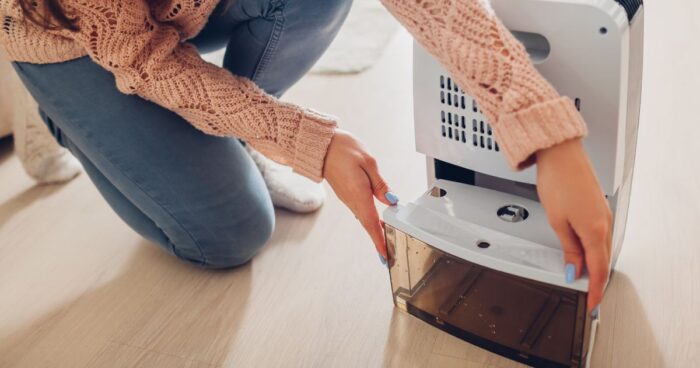
Once you decide to get a dehumidifier, you’ll come across two main types: compressor and desiccant. Each suits different conditions.
A compressor dehumidifier works like a small fridge. Inside, it has a cooling plate where moisture from the air condenses. It’s very efficient, but its performance drops as temperatures fall. It works best above 15–18 °C. It’s also somewhat noisier (typically 45–55 dB), which can be disruptive in a bedroom. The upside is lower energy consumption.
A desiccant (adsorption) dehumidifier uses a special hygroscopic material (desiccant) that binds water. It then heats the air to release the water from the material into a collection tank. Its main advantage is that it works effectively even in cold spaces (basements, garages, holiday cottages) — right down to 1 °C. It’s also significantly quieter (35–45 dB), making it more suitable for overnight use. The downside is higher electricity consumption.
When choosing, look at the dehumidifying capacity, expressed in litres per 24 hours. For a standard flat up to 50 m², a model with around 16 l/day should suffice. For a larger flat or house of around 100 m², go for a more powerful unit with a capacity of at least 25 l/day. It’s better to have some power in reserve than to run the machine flat-out all the time.
Bedroom: The critical room that determines your sleep
If you could focus your efforts on just one room, make it the bedroom. This is where you spend a third of your life in close contact with the highest concentration of dust mites — in your mattress and pillow. And this is precisely where you create the perfect microclimate for them to multiply at night.
During eight hours of sleep, your body releases roughly 0.5 litres of water through breathing and perspiration. This moisture soaks into your bedding and mattress. By the time you wake up, relative humidity in the bedroom can be 5 to 10% higher than it was the night before. For dust mites, that’s quite literally breakfast in bed.
So what’s the optimal bedroom humidity? Same as the rest of the home — aim for 40–50%. Here’s what you can do:
- Morning ritual: As soon as you wake up, pull back the duvet so the bedding and mattress can dry out. Then ventilate intensely for 5–10 minutes.
- Hygrometer on the bedside table: Keep an eye on the numbers. If it reads 55% or more in the evening, run a dehumidifier for an hour before bed.
- Overnight automation: If your bedroom consistently has higher humidity, consider getting a quiet desiccant dehumidifier with an automatic mode that manages humidity for you while you sleep.
Properly managing bedroom humidity is, alongside using barrier covers, the most important step towards peaceful sleep without coughing and a blocked nose.
💧 What I use at home
I monitor humidity with a nanoSPACE hygrometer (alarm when it goes above 55%). During the critical September–November season, I run a dehumidifier in the bedroom, combined with an air purifier for allergens.
📖 You might also be interested in
Conclusion
Fighting humidity can feel like an endless battle, but it’s one of the few things in allergy management that’s entirely within your control. The goal isn’t to create a sterile home environment — it’s about establishing conditions where dust mites and mould simply can’t thrive. The key is understanding the principles, measuring accurately, and being consistent with simple habits like ventilating and using a dehumidifier.
If you’re feeling overwhelmed, don’t try to change everything at once. Start with one small but concrete step — and do it today. Buy a digital hygrometer. It’s a small investment that gives you objective data and shows you exactly where to begin. You’ll find that taking control of the environment where you sleep and breathe is incredibly empowering.
Frequently asked questions
What absorbs humidity best?
The most effective way to reduce indoor humidity is an electric dehumidifier. It actively removes water from the air and collects it in a tank, unlike passive methods such as ventilation.
What is the optimal bedroom humidity?
The optimal bedroom humidity for allergy sufferers is between 40% and 50%. This range prevents dust mites and mould from multiplying while avoiding dryness in the respiratory mucous membranes, which could lead to irritation.
How much does a quality dehumidifier cost?
Prices for quality household dehumidifiers range from 4,000 CZK to 10,000 CZK. The cost depends on capacity, technology (compressor vs. desiccant), and additional features such as a quiet mode or ioniser.
Does air conditioning help with humidity?
Yes, if your air conditioning unit has a dehumidifying function (often labelled “Dry”). In this mode, it cools the air and condenses out the moisture, effectively reducing relative humidity in the room — particularly useful in summer.
How quickly can I reduce humidity?
The fastest approach is a combination of burst ventilation (5–10 minutes) for an immediate air exchange, followed by running an electric dehumidifier. Depending on its capacity and the room size, a dehumidifier can lower humidity by 10–15% within a few hours.
Is ventilation enough to reduce humidity?
In winter, when outdoor air is dry, proper burst ventilation may be sufficient. In autumn or summer, when outdoor humidity is high, ventilation often isn’t enough and can even make the problem worse. During these periods, a dehumidifier is the more reliable solution.
How do you dehumidify air?
There are several ways to reduce humidity in a room. Ideally, combine all of them: fix any leaks, ventilate regularly in short bursts, use a dehumidifier, dry laundry in a tumble dryer, and properly ventilate the bathroom and kitchen.
How do I get rid of humidity in the bedroom?
In addition to morning burst ventilation, a quiet dehumidifier that can run overnight will help with bedroom humidity. Keep the temperature between 18–20 °C and always pull back the duvet after waking up so the mattress can dry out.
How do you ventilate away humidity?
Ventilate in short bursts. Open the windows wide for 5 to 10 minutes, ideally creating a cross-draught. This quickly replaces the humid indoor air with drier outdoor air (especially in winter) without cooling down the walls of your home.
How do you ventilate when it’s humid outside?
When it’s rainy and humid outside, limit ventilation to short, essential intervals. On such days, the main tool for reducing indoor humidity is an electric dehumidifier, since opening windows would actually bring more moisture in.
What should the humidity be in a home?
The ideal indoor humidity for allergy sufferers should stay between 40 and 50% year-round. A digital hygrometer will help you determine the exact level.
How much humidity does a person produce?
A person produces moisture through breathing and perspiration. Depending on activity level and ambient temperature, each person releases approximately 1 to 1.5 litres of water into the air per day, of which up to half a litre is produced during sleep.