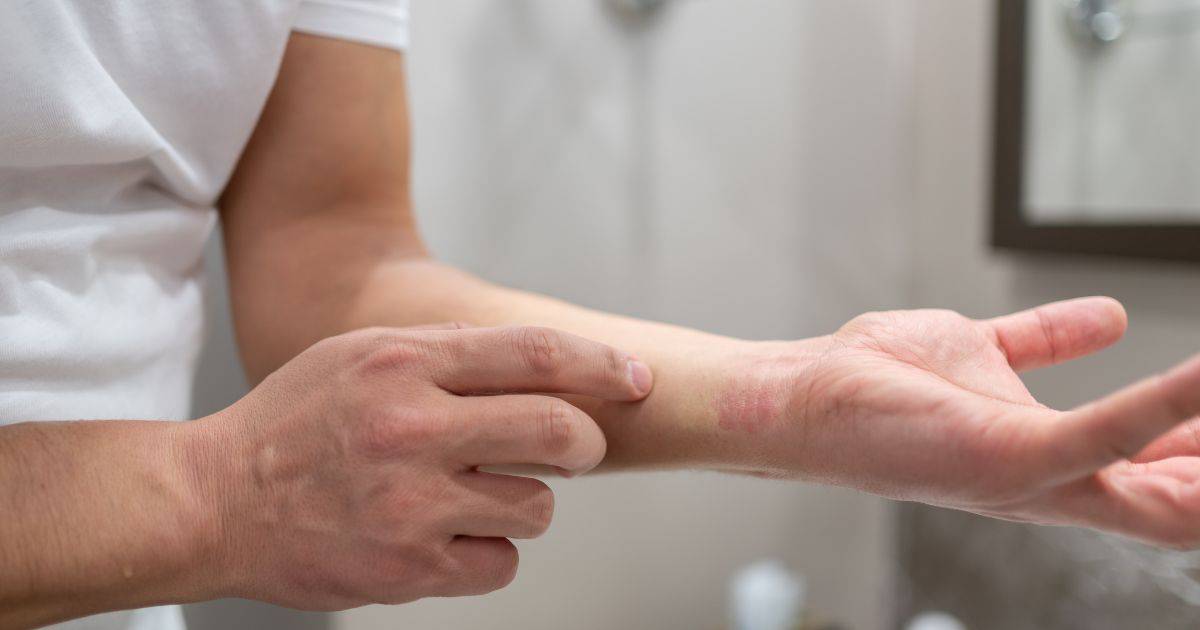
Atopic eczema is a fairly well-known and common condition, but I understand it can be confusing. It’s still frequently mistaken for other types of dermatitis, which often leads to the wrong skincare approach and unnecessary frustration. I know first-hand what it’s like to try everything under the sun with nothing working. That’s why I’ve put together this updated guide on how to identify atopic eczema, so you can feel confident and give your skin exactly what it needs.
TL;DR
- Atopic eczema is a chronic skin inflammation, not a contagious infection. Its cause is a combination of genetics and environmental factors.
- The main atopic eczema symptoms include persistent itching, dryness, redness, and typical distribution (skin folds, face, neck).
- Diagnosis relies on the Hanifin-Rajka criteria (itching, chronic course, family history of atopy, typical locations).
- Symptoms change with age — from weeping cheeks in infants to thickened, dry skin in the flexural areas of adults.
- The foundation of treatment is regular moisturising (emollients), topical corticosteroids during flare-ups, and modern therapies for more severe forms.
What is atopic eczema?
Atopic eczema, medically known as atopic dermatitis, is a chronic, non-infectious, and intensely itchy inflammatory skin condition. The word “atopic” refers to a tendency for an exaggerated immune response to ordinary environmental triggers — something also seen in allergic rhinitis and asthma. The condition often appears in early childhood and is closely linked to genetic predisposition and impaired skin barrier function.
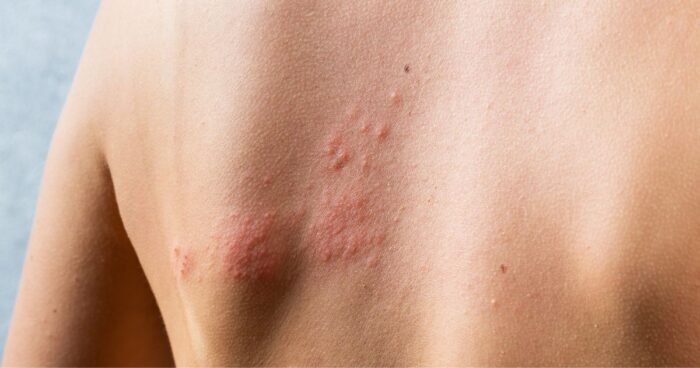
Read about the other types of eczema.
Causes of atopic eczema: Why does it develop?
There isn’t a single cause — it’s a combination of several factors working together. Think of it like a jigsaw puzzle where multiple pieces need to fall into place before eczema appears.
Genetic predisposition
Heredity plays a major role. If one parent has atopy (eczema, asthma, hay fever), the child’s risk is roughly 25–30%. If both parents are affected, that risk jumps to 60–80%. It’s not the disease itself that’s directly inherited, but rather a “readiness” of the skin and immune system to overreact. Keep this in mind when trying to identify atopic eczema.
Impaired skin barrier
An atopic person’s skin is like a wall held together with poor-quality mortar. It lacks essential lipids (fats), particularly ceramides, which bind skin cells together. This makes the skin more permeable — water escapes more easily (which is why it’s so dry) and irritants and allergens penetrate inward, triggering inflammation. When it comes to identifying atopic eczema, this is doubly important.
Immune system dysfunction
The immune system of someone with atopy is on constant high alert. It responds disproportionately to ordinary stimuli, producing substances that cause inflammation and itching. It’s like having an overly sensitive alarm that goes off at the slightest breeze. This is a crucial piece of the puzzle when trying to identify atopic eczema.
Environmental and lifestyle factors
On top of this genetic foundation, environmental triggers come into play. These can range from allergens (dust mites, pollen, mould) to irritants (detergents, fragrances, wool) and certain foods (commonly milk, eggs, and wheat in young children). Psychological stress also plays a significant role and can reliably worsen eczema. The same applies when learning how to identify atopic eczema.
Atopic eczema: symptoms — the telltale signs
Although symptoms can vary, several hallmark signs are characteristic of atopic dermatitis. If you notice a combination of these in yourself or your child, it’s time to pay attention.
Intense itching (pruritus)
This is the absolute cornerstone. Atopic eczema is defined by itching. It’s not just the occasional scratch — it’s a relentless, uncontrollable urge that wakes you at night and dramatically impacts quality of life. A vicious cycle takes hold: itching leads to scratching, scratching damages the skin, and damaged skin itches even more. Bear this in mind when trying to identify atopic eczema.
Dry skin (xerosis)
Because of the impaired barrier, the skin can’t retain moisture. It feels tight, rough to the touch, may flake in fine scales, and cracks easily. Even during calm periods when you don’t have active patches, the skin is generally drier overall. This is a key feature when identifying atopic eczema.
Redness and inflammation
During active flare-ups, red, poorly defined patches appear on the skin. This is the visible sign of inflammation occurring beneath the surface. The skin in these areas may feel hot to the touch.
Rash, papules, and weeping
Small papules or vesicles filled with clear fluid may form on the red patches. These can burst and weep, which is especially common in the infant form of eczema. As they dry, yellowish crusts develop. This is an important marker when trying to identify atopic eczema.
Skin thickening (lichenification)
With prolonged scratching and rubbing, the skin fights back by becoming coarser and thicker. The skin lines become more pronounced, and the area feels tougher and darker. This process, called lichenification, is typical of chronic eczema — particularly in the elbow and knee creases.
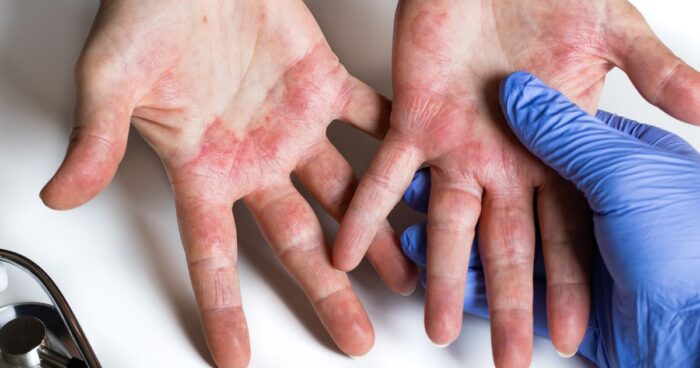
How to identify atopic eczema? Hanifin-Rajka criteria step by step
Diagnosing atopic eczema is primarily clinical, meaning the doctor bases it on what they see and what you tell them. There is no single test that can confirm the condition. That’s why dermatologists worldwide use a set of diagnostic guidelines known as the Hanifin-Rajka criteria. For a diagnosis, at least 3 of the 4 major criteria and 3 of the many minor criteria must be met.
Try going through the following checklist. If you answer “yes” to most of the points, the likelihood of atopic eczema is high. However, treat this as a guide only — the final diagnosis should always be made by a doctor.
Major criteria (3 out of 4 must be met)
- ☐ Itching (pruritus): Are you or your child troubled by intense skin itching? Is it the most prominent and bothersome symptom?
- ☐ Typical location and appearance: Do the eczema patches match your age group? In infants: cheeks and outer surfaces of the limbs; in children and adults: flexural areas (elbow and knee creases, neck, wrists).
- ☐ Chronic or relapsing course: Have you been struggling with eczema long-term? Do you experience alternating periods of remission and flare-ups?
- ☐ Personal or family history of atopy: Have you or a close family member (parents, siblings) been diagnosed with atopic eczema, asthma, or allergic rhinitis (hay fever)?
Minor criteria (3 or more must be met)
The most common include: ☐ Dry skin (xerosis), ☐ Early childhood onset, ☐ Eczema on hands or feet, ☐ Eczema on the eyelids, ☐ Cracked lips (cheilitis), ☐ Susceptibility to skin infections (especially bacterial, caused by Staphylococcus aureus), ☐ Elevated total IgE levels in the blood (identified by an allergist), ☐ Dark circles under the eyes, and ☐ Dennie-Morgan fold (an extra crease of skin beneath the lower eyelid).
Atopic eczema across different life stages
One of the key characteristics of atopic eczema is that it changes its appearance with age. What troubles an infant looks quite different from eczema in a teenager or an adult.
Atopic eczema in infants (0–12 months) — specifics
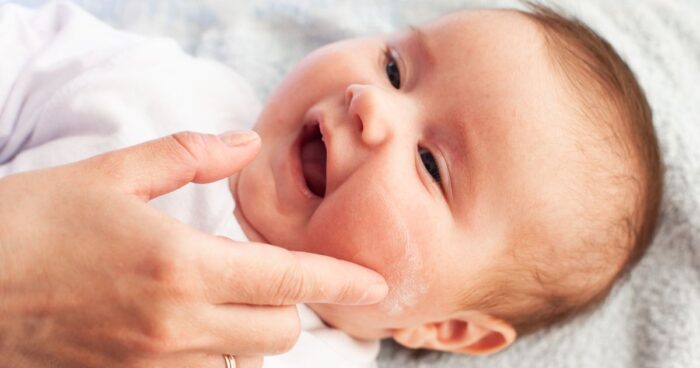
The first signs typically appear between the 2nd and 6th month of life. It starts as red, rough, scaly patches on the cheeks, forehead, and scalp (often called “cradle cap”). These patches frequently weep heavily, forming small vesicles followed by honey-yellow crusts. The eczema can quickly spread to the trunk and outer surfaces of the arms and legs. Atopic eczema in infants is characterised by an acute, weeping phase. It’s important not to confuse it with seborrhoeic dermatitis, which presents as greasy, yellowish scales on the scalp and face but, unlike atopic eczema, barely itches at all.
Atopic eczema in toddlers and preschoolers (1–6 years)
Once a child starts moving around and crawling, the eczema typically migrates to the flexural (skin-fold) areas. You’ll most commonly find it in the elbow and knee creases, on the neck, wrists, and ankles. The skin no longer weeps as much — instead, it tends to be dry, red, and, from constant scratching, begins to coarsen and thicken (lichenification). Common triggers in this age group include viral infections (picked up at nursery), dust mites, and in roughly 30% of cases, food allergies.
Atopic eczema in adults
In adulthood, eczema typically persists in the flexural areas but also very commonly affects the hands (especially the backs and fingers), neck, décolletage, and face — particularly around the eyes and mouth. The skin is chronically dry, heavily lichenified, and may crack. Major triggers tend to be psychological stress and work-related factors (frequent hand washing, contact with chemicals, dusty environments). Adults also face a higher risk of secondary bacterial infection with Staphylococcus aureus, which thrives on damaged skin and worsens inflammation.
Atopic eczema in the elderly and overlap with asteatosis
In later life, atopic eczema may return or appear for the first time. Ageing skin is naturally thinner, more fragile, and produces less sebum (physiological atrophy). Atopic eczema in this group often overlaps with asteatotic eczema (eczema craquelé), which arises from extreme dryness. The skin — most commonly on the shins and forearms — looks like cracked, dried-out earth. Treatment requires very rich, heavy emollients. Topical corticosteroids must be used cautiously, as they can thin the already fragile skin even further. According to studies, the median age of onset for asteatotic eczema is 69 years (Tanaka et al., 2019, J Dermatol).
What can atopic eczema be confused with? (Differential diagnosis)
An itchy red rash isn’t always atopic eczema. Several other skin conditions share similar features, and telling them apart is crucial for effective treatment. Here’s a handy comparison table of the most common mix-ups:
| Condition | Typical features | Most common locations |
|---|---|---|
| Atopic eczema | Intense itching, dryness, poorly defined borders, family history of atopy, appearance changes with age. | Age-dependent: face (infants), flexural areas (children, adults), neck, hands. |
| Psoriasis | Sharply defined patches, silvery, firmly attached scales, itching is typically mild or absent. | Outer surfaces of elbows and knees, scalp, lower back (sacral area). |
| Contact dermatitis | Develops after contact with a specific substance (allergen or irritant), patches are sharply defined and mirror the contact site. | Hands (chemicals, metals), abdomen (belt buckle), earlobes (earrings). |
| Seborrhoeic dermatitis | Greasy, yellowish scales, itching is relatively mild. Worsens in winter and under stress. | T-zone of the face (eyebrows, around the nose), scalp, chest, skin folds. |
| Tinea (fungal skin infection) | Characteristic ring-shaped patches with a raised, red, scaly border and a gradually clearing centre. | Anywhere on the body (trunk, limbs, groin). |
First steps in treatment in 2026: From moisturising to biologics
Treating atopic eczema is like building a house — it needs solid foundations. Those foundations are daily skincare. When that’s not enough, additional layers of medication come into play. Modern dermatology follows a “step-up” approach — starting with the simplest measures and escalating to the most potent.
The cornerstone: Emollients (moisturisers)
This is the absolute baseline without which no other treatment can work effectively. Emollients replenish the skin’s missing lipids, hydrate it, and restore barrier function. They should be applied at least twice a day to the entire body — including areas that don’t currently look inflamed. It’s a preventive measure that helps delay the next flare-up.
Step 1: Topical corticosteroids (TCS)
When eczema flares (the skin turns red and starts itching intensely), you need to suppress the inflammation quickly. That’s where topical corticosteroids in the form of creams or ointments come in (e.g. containing mometasone or hydrocortisone butyrate). They’re used short-term on affected patches as directed by a doctor. There’s no need to fear them — when used correctly, they’re safe and highly effective.
Step 2: Topical calcineurin inhibitors (TCI)
These are an alternative to corticosteroids, particularly for sensitive areas like the face, eyelids, neck, or genitals, where long-term corticosteroid use could lead to skin thinning. They don’t worsen skin atrophy. They’re also excellent for proactive (maintenance) therapy, where they’re applied twice weekly to previously affected areas to prevent new flare-ups. This group includes tacrolimus and pimecrolimus ointments.
Step 3: Systemic treatment for severe forms
If topical treatment isn’t enough and the eczema is widespread and severe, systemic treatment comes into play — targeting the immune system from within. This belongs exclusively in the hands of specialists at atopic eczema treatment centres. Since 2024, patients in the Czech Republic have access to modern options:
JAK inhibitors
These are a new generation of oral medications (e.g. Olumiant, Rinvoq) that selectively block signalling pathways involved in inflammation and itching. Their onset of action is very rapid.
Biologic therapy
Targeted injections (e.g. dupilumab) that block specific molecules responsible for type 2 allergic inflammation. They’re typically administered once every two weeks.
When to see a dermatologist about eczema
I know only too well that the temptation is to try home remedies or over-the-counter creams first. In some cases, though, seeing a doctor (a dermatologist, or a paediatrician for children) is absolutely essential. So when should you not delay?
Seek medical attention immediately or as soon as possible if:
You suspect a secondary infection. Signs include yellow, honey-coloured crusts, pus-filled blisters, an unpleasant smell, or the onset of fever.
The eczema is widespread and heavily weeping, especially in a young infant. There’s a risk of fluid and protein loss.
The itching is so unbearable that it prevents you or your child from sleeping and functioning normally.
Small, painful blisters resembling cold sores appear on the eczema patches. This could be a dangerous herpetic superinfection (eczema herpeticum).
Book a planned appointment if:
The rash has lasted longer than 6 weeks and isn’t responding to basic moisturising care. You’re unsure about the diagnosis and want to rule out other skin conditions. The eczema is manageable but significantly affects your mental health and quality of life. You’d like advice on modern treatment options and want to find out whether you’re a candidate for systemic therapy.
🌿 What I use for atopic skin
For daily care of atopic skin (including for children), I use the AtopCare range — free from fragrance, MIT/MCI, and SLS. I complement it with gentle antibacterial clothing and, during seasonal flare-ups, an air purifier in the bedroom.
📖 You might also like
Conclusion
Recognising atopic eczema can be tricky at first because its symptoms are varied and change over time. I hope this guide has helped you get to grips with the key symptoms, diagnostic criteria, and differences across age groups. Remember — atopic eczema isn’t just a cosmetic issue; it’s a chronic inflammatory condition that requires a comprehensive and, above all, consistent approach.
If after reading this article you feel it applies to you or your child, take one concrete step today. Go through the Hanifin-Rajka criteria checklist at your own pace. And if your suspicion holds, don’t hesitate — book an appointment with a dermatologist. Getting the right diagnosis is the very first and most important step on the journey to calmer skin and a better quality of life. Best of luck!
Frequently asked questions
Is atopic eczema contagious?
No, atopic eczema is absolutely not contagious. It is a non-infectious inflammatory skin condition caused by a combination of genetic factors and immune dysregulation — not by a bacterium or virus that could be passed on.
When does atopic eczema go away?
Atopic eczema may clear up in children during the school years or puberty. However, some people continue to deal with it throughout their lives.
How do you identify atopic eczema in an infant?
The main clues are the symptoms and their location. Infants typically develop an itchy, often weeping rash and blisters on the cheeks, forehead, and scalp. The eczema may then spread to the trunk and outer surfaces of the limbs.
At what age does atopic eczema first appear?
It most commonly appears in early childhood. Roughly 60% of cases develop during the first year of life, and up to 85% by the age of five. In rare cases, however, it can appear for the first time in adulthood.
Does atopic eczema fade with age?
In many children (estimates suggest 60–70%), symptoms significantly improve with age or disappear entirely by puberty. Unfortunately, for some people the condition persists into adulthood, or it may return after a period of remission.
Is atopic eczema hereditary?
Yes, heredity plays a fundamental role. If one parent has any form of atopy (eczema, asthma, hay fever), the child’s risk is approximately 25–30%. If both parents are affected, the risk rises to as much as 60–80%.
Can I exercise with atopic eczema?
Yes — there’s no need to give up physical activity. Sweat can irritate the skin, though, so it’s a good idea to wear breathable, moisture-wicking clothing, shower with lukewarm water straight after exercising (skip the harsh soap), and apply emollient immediately.
What irritates atopic eczema the most?
It varies greatly from person to person, but the most common triggers include dry air (especially during the heating season), sweat, irritating fabrics (wool), fragrances and harsh cleaning products, allergens (dust mites, pollen, pets), and — last but not least — psychological stress.
How often should I use moisturiser?
Ideally, you should apply emollient at least twice a day — morning and evening, and always after bathing or showering. If your skin is still dry despite this, feel free to apply more often. The golden rule is: “moisturise, moisturise, moisturise.”
Can I treat atopic eczema without medical supervision?
If you suspect atopic eczema, I really do recommend seeing a doctor. A specialist can confirm the diagnosis, rule out other conditions, and suggest an appropriate treatment plan. You can handle basic care — moisturising and avoiding triggers — on your own, but managing acute flare-ups should always be guided by a doctor.